Build a Pet First-Aid Kit: Essentials for Every Owner
Why the Kit Matters More Than the Skill
Most owners never take a pet first-aid course, and that is a reasonable choice. What is not reasonable is reaching the moment of an injury with nothing in the house but a roll of sticky tape and an expired bottle of antiseptic.
A kit does three things. It buys time, it prevents the injury from getting worse on the way to the clinic, and — less obviously — it stops you from doing something harmful out of panic. The third benefit is the most valuable. Most first-aid injuries to pets are caused by well-meaning improvisation: a human bandage applied too tightly, hydrogen peroxide poured into a wound, a bent leg forced straight.
Layer 1: The Core Kit
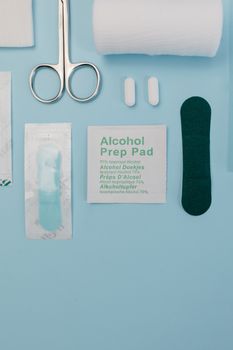
This layer handles bleeding, wounds, and basic restraint. Everything here should be in a single box that lives in one known place.
| Item | Why it is there | Notes |
|---|---|---|
| Sterile gauze pads (multiple sizes) | Direct pressure on bleeding wounds | Buy more than you think you need; a bleeding wound consumes pads fast |
| Self-adhering bandage wrap | Holds gauze in place without adhesive touching skin | Vet wrap; stretch it, never wrap at full tension |
| Medical tape | Securing dressings on awkward areas | Paper tape is gentler on thin skin |
| Sterile saline (0.9%) | Flushing wounds, eyes, and contaminated fur | Single-use vials are better than a large bottle |
| Chlorhexidine solution or wipes | Antiseptic for superficial wounds | Dilute as directed; never use alcohol or hydrogen peroxide on open tissue |
| Blunt-tipped scissors | Cutting bandage and fur away from a wound | Blunt tips prevent a panicked snip into skin |
| Tweezers | Removing ticks, thorns, glass fragments | Fine-tipped, with good grip |
| Disposable gloves | Your protection as much as the pet's | Several pairs; a nervous pet will bite |
| Muzzle or cloth strip | Safety during painful handling | Even the gentlest dog may bite when hurt — and a cat should never be muzzled |
| Digital thermometer + water-based lubricant | Rectal temperature is the only reliable reading | Normal: dog 38–39.2 °C, cat 38–39.5 °C |
| Blanket or large towel | Wrapping, warmth, and restraint | Also works as an improvised stretcher for a small pet |
| Emergency contact card | Vet, nearest 24-hour clinic, poison control | Laminated, and duplicated in your phone |
Layer 2: The Useful Extras
These are not essential for immediate stabilisation but solve common situations cleanly.
- Tick removal tool — a proper twist tool removes the whole tick far more reliably than tweezers, which tend to squeeze the abdomen and express fluid back into the wound.
- Styptic powder — stops bleeding from a cut quick after nail trimming.
- Oral syringe (no needle) — for flushing a wound or dosing a liquid medication.
- Soft pet carrier or a sling — an injured animal often cannot walk and should not be made to.
- Spare leash and slip lead — for an animal that has slipped its collar in a stressful moment.
- Instant cold pack — for swelling and insect stings, wrapped in cloth before contact.
What Does Not Belong in the Kit
This section matters more than the shopping list, because these are the items that cause harm.
| Commonly included | Why it is a problem |
|---|---|
| Hydrogen peroxide | Damages healthy tissue and delays healing. Its only legitimate use is inducing vomiting, and only on explicit veterinary instruction with a known dose. |
| Human adhesive bandages | Do not conform to a limb, and a bandage that slips and tightens can cut off circulation. |
| Alcohol and iodine tincture | Painful on open wounds and destructive to tissue. Chlorhexidine or saline is the correct choice. |
| Human painkillers | Paracetamol and ibuprofen are toxic to both dogs and cats. Never dose a pet from your own medicine cabinet. |
| Activated charcoal | Only useful for a specific class of toxin and actively harmful for others, including caustics. Give it only when a vet or poison line tells you to. |
| Antibiotic ointment for humans | Some formulations contain ingredients that are not safe if licked off. |
| Cotton wool | Fibres stick to wounds. Use gauze instead. |
The pattern is consistent: anything that sounds like decisive first aid — induce vomiting, sterilise with alcohol, give a painkiller — is the thing most likely to make the situation worse.
Layer 3: Build a Kit per Scenario
One box in the kitchen does not help you on a hike. Most households with pets benefit from three light kits rather than one large one.
The home kit — the full list above, in a clear plastic box with a lid, stored somewhere you can reach at 2 a.m. without turning on lights.
The travel kit — gauze, wrap, saline, gloves, a slip lead, the emergency card, and a tick tool. Small enough to live in the car permanently. Heat degrades medications, so do not store drugs in a vehicle.
The multi-pet kit — if you keep both cats and dogs, note that dosing, restraint, and carrier needs differ. Add a cat-specific carrier and never use a dog muzzle on a cat; a cat in respiratory distress cannot afford its mouth held shut.
Organising It So It Works Under Stress
A kit you cannot use is a box of objects. Three design rules:
- One layer deep. Everything visible when the lid comes off. Boxes within boxes fail at 2 a.m.
- Grouped by task, not by type. Put gauze, wrap, and tape together in a labelled pouch marked "bleeding", rather than scattering all the tapes in one compartment.
- Labelled and dated. Write the expiry date on the lid of anything perishable. Saline, ointments, and adhesive all degrade.
The Six-Month Check
Set a recurring reminder. Every six months:
- Replace anything expired — saline, antiseptic, lubricant, medications.
- Restock what you used, even if you only took a single gauze pad.
- Check the thermometer still powers on, and that the batteries have not corroded.
- Verify the emergency numbers are still correct; clinics close and move.
What the Kit Cannot Do
A first-aid kit stabilises. It does not treat. Four situations bypass the kit entirely and go straight to a clinic:
- Difficulty breathing — open-mouthed breathing in a cat, or laboured breathing in any pet.
- A distended, hard abdomen — particularly in a deep-chested dog, where it can indicate bloat and torsion, which is a surgical emergency measured in minutes.
- Uncontrolled bleeding that continues after five minutes of firm direct pressure.
- A suspected toxin ingestion — the kit does not help here; the phone does. Call the vet or a poison service immediately and keep the packaging.
Frequently Asked Questions
What should every pet first-aid kit contain?
At minimum: sterile gauze pads, self-adhering bandage wrap, medical tape, sterile saline, chlorhexidine antiseptic, blunt scissors, tweezers, disposable gloves, a muzzle or cloth strip for dogs, a digital thermometer, a blanket, and a card with your vet's and the nearest 24-hour clinic's numbers. Everything else is an enhancement.
Can I give my dog or cat human painkillers?
No. Paracetamol and ibuprofen are toxic to both species, and the margins are narrow enough that a single tablet can cause serious harm. Pain relief must come from a veterinarian.
Should I use hydrogen peroxide on a wound?
No. It damages healthy tissue and slows healing. Its only legitimate use in pets is inducing vomiting, and only on explicit veterinary instruction with a known dosage. Use sterile saline to flush and chlorhexidine to disinfect.
How tight should a bandage be?
Firm enough to hold the dressing, loose enough that you can slide a finger under the edge. Stretch the self-adhering wrap as you apply it but never pull it to full tension. A bandage that tightens as the limb swells can cut off circulation, and swelling is expected after an injury.
How often should I check my pet first-aid kit?
Every six months. Replace anything expired, restock anything used, verify the thermometer works, and confirm the emergency phone numbers are still current. A kit that has never been opened is usually a kit with expired saline.
What if my pet is bleeding heavily?
Apply firm, direct pressure with gauze and hold it for at least five minutes without lifting to check. If bleeding continues after that, wrap the limb and go to a clinic. Do not repeatedly lift the dressing — that disrupts the clot you are trying to form.