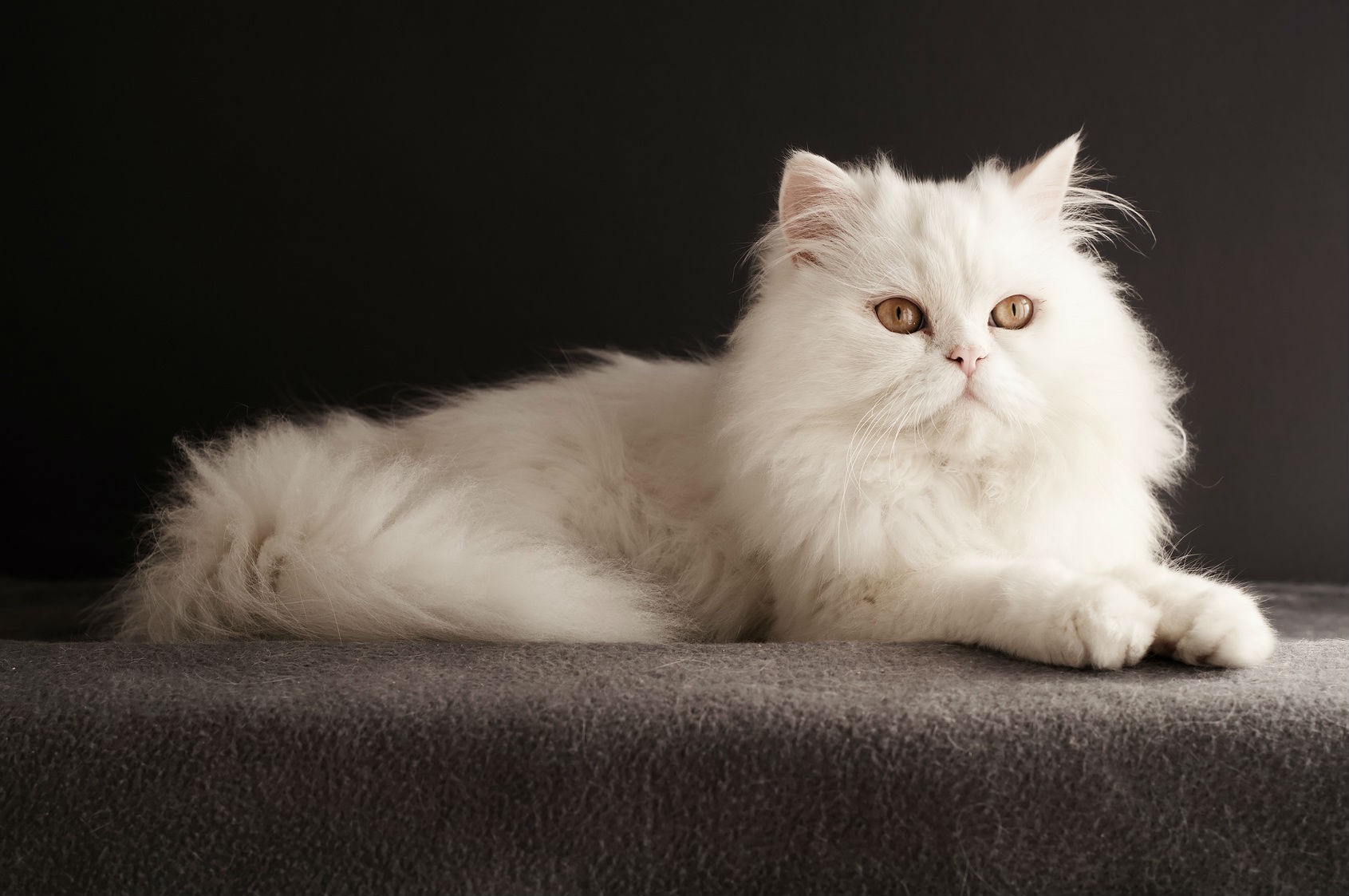
Persian Cat: Daily Care for the Flat-Faced Longhair
Care Is the Whole Point With This Breed
Most breed profiles spend their words on history and temperament. With the Persian, that is the easy part: a quiet, low-energy, affectionate cat that prefers a still household and would rather sit beside you than on you. The hard part — and the part that decides whether the cat is comfortable for the next fifteen years — is the daily routine.
The Persian is a brachycephalic breed. The shortened skull that produces the laid-back face also shortens the tear ducts, narrows the nasal passages, and changes the way the teeth sit. Add the longest coat in the domestic cat and you get a breed whose quality of life is largely a function of how consistently the owner maintains it. This guide covers that maintenance.
The Face: Ten Minutes a Day, Every Day
The flat face is the defining feature and the defining problem.
Tear staining. Persian tear ducts are shallow and often partially blocked, so tears overflow onto the face instead of draining. The moisture feeds two yeasts that produce the characteristic rust-coloured stain. The stain itself is cosmetic, but the wet fur underneath breeds skin infections.
The routine: wipe daily, not when the fur is already brown. Use a soft pad or cotton wool dampened with sterile saline or a feline eye wipe — not human contact lens solution, and never anything containing alcohol. Wipe downward and outward from the inner corner, one fresh pad per eye to avoid transferring infection between them. Dry the fur afterwards; a damp face is the environment the yeast wants.
Once staining has set in, no wipe removes it. It has to grow out, which is the argument for doing the ten seconds of daily wiping that prevents it.
Nose fold cleaning. Many Persians have a fold between the nose and the upper lip where food, saliva, and discharge collect. Clean it with a damp pad and dry it, or it becomes a site of dermatitis and bacterial overgrowth.
Nasal discharge. A small amount is normal in this breed. A change in colour to yellow or green, or a change in volume, is not — that is a vet visit.
Breathing: What to Watch and What to Change
Brachycephalic obstructive airway syndrome is a spectrum, and most Persians sit somewhere on it without being in crisis. What owners should watch for:
- Open-mouthed breathing at rest or in a cool room. This is abnormal in a cat and should be assessed.
- Snoring that has worsened over months.
- Exercise intolerance — stopping during play.
- Noisy breathing at rest rather than only when excited.
What you can change at home:
- Keep the cat lean. Fat around the chest and neck directly worsens airway resistance. This is the single most effective intervention an owner controls.
- Avoid heat and humidity. Flat-faced cats cannot cool themselves efficiently by panting. Keep the house below about 26 °C and provide cool surfaces in summer. A Persian in a hot car is at serious risk.
- Use low-dust, low-scent litter and avoid aerosols, incense, and strong cleaning products — all of which irritate already-narrow passages.
- Choose a shallow, wide bowl. A deep bowl forces the nose into the food, and a flat face cannot eat around an obstacle. Some cats do better with food spread on a flat plate.
The Coat: A System, Not a Chore
The Persian coat mats rather than merely sheds. Once a mat forms close to the skin, brushing over it makes it tighter, and it can only be cut out.
The daily minimum is five to ten minutes. For a show coat it is considerably more.
The tool order matters: a metal comb with rotating teeth goes first, and the slicker brush second. This is the reverse of what most owners do. The comb finds the tangles; the brush smooths the surface. Brushing first means you polish the top layer while a mat forms underneath.
Work in sections — chest and armpits, belly, behind the ears, rear and tail base, then back — and reach the skin with the comb at each pass. Pay particular attention to:
| Zone | Why it mats |
|---|---|
| Armpits and chest | Friction from lying down and moving |
| Behind the ears | Fine fur, high friction |
| Belly and inner thighs | Contact with the ground |
| Tail base and trousers | Long, dense, and often missed |
Matting is not only cosmetic. A tight mat pulls the skin and prevents the cat from grooming and from scratching comfortably; severe mats hide wounds, restrict movement, and cause pain.
Bathing every four to six weeks suits most Persians, followed by thorough drying — a damp undercoat in a flat-faced cat invites skin problems. If the coat has become unmanageable, a professional groomer can take it down short, and it grows back. A shaved cat is far better off than a matted one.
Eyes, Ears, Teeth
- Eyes — check daily. Discharge, redness, a cloudy cornea, or a visible third eyelid all warrant a vet. Persian cats are over-represented in progressive retinal atrophy and in tear-duct abnormalities.
- Ears — check weekly. Long fur traps wax and reduces airflow. Clean the visible folds with a pet ear cleaner on a pad; never push anything into the canal.
- Teeth — the shortened jaw crowds the teeth and worsens the breed's already high rate of periodontal disease. Daily brushing with pet toothpaste is the gold standard; where that is not achievable, dental chews and a professional scale and polish matter more than in a mesocephalic cat. Gum disease is a genuine welfare issue and an anaesthetic risk, not a cosmetic one.
Health Screening Worth Knowing About
Two hereditary conditions affect this breed often enough that any Persian owner should know the names:
- Polycystic kidney disease — fluid-filled cysts form in the kidneys and reduce function over years. There is a DNA test, and it is the reason to buy from a breeder who screens.
- Hypertrophic cardiomyopathy — thickening of the heart muscle, common in the breed. Screening by echocardiogram in breeding cats reduces risk; in a pet, an annual heart listen plus a scan if a murmur is found is reasonable.
Because these are silent for years, annual wellness checks matter more for this breed than for most. A blood panel and a urine sample at each visit catch kidney changes before symptoms appear.
Temperament and Daily Life
The Persian is a calm, low-activity cat that does not need a climbing wall. It does need:
- A quiet, warm place to rest at height, away from household traffic.
- Short daily play — a wand toy for five minutes twice a day is enough, and is good for weight control.
- Grooming as bonding. A cat conditioned early to handling will tolerate, and often seek, the daily session. Starting young is the whole trick; an adult Persian that has never been brushed requires patient counter-conditioning, which is worth doing rather than fighting.
Because the breed is sedentary, weight management is a constant concern. A Persian at ideal weight is slim-waisted and easy to feel the ribs on. Portion the food, use the daily grooming session to assess body condition by hand, and weigh the cat monthly. Obesity in a flat-faced cat compounds the airway problem directly.
Frequently Asked Questions
How often do Persian cats need to be groomed?
Daily brushing for five to ten minutes is the realistic minimum, using a metal comb first to find tangles and a slicker brush second to smooth the surface. Bathing every four to six weeks suits most coats. Once the coat is heavily matted, brushing cannot fix it — the mats have to be cut out or the coat taken down professionally.
Why does my Persian cat have brown stains under its eyes?
Persian tear ducts are shallow and drain poorly, so tears overflow onto the face and feed yeasts that stain the fur rust-coloured. Wipe daily with a soft pad and sterile saline or a feline eye wipe, then dry the fur. Established stains will not come out with wiping; they have to grow out, which is why daily prevention matters.
Can Persian cats live normal lifespans?
Yes, with consistent care, most live twelve to seventeen years. Their main risks are not age itself but the breed's structural issues — airway disease from the flat face, polycystic kidney disease, and hypertrophic cardiomyopathy — along with dental disease. Regular veterinary checks and weight management do most of the work.
Is it cruel to own a flat-faced cat?
It is a legitimate ethical question, and the conscientious answer is that a brachycephalic cat can live very comfortably if kept lean, kept cool, screened for the breed's hereditary conditions, and given a household adapted to its limits. What it cannot do is tolerate heat, heavy exercise, or a dusty, scented environment. Choosing this breed means accepting those constraints rather than ignoring them.
Do Persian cats shed a lot?
They shed, but the more serious issue is matting. The coat tangles rather than dropping cleanly, particularly in the armpits, behind the ears, and around the tail base, and a mat that is not addressed pulls at the skin and can hide wounds. Daily combing reaches the skin where the tangles start.
What should I feed a flat-faced cat?
A complete, balanced diet appropriate to the cat's age, portioned to maintain a lean body condition. The practical adaptation is the bowl: a shallow, wide dish lets a flat-faced cat eat without pressing its nose into the food, and some cats do better with food spread out on a flat plate. Keeping the cat lean is the single most effective thing you can do for its breathing.