Origin and History
The Wetterhoun, also known as the Frisian Water Dog, originates from the province of Friesland in the Netherlands. This breed has a storied history that spans at least 400 years, with its origins dating back to the 17th century. The Wetterhoun was developed through the crossing of Romani dogs with an indigenous Frisian dog, possibly the now extinct Old Water Dog, a breed known for its proficiency in waterfowl hunting.
During its early days, the Wetterhoun was primarily bred for the demanding task of hunting otters and waterfowl. Known for their agility and stamina, these dogs were also skilled at retrieving waterfowl from the water. Additionally, they served as excellent watch dogs, protecting their owners' property. Despite facing near extinction during World War II, when many of the breed were killed or lost, the Wetterhoun was successfully revived through careful breeding efforts by enthusiasts and dedicated breeders.
Today, the Wetterhoun is recognized by the Fédération Cynologique Internationale (FCI) in the water dogs section of Group 8 and by the United Kennel Club in the gun dog group. The breed's recognition extends to various minor registries, hunting clubs, and internet-based dog registry businesses, ensuring its place in the world of dog breeds.
Appearance
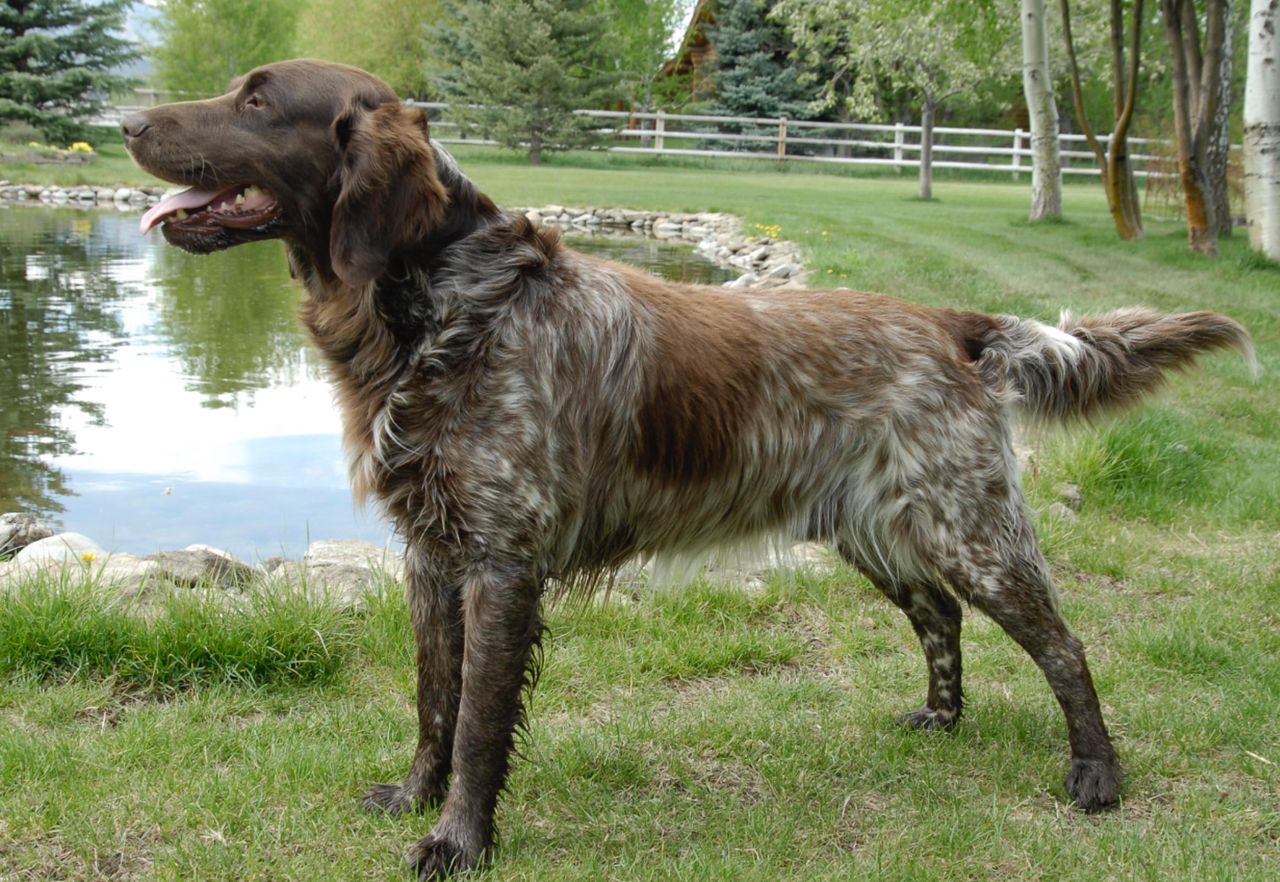
The Wetterhoun is a medium-sized dog, with an average height at the withers of 55-59 centimeters (21.6-23 inches) and a weight range of 25 to 35 kilos (55 and 77 pounds) at maturity. Their coat is thick and curly, with the exception of the head, ears, and legs, where it is smoother and more textured.
The coat may also feature ticking or roaning patterns. The ears are low-set and hang flat against the head, contributing to the dog's distinctive appearance. The tail curls tightly over the back, and the breed is known for its somewhat stern expression, which is accentuated by the shape of its eyes.
Temperament and Character
The Wetterhoun is celebrated for its independent yet loyal nature. This breed is intelligent, alert, and calm, traits that make it an excellent hunting dog and a natural watchdog. The Wetterhoun's strong will is matched by its focus and determination, often leading it to complete tasks to the end. Despite its independent streak, the breed is not stubborn or willfully disobedient, which makes it a pleasure to train and live with.
Due to its sensitive nature, the Wetterhoun should be treated with kindness during training. This breed is protective by nature, but it is not aggressive, and it enjoys the company of its family. The breed's temperament is such that it can form strong bonds with its owners, making it a beloved companion for those who appreciate a loyal and intelligent dog.
Health and Genetics
The Wetterhoun is generally a healthy breed, but like all dogs, it is prone to certain health conditions. Specific health concerns that may affect the Wetterhoun include hip dysplasia, a condition that can lead to pain and mobility issues, and cataracts, which can result in vision problems.
Other potential health issues may include progressive retinal atrophy, a degenerative eye disorder, and skin allergies.
Training and Exercise
The Wetterhoun is an excellent gun dog, with a natural talent for retrieving game across both land and water. This breed's physical prowess and mental agility make it well-suited for hunting. However, the strong will and natural guarding instincts of the Wetterhoun require early and consistent training. Training should be positive and rewarding, as this breed responds well to kindness and is sensitive to harsh treatment.
Living with a Wetterhoun
The Wetterhoun is an excellent choice for experienced dog owners who appreciate a breed with a moderate energy level and moderate shedding. Their adaptability to various living situations, whether it be a home with a yard or an apartment, makes them versatile companions. However, their protective nature means they may not be the best choice for households with young children, as their gentle but firm nature can sometimes be misunderstood by energetic and playful young ones.
Owners of a Wetterhoun should be prepared to provide consistent training and structure, as this breed responds well to a clear hierarchy and rules.
Buying a Wetterhoun
When selecting a puppy, ask the breeder about their experience, the health history of the puppy's parents, and the availability of health clearances. This information can help ensure that you are getting a healthy puppy with a good temperament.
Be prepared for the costs associated with owning a Wetterhoun.
Frequently Asked Questions
What is the lifespan of the Wetterhoun?
The average lifespan of the Wetterhoun is about 12-14 years. Good nutrition and regular veterinary care support a healthy life.
What is the temperament of the Wetterhoun?
The Wetterhoun is known for: Independent, Loyal, Intelligent, Alert, Calm, Protective. Its energy level is low.
What size and weight is the Wetterhoun?
It is a large dog, typically around Male: 25-35; Female: 20-30 kg as an adult.
Is the Wetterhoun easy to care for?
Reliable grooming and shedding ratings are not available. Routine brushing, ear and dental care, and nail trims are still recommended.
Is the Wetterhoun good with kids and other pets?
Reliable child- and pet-friendliness ratings are not available. Supervised, gradual introductions are recommended.
How much exercise does the Wetterhoun need?
With a low energy level, it needs walks, play or training matched to its stamina.
Wetterhoun
Trait Scores
N/A