Origin and Historical Background
The Airedale Terrier, also known as the Bingley Terrier and Waterside Terrier, originated in the valley of the River Aire in the West Riding of Yorkshire, England. This breed was formally recognized by the Kennel Club of England in 1886. The Airedale was developed by crossing the Old English Black and Tan Terrier with the Otterhound and possibly other terrier breeds, contributing to the creation of other breeds like the Yorkshire Terrier.
Historically, the Airedale was bred to be a versatile working dog, excelling in hunting, herding, and as a family guardian. During World War I, Airedales were used as messengers, finding wounded soldiers, and even as police dogs, showcasing their intelligence and versatility. The breed's courage and loyalty were highly valued during these times.
The first imports of Airedales to North America occurred in the 1880s, with the first dog named Bruce winning the terrier class in a New York dog show in 1881. The Airedale Terrier Club of America was founded in 1900, serving as the parent club for the breed in the United States. This club has played a significant role in the breed's development and standardization in the country.
Physical Description
The Airedale is the largest of the British terriers, weighing between 19–25 kilograms (42–55 lb) in fit condition. Males typically stand at 58–61 centimeters (23–24 in) at the withers, while females are slightly smaller. Larger Airedales, up to 55 kilograms (121 lb), can be found in North America, sometimes referred to as "Oorangs" or Roosevelt Terriers. These larger sizes are a result of selective breeding for size and weight.
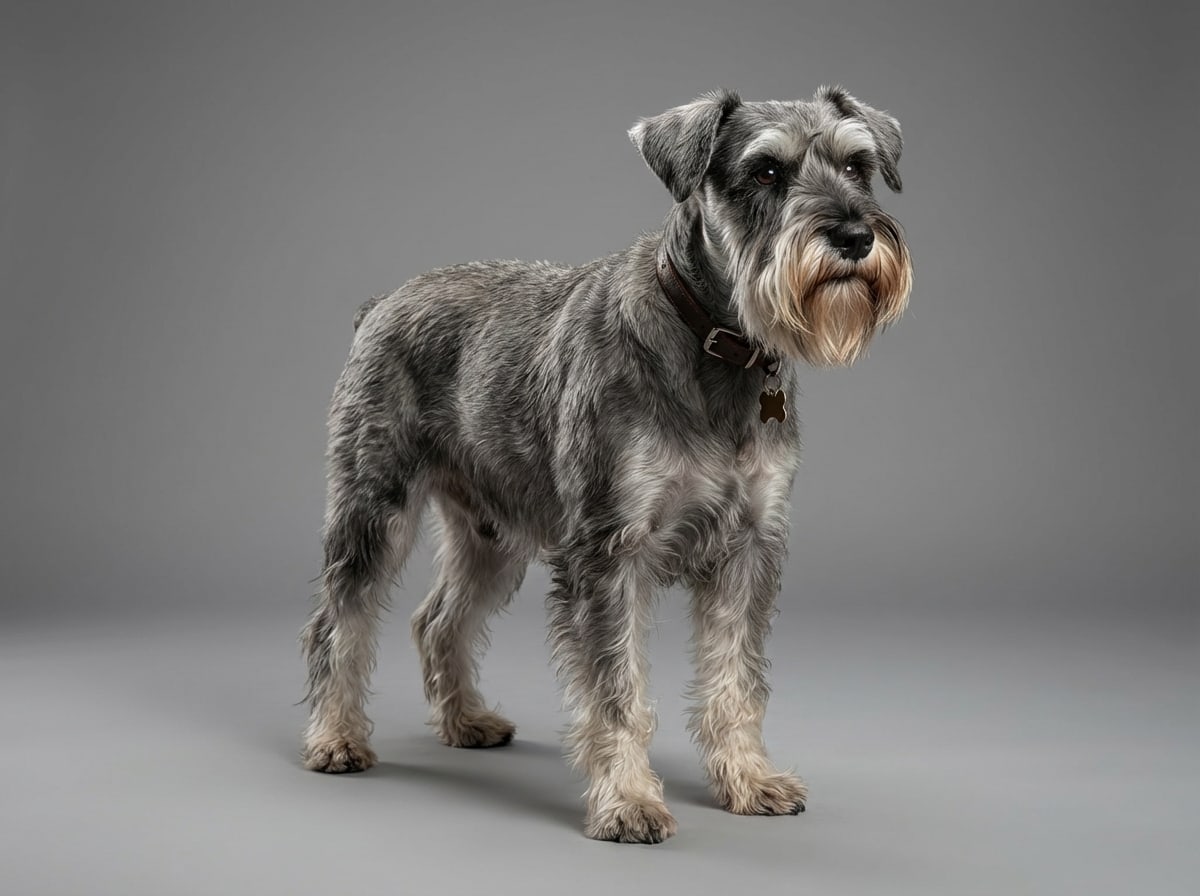
They have a medium-length black and tan coat with a harsh topcoat and a soft undercoat. The coat is commonly called hypoallergenic, although studies have not found significant differences in allergen levels between Airedales and other dogs. The AKC breed standard specifies a black saddle with tan head, ears, and legs, or a dark grizzle saddle, with red hair mixed in the black.
The tail is traditionally long and erect, but in some countries, it is illegal to dock dogs' tails unless it is for the dog's benefit. This has led to the emergence of a spitz tail in some dogs. In the United States, the AKC standard allows for a docked tail, but it is not a breed standard custom.
Temperament and Behavior
The Airedale Terrier is known for its confident, intelligent, courageous, alert, energetic, and outgoing temperament. They are not aggressive but are fearless and make excellent working dogs. Airedales have been used as war dogs, guide dogs, police dogs, and in many other working capacities. Their versatility and intelligence have made them valuable in various roles.
They exhibit some herding characteristics and have a propensity to chase animals, which can be beneficial in hunting scenarios. However, an untrained Airedale may agitate and annoy livestock. Airedales are very loyal to their owners and are often described as independent, strong-minded, and sometimes stubborn. This temperament requires a firm but gentle hand in training and socialization.
Albert Payson Terhune, a noted dog writer, described the Airedale as "swift, formidable, graceful, big of brain, an ideal chum and guard," and as a dog that is "an adoring pal" to its owner and a "destructive lightning bolt" to marauders. This quote captures the breed's complex and dynamic nature.
Health Considerations
The Airedale Terrier has a life expectancy of 11-14 years, with common causes of death including cancer (39.5%), old age (14%), urologic issues (9%), and cardiac problems (7%). Hip dysplasia is a concern, with 6.22% of Airedales in North American teaching hospitals found to have the condition, compared to 3.52% overall. This prevalence is higher than in the general dog population.
Other health issues include von Willebrand's disease, a bleeding disorder, and a predisposition to certain types of cancer, such as lymphoma and mast cell tumors.
Coat Care and Grooming
The Airedale has a 'broken' coat, which is hard and wiry, with a harsh topcoat and a soft undercoat. The coat should be kept short to appear neat and lies straight and close to the body. The outer coat is hard and wiry, while the undercoat is softer. Curly soft coats are highly undesirable and can indicate a genetic defect.
Airedales require frequent grooming, such as clipping or stripping every 6 to 8 weeks, as they do not shed. Hand stripping is a common grooming method, where a small serrated-edged knife is used to pull out loose hair from the dog's coat. This process helps keep the coat in good condition and reduces the risk of mats and tangles.
The correct coat color, according to the AKC breed standard, is either a black saddle with tan head, ears, and legs or a dark grizzle saddle, with red hair mixed in the black. Non-standard black-coated and "red" (tan) coated Airedales do exist, as do short coated "Redline" type Airedales, which are similar to the breed's early days.
Buying an Airedale Terrier
Be prepared for the cost of grooming, as Airedales require frequent grooming to maintain their coat. This can include professional grooming services or at-home grooming, which requires time and effort.
Ensure that your home and lifestyle can accommodate an active, intelligent, and energetic dog like the Airedale Terrier. They are not suitable for everyone, especially those with allergies or those who cannot provide the necessary exercise and attention.
This ensures that you are getting a dog that is healthy and has a good chance of living a long and fulfilling life.
Frequently Asked Questions
What is the lifespan of the Airedale Terrier?
The average lifespan of the Airedale Terrier is about 11-14 years. Good nutrition and regular veterinary care support a healthy life.
What is the temperament of the Airedale Terrier?
The Airedale Terrier is known for: Confident, Intelligent, Courageous, Alert, Energetic, Outgoing. Its energy level is high.
What size and weight is the Airedale Terrier?
It is a large dog, typically around Male: 23-32; Female: 18-25 kg as an adult.
Is the Airedale Terrier easy to care for?
Reliable grooming and shedding ratings are not available. Routine brushing, ear and dental care, and nail trims are still recommended.
Is the Airedale Terrier good with kids and other pets?
Reliable child- and pet-friendliness ratings are not available. Supervised, gradual introductions are recommended.
How much exercise does the Airedale Terrier need?
With a high energy level, it needs walks, play or training matched to its stamina.
Airedale Terrier
Trait Scores
N/A