Origin and History
The Small Münsterländer, also known as the Kleiner Münsterländer, originated in the Münster region of Germany. This versatile hunting dog breed reached its current form in the area around Münster, Germany. It is not related to the Large Münsterländer, despite the similar names. The ancestors of the Small Münsterländer, the Kleiner Münsterländer Vorstehhund, were bred exclusively for noble families and their falconers, working in upland areas to flush prey for falcons before guns were used in bird and small game hunting. The breed has been documented since the 13th and 14th centuries.
After the abolition of noble privileges and immunities in 1919, the breed adapted to the changing times, evolving into a retriever that worked equally well in the field and water. Today, the Small Münsterländer is considered an elite hunter within the versatile hunting dog arena, trained to retrieve, hunt, and track a wide variety of game, including woodcock, rail, grouse, dove, partridge, chukar, quail, pheasant, duck, goose, rabbit, deer, and fox.
The breed's international popularity varies, with around 2000 Small Münsterländers in the United States, where demand from hunters exceeds the number of available dogs. They are more numerous in Germany, Belgium, the Netherlands, Denmark, and the Czech Republic, where they are bred, trained, and tested to high standards to maintain their superior versatility. In the United Kingdom, the breed is rarer still, recognized by The Kennel Club as an imported breed in 2006.
Appearance
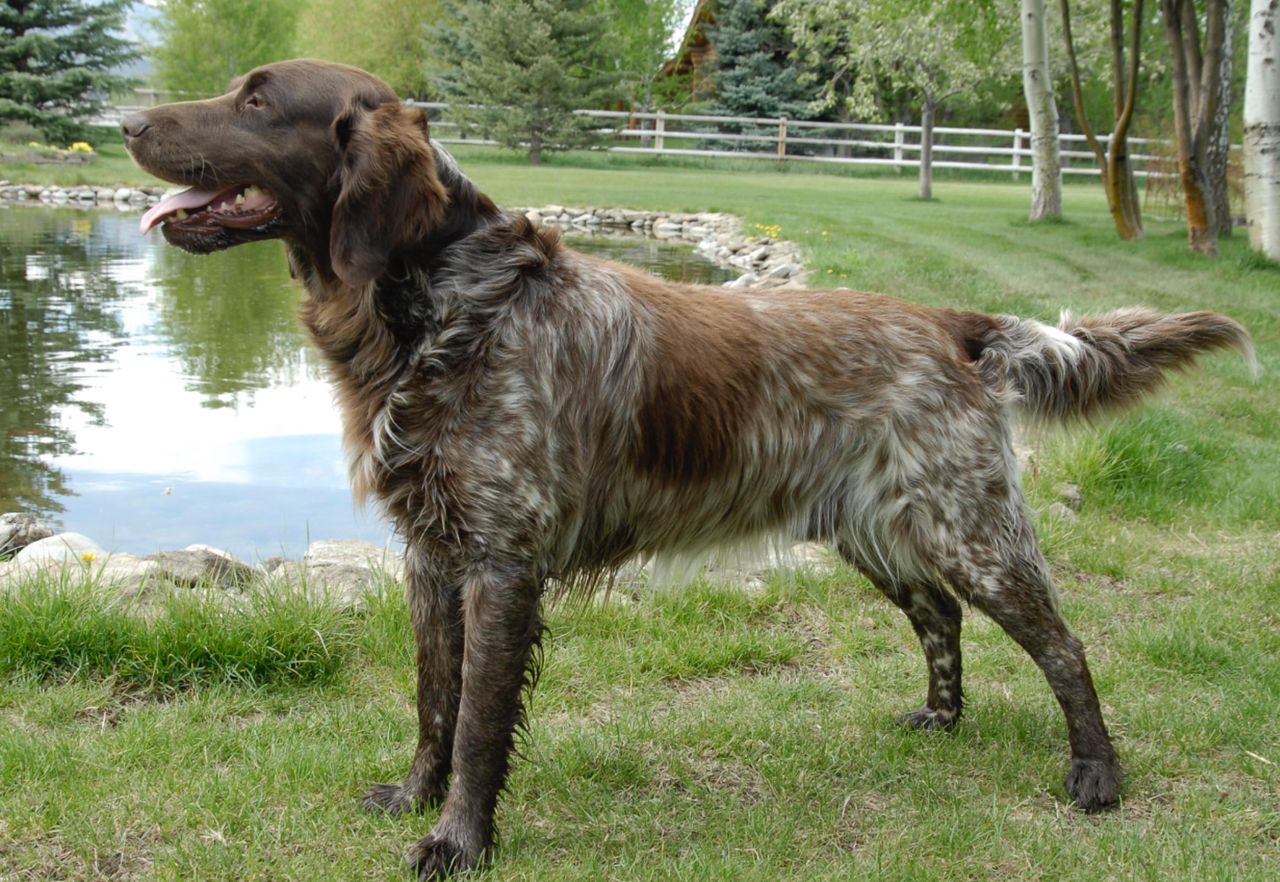
The Small Münsterländer is a medium-sized dog with a strong and harmonious build. Males stand between 52-56 cm at the withers, while females stand between 50-53 cm. They weigh between 17-26 kg, with males typically being larger. The breed has a distinctive coat that is medium length, glossy, dense, and straight or slightly wavy. The coloration features large patches of brown on a ticked or solid white background.
In movement, the Small Münsterländer is athletic, graceful, and far-reaching. The dog displays flowing outlines with a horizontally carried, well-flagged tail. The front legs are well feathered, and the hind legs have breeches. The overall appearance should be one of strength in the hindquarters, balance, and a distinguished, not too blocky head.
Temperament and Behavior
Small Münsterländers are known for their intelligence, eagerness to please, and loyalty. They are highly trainable and attentive but require gentle and patient training. They thrive with daily exercise and mental challenges, which can be provided through hunting or other challenging activities.
These dogs are not suited to life in a kennel due to their sociable nature and need to interact with people. They typically bond closely with one individual, often the hunter, but also enjoy the company of the rest of the family. When raised with other pets, such as cats, they can coexist happily, though they may enjoy a game of chase and point. They are not tolerant of unfamiliar small animals outdoors.
Lack of regular and sufficient exercise and mental challenge can lead to unwanted behavior in this highly intelligent and driven breed. Their temperament is generally happy and affectionate when in the home, transitioning to a focused and driven hunter-pointer-retriever when in the field.
Health and Genetics
The Small Münsterländer is a robustly healthy breed with rare issues, save for dry skin in colder climates and water in the ears after swimming. Responsible breeders and owners have a strong commitment to the breed's health, leading to selective breeding programs that prioritize OFA/Penn Hip, CERF, and temperament clear dogs. This focus has resulted in extremely low instances of congenital diseases and conditions.
Breed organizations, kennels, and owners work together to maintain high standards of health, requiring that breed programs be very selective and that dogs meet certain criteria to ensure a healthy and versatile breed. This dedication has helped to keep the Small Münsterländer a robust and healthy breed.
Training and Exercise
Training a Small Münsterländer requires gentle and patient methods, as they are highly intelligent and may challenge inconsistent or indecisive owners. Both voice and hand signals are effective, and the breed is known for looking back to check in with the hunter for silent signals at intervals when on hold or pointing.
Due to their high energy levels and strong prey drive, these dogs require at least an hour or more of exercise and mental stimulation each day. Hunting or similar activities that provide both physical exercise and mental challenge are ideal for the Small Münsterländer. They are also strong swimmers, making them well-suited to water-based hunting activities.
Living with a Small Münsterländer
They are not suited to life in a kennel and prefer to be part of the family. Their sociable nature means they need to live in a home where they can interact with people, and they often bond closely with one person, typically the hunter.
They can coexist happily with other pets, including cats, but their strong prey drive means they may chase small animals outdoors. Their moderate shedding means regular brushing can help manage this.
Given their hunting background, they are best suited to owners who appreciate their versatile nature and are willing to provide the necessary training, exercise, and attention they require.
Buying a Small Münsterländer
- Look for breeders who prioritize health and temperament in their breeding programs.
- Ensure the dog has been tested for OFA/Penn Hip and CERF to confirm its health.
- Check the dog's temperament and behavior to ensure it is well-suited to your lifestyle and home environment.
- Understand the breed's need for social interaction and a family-oriented living situation.
Responsible breeding, health care, and training should be considered when budgeting for this versatile and intelligent dog.
Frequently Asked Questions
What is the lifespan of the Small Münsterländer?
The average lifespan of the Small Münsterländer is about 12-14 years. Good nutrition and regular veterinary care support a healthy life.
What is the temperament of the Small Münsterländer?
The Small Münsterländer is known for: Intelligent, Eager to Please, Energetic, Loyal, Adaptable. Its energy level is high.
What size and weight is the Small Münsterländer?
It is a large dog, typically around 18-30 kg as an adult.
Is the Small Münsterländer easy to care for?
Reliable grooming and shedding ratings are not available. Routine brushing, ear and dental care, and nail trims are still recommended.
Is the Small Münsterländer good with kids and other pets?
Reliable child- and pet-friendliness ratings are not available. Supervised, gradual introductions are recommended.
How much exercise does the Small Münsterländer need?
With a high energy level, it needs walks, play or training matched to its stamina.
Small Münsterländer
Trait Scores
N/A