Origin and Recognition
The Shikoku, also known as Shikoku Inu or Kōchi Inu, originated from the Shikoku Island in Japan, where it was known for its exceptional hunting abilities. This breed is recognized as a Foundation Stock Service breed by the American Kennel Club (AKC) and is fully acknowledged by the United Kennel Club (UKC). Its name, Shikoku, is a direct reflection of its Japanese roots, with the breed's name shortened to fit this moniker.
Shikokus were widely used by Japanese hunters, known as Matagi, for hunting deer, boar, and other wildlife on Shikoku Island. The mountainous terrain of the island provided the perfect environment for these dogs to demonstrate their agility and strength, making them excellent hunting companions. Their roles in the hunt included the Hoeru-dome technique, where the dog barked to detain the prey, and the Kami-dome technique, where the dog bit to detain. The Hoeru-dome technique was favored for its safety implications for the dogs.
Haruo Isogai, a prominent Japanese cynologist and dog breeder, conducted a study in the 1930s that was instrumental in classifying Japanese dog breeds into large, medium, and small sizes. The Shikoku was classified as a medium-sized dog, belonging to the Shika-inus category. This classification was based on the breed's physical characteristics and its role as a hunting dog.
Physical Characteristics
The Shikoku stands at a standard height of 52 cm (20 in) for males and 49 cm (19 in) for females, with a tolerance of ±3 cm (1.2 in) to account for individual variations. This breed exhibits sexual dimorphism, with males being notably larger and more robust than females, which is a characteristic common among hunting dogs.
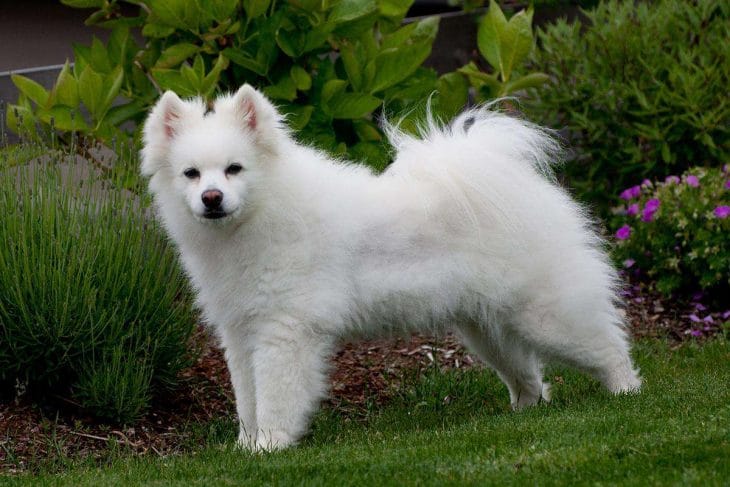
With a dense and harsh coat, erect ears, and a tail carried over the back, the Shikoku has a wolf-like appearance that is both striking and characteristic. The coat comes in three accepted colors: sesame, red sesame, and black sesame. A rare cream-colored coat known as pinto is not considered an acceptable color for the breed standard. This adherence to specific color standards ensures the breed's distinctiveness and purity.
These dogs have pale markings, known as urajiro, which are visible on the ventral portion of the dog. These markings follow a pattern similar to tan points on a black dog, including the eyebrow, side of the muzzle, cheeks, underside of the jaw, paws, inside of the legs, and under the tail. These markings add to the breed's distinctive appearance and are an important feature for breed identification.
Temperament and Behavior
The Shikoku is an alert, loyal, energetic, intelligent, courageous, and independent dog. They are enthusiastic hunters by nature and are known for their strong sense of loyalty towards their masters. This loyalty is reflected in their docility towards their owners, making them ideal pets for families and individuals who value a strong bond with their dogs.
Japanese hunters, known as Matagi, trained Shikokus in two main hunting styles: Hoeru-dome and Kami-dome. The Hoeru-dome technique, where the dog barks to detain the prey, is preferred due to its safety implications for the dogs. This training not only hones their hunting skills but also strengthens their bond with their human counterparts.
These dogs are spirited and have sharp senses, capable of becoming ardent hunters, vigilant watchdogs, or loving companions. Their hunting instincts can be channeled into various activities, such as obedience training or agility sports, which provide mental and physical stimulation that is beneficial for their well-being.
Health Considerations
The Shikoku has a predisposition to epilepsy, which is the only major health issue reported for this breed. Epilepsy can be managed with proper veterinary care, including medication and lifestyle adjustments, to ensure the dog's quality of life.
Other health conditions that have been seldom reported include canine focal metatarsal fistulation and neuronal ceroid lipofuscinocis, which are specific to the Shikoku region in Japan. These conditions are less common and require specialized veterinary care and management.
History and Varieties
The Shikoku is one of the six native Japanese breeds and has a long history as a large game hunting dog. The breed's history is intertwined with the cultural heritage of the region, where they were revered for their hunting prowess.
Following the reconstruction efforts in the aftermath of World War II, five distinct lines of the Shikoku were developed: the Eastern Iya and Kochi-Aki strains, as well as the Hata, Hongawa, and Awa western strains. The Hongawa region is particularly significant as it maintains the purest bred dogs due to the area's inaccessibility, which limited crossbreeding and preserved the breed's genetic purity.
The modern Shikoku is primarily descended from the Hongawa and Hata lines, with the Awa line essentially disappearing due to the hardships of World War II and a lack of quality specimens due to frequent crossbreeding with outside dogs. This history of the Shikoku reflects the resilience and adaptability of the breed, as well as the dedication of breeders to maintaining its distinct characteristics.
Buying and Owning a Shikoku
Given their history as hunting dogs, Shikokus require proper training and socialization to ensure they are well-behaved and adapt well to different environments.
These dogs have a moderate shedding coat, which means that frequent brushing can help manage hair in the home and maintain the dog's coat health.
- Proper training and socialization
- Access to veterinary care
Frequently Asked Questions
What is the lifespan of the Shikoku?
The average lifespan of the Shikoku is about 10-15 years. Good nutrition and regular veterinary care support a healthy life.
What is the temperament of the Shikoku?
The Shikoku is known for: Alert, Loyal, Energetic, Intelligent, Courageous, Independent. Its energy level is high.
What size and weight is the Shikoku?
It is a large dog, typically around Male: 16-25; Female: 16-20 kg as an adult.
Is the Shikoku easy to care for?
Reliable grooming and shedding ratings are not available. Routine brushing, ear and dental care, and nail trims are still recommended.
Is the Shikoku good with kids and other pets?
Reliable child- and pet-friendliness ratings are not available. Supervised, gradual introductions are recommended.
How much exercise does the Shikoku need?
With a high energy level, it needs walks, play or training matched to its stamina.
Shikoku
Trait Scores
N/A