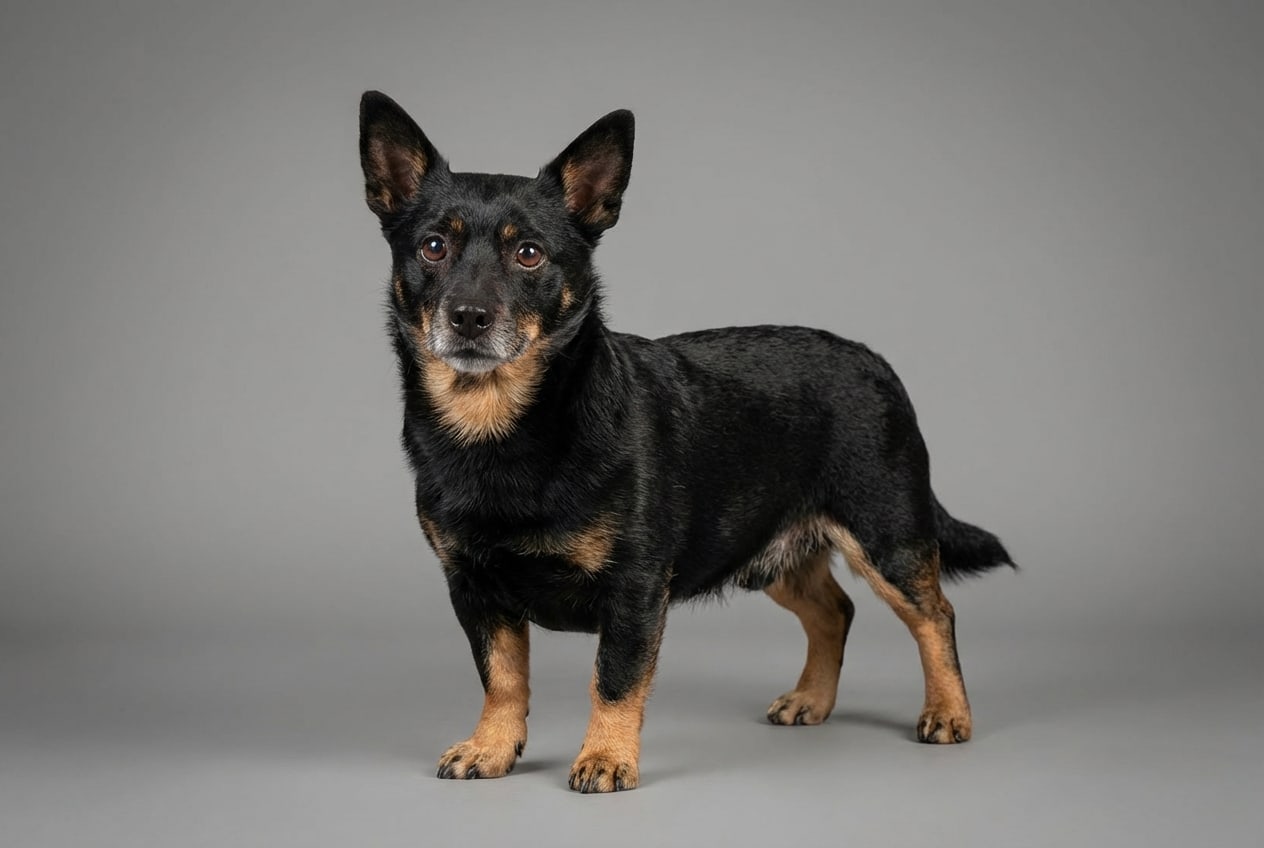
Origin and History
The Rottweiler, originating from Rottweil, Germany, has a rich history that dates back to Roman times. Initially used as herder and driving dogs, these dogs accompanied the Roman legions over the Alps, protecting humans and herding cattle. Over time, they evolved into a breed known for their driving and guarding abilities, specifically for herding cattle and defending their masters' property. The breed acquired its name from the old free city of Rottweil and was known as the "Rottweil butcher's dog," reflecting their role in herding livestock and pulling carts laden with meat to market.
The Deutscher Rottweiler-Klub, the first Rottweiler club in Germany, was founded in 1914, followed by the Süddeutscher Rottweiler-Klub in 1915. These clubs aimed to produce working dogs and did not emphasize the morphology of the Rottweiler. The Allgemeiner Deutscher Rottweiler Klub (ADRK) was formed in 1921, recognized worldwide as the home club of the Rottweiler. The Rottweiler was officially recognized by the American Kennel Club in 1931 and reached its peak popularity in the mid-1990s as the most registered dog by the AKC.
Historically, the tail of the Rottweiler was traditionally docked at the first or second joint, but docking is now banned in most countries. In 2018, the Fédération Cynologique Internationale (FCI) amended the standard to classify the Natural Bob Tail as a "Disqualifying Fault," reflecting changes in breed standards over time.
Breed Characteristics
The Rottweiler is a large, robust, and muscular working dog, known for its black coat and tan markings. They are recognized for their great strength, protective instincts, and confident temperament, making them loyal and loving guardians. The breed has a life span of 9-10 years, with males weighing between 43-61 kg and standing 61-69 cm at the withers, while females weigh between 36-45 kg and stand 56-64 cm at the withers.
According to the FCI Standard, Rottweiler breeders aim for a dog of abundant strength, black coated with clearly defined rich tan markings, and a powerful appearance that does not lack nobility. The breed is exceptionally well-suited to be a companion, service, rescue, and working dog. The Rottweiler's head is of medium length, with a moderately arched forehead line and a well-developed occipital bone. The nose is well-developed, broad, with relatively large nostrils and always black. The lips are black and close fitting, and the gums should be black or as dark as possible.
The Rottweiler's eyes are of medium size, almond-shaped, and dark brown in color. The ears are medium-sized, pendant, triangular, wide apart, and set high on the head. The tail is strong, level in extension of the upper line, and can be carried upward in a light curve when excited or moving. The coat consists of an outer coat and an undercoat, with the outer coat being medium-length, coarse, dense, and flat. The color is always black with clearly defined markings of a rich tan on the cheeks, muzzle, throat, chest, and legs.
Temperament and Behavior
The Rottweiler is known for its confident, loyal, courageous, calm, protective, and affectionate temperament. A study published in 2008 found that male Rottweilers have higher confidence, sharpness, and defense and play drives than females. While Rottweilers are average in aggressiveness towards owners and other dogs, they tend to be more aggressive toward strangers, a trait correlated with their watchdog and territorial instincts. Joan H. Walker, in the Rottweiler Handbook, emphasizes the Rottweiler's territorial nature, indicating that owners must regularly work with the dog to control its territorial aggressiveness.
The Rottweiler has a natural gathering style with a strong desire to control. They generally show a loose eye and have a great amount of force while working well off the stock. The breed often carries the head on an even plane with the back or carries the head up with the neck and shoulders lowered. The Rottweiler has a reasonably good natural balance, force-barks when necessary, and uses a very intimidating charge when working cattle. The breed is also exceptionally suited for and commonly used in many dog sports, including Agility and Schutzhund.
Health Considerations
The Rottweiler is prone to several health conditions. A 2022 study in England found the average life expectancy of the Rottweiler to be 8 years, lower than the average of 12 years for purebreeds. However, a 2024 UK study found a life expectancy of 10.6 years for the breed, compared to an average of 12.7 for purebreeds and 12 for crossbreeds. A 2024 Italian study found a life expectancy of 9 years for the breed, compared to 10 years overall. The most common cause of death in the Rottweiler is cancer, with more than 45% of deaths attributed to cancers.
Other health conditions include acral lick dermatitis, calcinosis cutis, lupoid onychodystrophy, malignant histiocytic sarcoma, systemic histiocytosis, vasculopathy, and vitiligo. Follicular lipidosis is a skin condition found in red point dogs such as the Rottweiler. The Rottweiler is also predisposed to canine hip dysplasia, with 10.53% of dogs having the condition compared to 3.52% overall. The breed also has the second highest prevalence of cranial cruciate ligament deficiency (CCLD) with 8.29% of dogs having the condition compared to an overall rate of 2.55%. Another study found the Rottweiler to be predisposed to gastric dilatation volvulus, although another study did not find a predisposition.
Coat and Grooming
The Rottweiler's coat consists of an outer coat and an undercoat, with the outer coat being medium-length, coarse, dense, and flat. The undercoat should be present on the neck and thighs, and Rottweilers living in hot climates may have acclimated and may be missing the undercoat. The coat is low maintenance but experiences heavy shedding before the seasons (females) or seasonally (males). According to the American Kennel Club (AKC) breed standards, a Rottweiler's coat is short and straight. A coat that is long or wavy is considered a flaw to the AKC.
The color and markings of a Rottweiler are very distinctive, with the dog always being black with clearly defined markings of a rich tan on the cheeks, muzzle, throat, chest, and legs, as well as over both eyes and under the base of the tail. The AKC calls for mahogany or rust-colored markings that do not take up more than ten percent of the dog's body color. All Rottweilers standard to AKC specifications have one mahogany dot above each eye on the inner brow ridge, on the cheeks, one strip on each side of the snout, and two downward-facing triangular marks on the chest.
Buying a Rottweiler
Here is a checklist to help potential owners:
- Research the breed's history and temperament to ensure it aligns with your lifestyle and expectations.
- Look for a reputable breeder who can provide health clearances and ensure the dog has been well socialized.
- Be prepared for the dog's size and strength, as well as its grooming and exercise needs.
- Consider the long-term commitment of owning a Rottweiler, as they have an average life span of 9-10 years.
Understanding the Rottweiler's history, characteristics, and needs can help potential owners make an informed decision and provide a loving and fulfilling home for this remarkable breed.
Frequently Asked Questions
What is the lifespan of the Rottweiler?
The average lifespan of the Rottweiler is about 9-10 years. Good nutrition and regular veterinary care support a healthy life.
What is the temperament of the Rottweiler?
The Rottweiler is known for: Confident, Loyal, Courageous, Calm, Protective, Affectionate. Its energy level is low.
What size and weight is the Rottweiler?
It is a large dog, typically around Male: 43-61; Female: 36-45 kg as an adult.
Is the Rottweiler easy to care for?
Reliable grooming and shedding ratings are not available. Routine brushing, ear and dental care, and nail trims are still recommended.
Is the Rottweiler good with kids and other pets?
Reliable child- and pet-friendliness ratings are not available. Supervised, gradual introductions are recommended.
How much exercise does the Rottweiler need?
With a low energy level, it needs walks, play or training matched to its stamina.
Rottweiler
Trait Scores
N/A



