Origin and Historical Significance
The Picardy Spaniel, a breed with French origins, traces its roots back to the region of Picardy in France. It is one of the oldest continental spaniel breeds, believed to have descended from the Chien d'Oysel, a dog described by Gaston Phoebus in the 14th century. This breed was favored by the French nobility and became a popular hunting companion due to its weather-resistant coat, which allowed it to hunt in diverse conditions and terrains. Following the French Revolution in 1789, hunting was no longer exclusive to the nobility, and the Picardy Spaniel's popularity spread throughout France, with a significant concentration in the north-west region, particularly in the departments of Somme and Aisne.
However, the early 20th century saw a decline in its popularity due to the introduction of English hunting breeds, such as the English Springer Spaniel and the English Cocker Spaniel, which were more popular and easier to breed. The British influence also led to the creation of the Blue Picardy Spaniel through the infusion of English Setter blood into the local spaniel population in the 1920s. Despite this, the Picardy Spaniel maintained its recognition and is now recognized by various kennel clubs and associations, including the North American Kennel Club (since 1936), the American Rare Breed Association, the United Kennel Club, and the Fédération Cynologique Internationale (FCI). It is also recognized by the Continental Kennel Club, although it is not recognized by the Canadian Kennel Club.
The breed's history is rich with contributions from notable artists such as Alexandre-François Desportes (1661–1743) and Jean-Baptiste Oudry (1686–1755), whose works feature the Picardy Spaniel in hunting scenes. The breed's first club, the Epagneul Picard Club, was formed in 1921 in Abbeville, marking a significant milestone in its recognition and preservation. The club aimed to promote the breed and ensure its survival, which was under threat due to the decline in hunting and the introduction of new breeds.
Physical Description
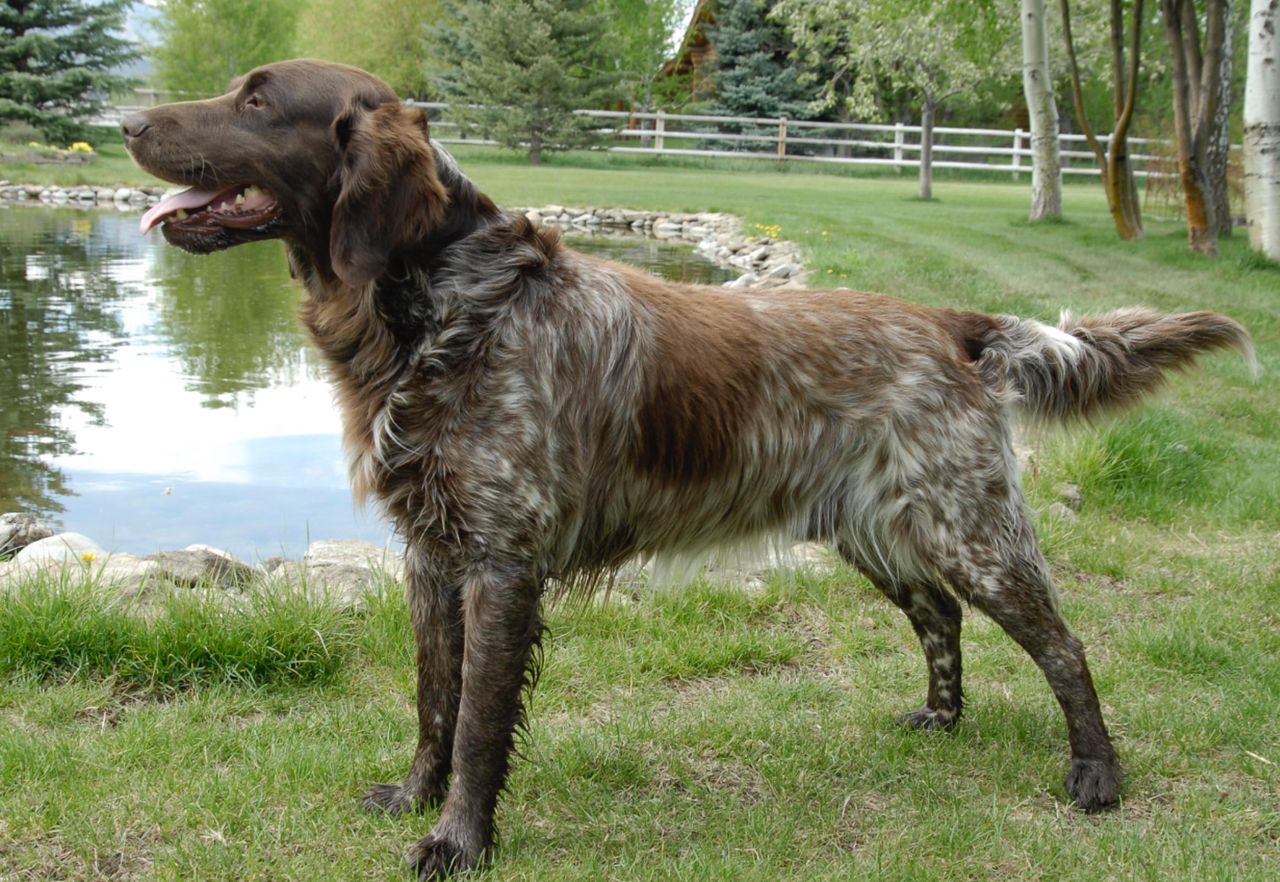
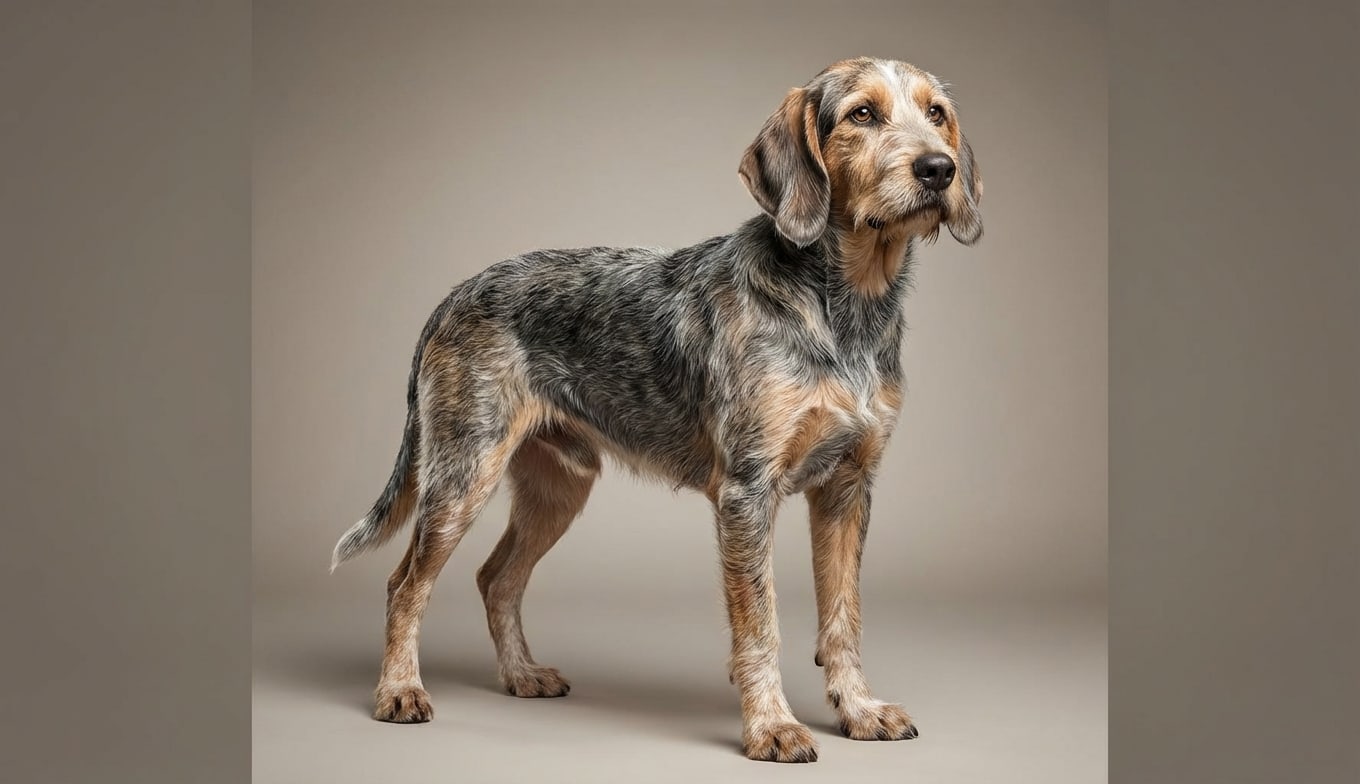
The Picardy Spaniel is a medium-sized, strongly-built dog, with an elegant gundog build. It measures between 56 and 61 cm (22 to 24 inches) at the withers and typically weighs between 20 and 25 kilograms (44 to 55 pounds). This breed is slightly smaller than an English Setter but larger than most of its spaniel cousins, such as the Drentse Patrijshond and the Large Münsterländer. The Picardy Spaniel's body is robust and well-proportioned, with a deep chest and a level topline.
The Picardy Spaniel has a muscular body, an oval-shaped head with a long muzzle, and long ears that hang low, reaching down to the cheeks. Its distinctive coat is grey-mottled brown, with feathering and can vary in color from chocolate, chestnut brown, and white. The coat may feature sandy-colored markings on the head and white or grey spots on the legs. The hair is abundant and slightly wavy, making it suitable for working in dense cover and water.
Temperament and Personality
The Picardy Spaniel is known for its gentle and docile temperament. This breed is affectionate and bonds well with children and their owners, displaying a sociable nature. It is described as having a good character and a laid-back attitude, making it relatively easy to train. Its adaptability is moderate, as it is content with a small amount of space, which makes it suitable for life in the city as well as in open spaces. This adaptability is due in part to its hunting background, which required the breed to be versatile and able to work in various environments.
This breed excels in hunting, particularly in wooded areas for pheasants and in swamps for snipes. It can also hunt ducks, hares, and rabbits, and is adept at retrieving, should the need arise. Its calm adaptability and natural hunting ability make it a versatile and reliable hunting companion.
Health and Lifespan
However, like many breeds with pendulous ears, it can be prone to ear infections. These infections are a common concern for owners and require regular monitoring and care, including keeping the ears clean and dry and avoiding excessive moisture.
Overfeeding can also be a concern for Picardy Spaniels, as it can lead to overweight issues. Owners should monitor their dog's weight and consult with a veterinarian about appropriate feeding practices.
Breeder Purpose and Recognition
The Picardy Spaniel was originally bred for sporting purposes, particularly as a gundog. Its natural hunting abilities and adaptability make it well-suited for hunting in various conditions and terrains, from dense forests to open fields and wetlands. The breed's intelligence and trainability were also important factors in its selection for hunting work. Today, the breed is recognized by several kennel clubs and associations, including the North American Kennel Club, American Rare Breed Association, United Kennel Club, and the Fédération Cynologique Internationale. It is also recognized by the Continental Kennel Club, although it is not recognized by the Canadian Kennel Club.
The breed's recognition by these organizations ensures that standards are maintained and the breed's characteristics are preserved for future generations. Breeder organizations also work to promote the breed and educate potential owners about the responsibilities of dog ownership.
Buyer's Checklist
When considering a Picardy Spaniel, potential owners should consider the following:
- Space requirements: Ensure you have a suitable living environment, whether in a city or an open space. The Picardy Spaniel is adaptable but does best with access to a secure outdoor area for exercise and play.
- Lifestyle compatibility: Assess if your lifestyle aligns with the breed's energy levels and hunting instincts.
- Training: Be prepared for training, as this breed is intelligent and responds well to positive reinforcement.
- Pay attention to the breed's potential for ear infections and monitor for signs of obesity.
By considering these factors, potential owners can ensure they are well-prepared to provide a loving and suitable home for a Picardy Spaniel.
Frequently Asked Questions
What is the lifespan of the Picardy Spaniel?
The average lifespan of the Picardy Spaniel is about 12-14 years. Good nutrition and regular veterinary care support a healthy life.
What is the temperament of the Picardy Spaniel?
The Picardy Spaniel is known for: Gentle, Calm, Intelligent, Docile, Devoted, Adaptable. Its energy level is low.
What size and weight is the Picardy Spaniel?
It is a large dog, typically around 20-25 kg as an adult.
Is the Picardy Spaniel easy to care for?
Reliable grooming and shedding ratings are not available. Routine brushing, ear and dental care, and nail trims are still recommended.
Is the Picardy Spaniel good with kids and other pets?
Reliable child- and pet-friendliness ratings are not available. Supervised, gradual introductions are recommended.
How much exercise does the Picardy Spaniel need?
With a low energy level, it needs walks, play or training matched to its stamina.
Picardy Spaniel
Trait Scores
N/A