Origin and Ancestry
The Otterhound hails from England and is a scent hound breed, recognized by the Kennel Club as a Vulnerable Native Breed, with approximately 600 animals worldwide. The breed's ancestry can be traced back to the first half of the 19th century in the North-West of England. Notable contributions to the breed include outcrossing with French Griffons, including a one-eighth Wolf cross/Griffon Vendéen, and later crossing with the Griffon Nivernais. The Otterhound's development was greatly influenced by these breeds, which brought elements of strength, stamina, and scenting ability.
The Otterhound was specifically bred for hunting otters, a practice that dates back to the early medieval period. References to otter hunting were found as early as 1360, and the breed became distinct as a hunting dog by the 18th century. The first recorded Otterhounds resembling the current breed appeared in the first half of the 19th century, particularly in the Hawkstone Otter Hunt and the Otterhounds of Squire Lomax.
The breed's purpose as a hound is evident in its physical attributes, such as its webbed feet, which are well-suited for swimming, and its dense, waterproof double coat, which aids in tracking otters through wet environments. The Otterhound's intelligence, stamina, and scenting ability were enhanced by selective breeding to meet the demands of otter hunting, requiring qualities such as "a Bulldog's courage, a Newfoundland's strength in water, a Pointer's nose, a Retriever's sagacity, the stamina of a Foxhound, the patience of a Beagle, and the intelligence of a Collie. "
Appearance and Characteristics
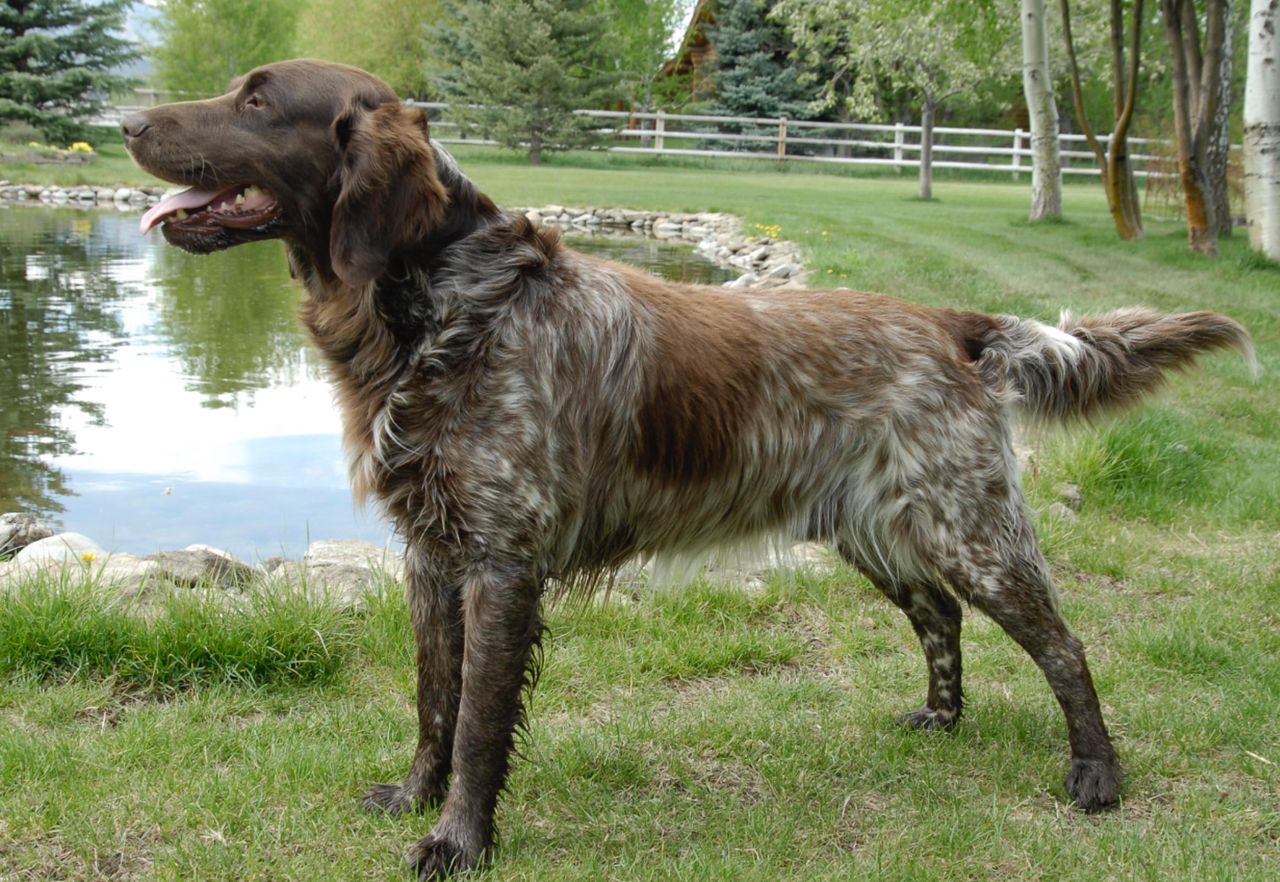
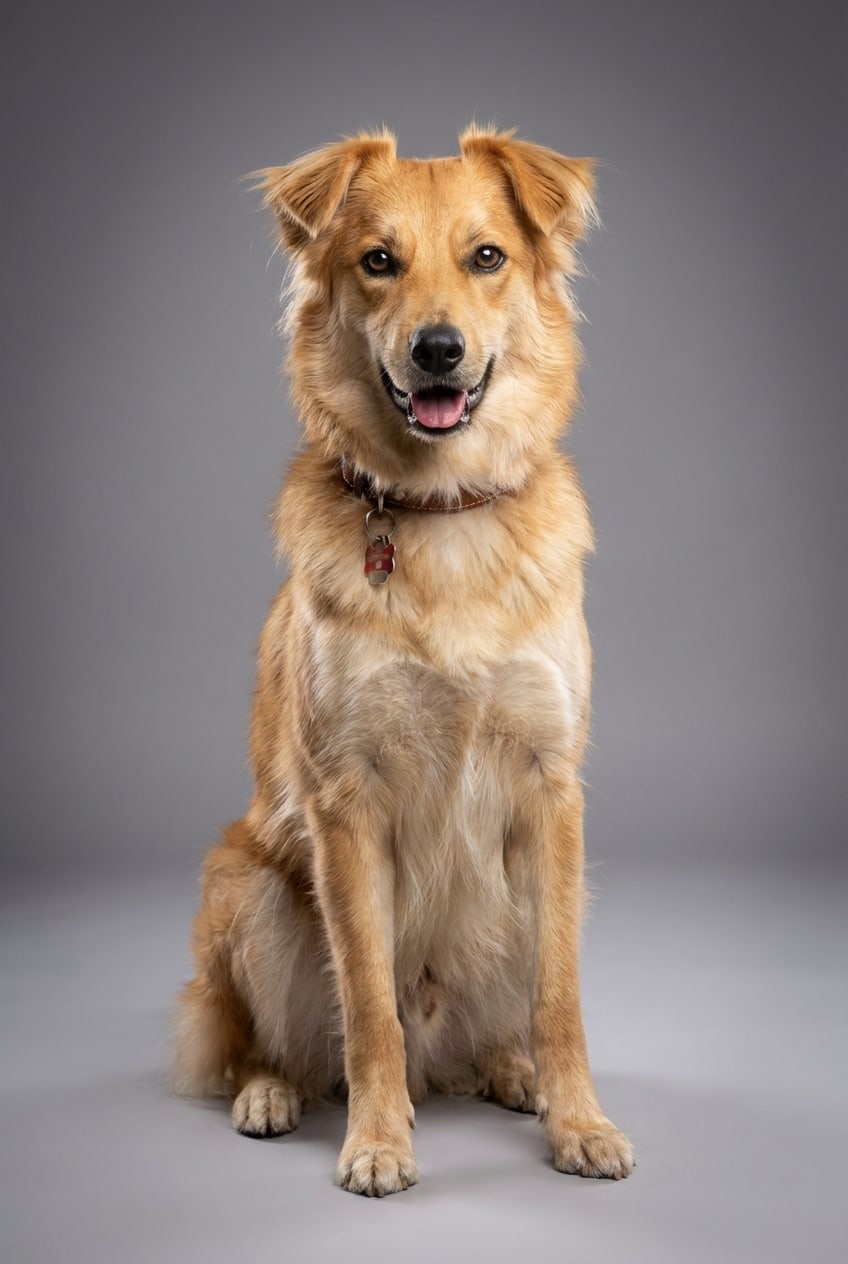
The Otterhound is a large dog with a rough, straight-limbed body and a shaggy coat that gives it a distinctive beard or moustache. Its head is deep but not wide, and its nose is wide, perfect for scenting. The eyes are deep-set with only a slight haw showing, and the ears are long and pendulous, rolling inwards to create a 'drape' appearance. The neck is long, and a slight dewlap is allowed. The forelegs are straight from the elbow to the ground, with slightly bowed pasterns, while the hind legs are well-muscled with heavily muscled thighs. In a normal stance, the hind legs from the hock to the ground are perpendicular.
Feet are large, round, and thickly padded, and the tail is thick at the base and never curls over the back. The coat is 4–8 cm (1.6–3.1 in) in length, dense, rough, and waterproof, appearing broken. The coat comes in various colors including whole coloured, grizzle, sandy, red, wheaten, and blue, with white markings permissible in all and additional lemon, blue, or badger pied markings allowed. The shoulder height for males ranges from 66-74 cm (27-29 inches), and for females, it ranges from 58-69 cm (24-27 inches), with males generally weighing between 43-54 kg (95-120 lbs) and females between 34-45 kg (75-99 lbs).
Temperament and Personality
The Otterhound is known for its boisterous and amiable temperament, making it a friendly and gentle companion. It is energetic and independent, which requires a home that can accommodate its high energy levels.
The breed's adaptability is listed as None, indicating that it may not be the easiest to adapt to new environments or lifestyles. Its affection level is also listed as None, suggesting that the Otterhound may not be overly demonstrative in terms of affection. However, its child-friendliness and dog-friendliness are not specified, but considering its temperament, it is likely to be good with other dogs and children. Its social needs and stranger-friendliness are also not specified, but its friendly nature suggests it would enjoy the company of people and may be friendly towards strangers.
Health Considerations
A survey of breed club members in the UK found a life expectancy of around 10.21 years, but 7.4% of deaths were attributable to gastric dilatation volvulus (GDV), a condition where the stomach twists, leading to bloating and pain. Approximately 9% of Otterhounds are predisposed to this condition, making it a significant concern for owners.
Other health concerns that may affect Otterhounds include hip dysplasia, which can lead to mobility issues, and skin conditions such as otitis externa (ear infections) due to the breed's dense coat.
Hunting Heritage and Modern Role
Once primarily used for hunting otters, the Otterhound's role has evolved as the sport of otter hunting has declined. In 1978, the otter was placed on the list of protected species in Britain, effectively ending otter hunting and leading to a decrease in the number of Otterhounds. Many original otterhound packs ceased to exist, but some, like the Pembroke and Carmarthenshire Minkhounds, have continued with a pure otterhound pack. Some hunts switched to hunting other animals, such as mink or coypu, but the decline in the breed's numbers remained a concern.
Today, Otterhounds are primarily companion animals. Their hunting instincts are still present, and they may enjoy activities such as tracking or trailing. However, their role as working dogs has diminished, and their primary role is as a loyal and loving family pet. Their coat and physical characteristics, such as their webbed feet and waterproof coat, are still reminiscent of their original purpose as hunting dogs.
Conservation Status and Challenges
The Otterhound is considered the most endangered native breed in Britain, with only 41 new registrations in 2016. Its endangered status is due in part to its low numbers, which have never been numerous, even at the height of otter hunting's popularity in the early 20th century. The breed is on the list of Vulnerable Native Breeds as identified by the UK Kennel Club, and efforts are being made to save the breed.
The breed's low registration numbers and endangered status highlight the challenges faced by rare and native breeds. The Otterhound's future depends on continued efforts to preserve its heritage, promote responsible breeding, and educate potential owners about the breed's unique characteristics and needs.
Buying an Otterhound: A Practical Checklist
- Research the breed thoroughly to understand its temperament, care requirements, and health considerations.
- Look for reputable breeders who prioritize the health and well-being of their dogs.
- Ensure that the Otterhound is a good fit for your lifestyle, considering its energy levels, exercise needs, and adaptability.
- Plan for the financial commitment associated with owning an Otterhound, including food, grooming, and other care expenses.
Frequently Asked Questions
What is the lifespan of the Otterhound?
The average lifespan of the Otterhound is about 10-13 years. Good nutrition and regular veterinary care support a healthy life.
What is the temperament of the Otterhound?
The Otterhound is known for: Friendly, Gentle, Independent, Energetic, Amiable. Its energy level is high.
What size and weight is the Otterhound?
It is a large dog, typically around Male: 43-54; Female: 34-45 kg as an adult.
Is the Otterhound easy to care for?
Reliable grooming and shedding ratings are not available. Routine brushing, ear and dental care, and nail trims are still recommended.
Is the Otterhound good with kids and other pets?
Reliable child- and pet-friendliness ratings are not available. Supervised, gradual introductions are recommended.
How much exercise does the Otterhound need?
With a high energy level, it needs walks, play or training matched to its stamina.
Otterhound
Trait Scores
N/A