Origins and Development
The Norwich Terrier originated in East Anglia, England, where it was bred for hunting small rodents. Its development can be traced back to the 19th century, with two extinct breeds, the Cantab terrier and the Trumpington terrier, often suggested as ancestors. The Cantab terrier was developed by Charles Lawrence in the 1880s, crossing Irish Terriers, Yorkshire Terriers, and East Anglian red terriers. The Trumpington terrier, on the other hand, gained popularity in Norwich and Leicestershire before its popularity waned with the move of its breeder, E. Jodrell Hopkins, to Newmarket.
Frank Jones, who worked as the whip in the Norwich staghounds, is credited with popularizing the breed. He brought terriers sired by Rags, a dog he had bred, into Market Harborough, naming them after the town. Jones preferred erect ears and dogs with red or black and tan coats without white markings. His efforts contributed to the breed's recognition by the Kennel Club in the early 20th century.
The Norwich Terrier was first recognized by the Kennel Club in 1932, with the formation of the first breed club by a group of 13 owners. The breed standard was established with debates over ear types, leading to the recognition of both prick and drop ears. The drop-eared variety became the Norfolk Terrier in 1964, with separate recognition by the American Kennel Club and other kennel clubs following suit.
Physical Description
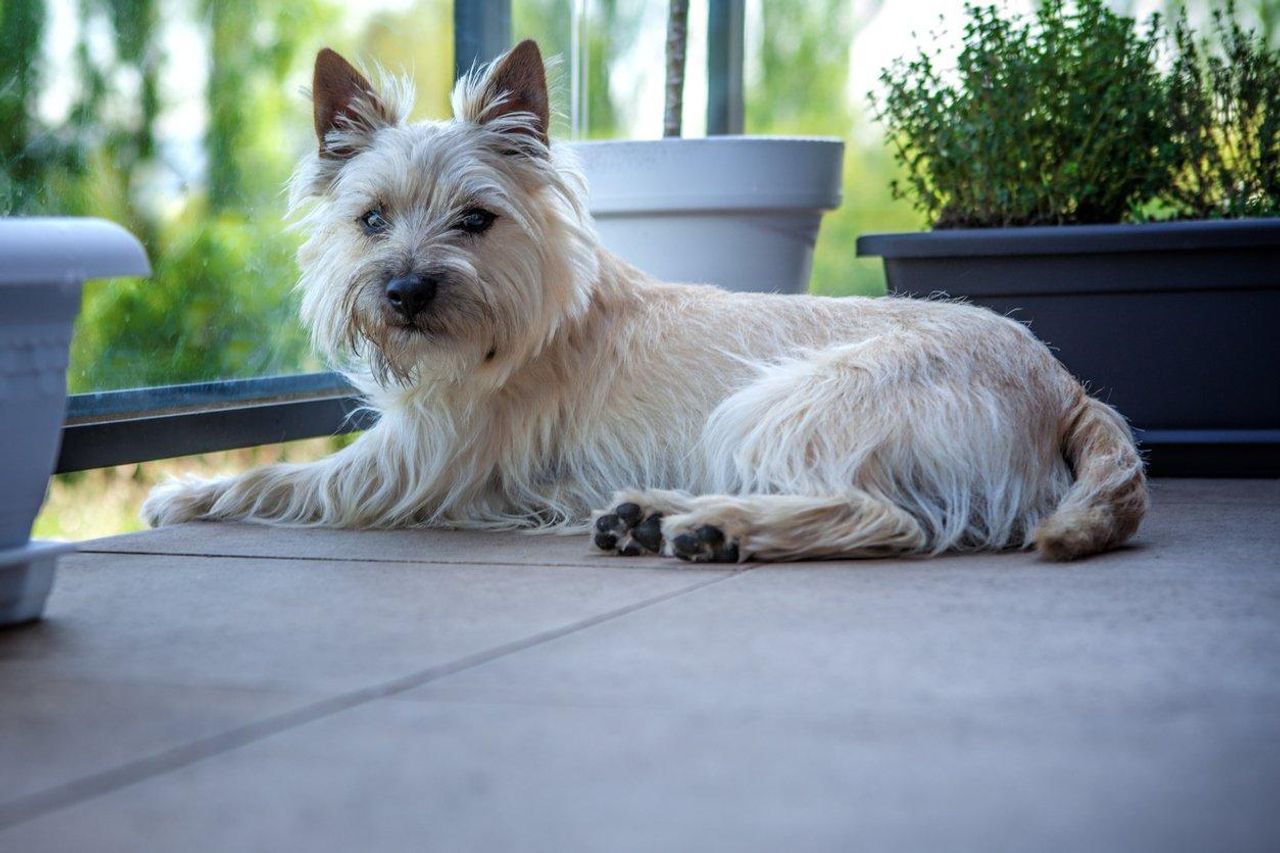
The Norwich Terrier is a small, sturdy, and compact terrier, weighing between 5.4 kg (12 pounds) and not exceeding 10 inches (25 cm) at the withers. The breed is known for its distinctive prick ears and a wiry double coat, which comes in various shades of red, tan, wheaten, black and tan, and grizzle. The skull is broad and slightly rounded with a well-defined stop, and the eyes are small and oval-shaped. The ears, usually erect, can lay back when the dog is calm and are set apart with good width between them. The back is short, with good depth and a well-sprung loin, and the legs are short with elbows more proximal than distal. The tail is of moderate length when not docked, thick at the base, and tapers near the top, carried jauntily but not excessively gay.
The American Kennel Club standard specifies a 'medium docked' tail, with enough of the tail left on to be held or grabbed. A study in 2019 identified a mutated variant of the gene ADAMTS3 in some Norwich Terriers suffering from respiratory tract disorders, highlighting the breed's susceptibility to certain health conditions.
Temperament and Behavior
Temperamentally, the Norwich Terrier is alert, energetic, affectionate, courageous, and outgoing. The breed is known for its hardy constitution and fearless but affectionate nature. Consistent and early training can help manage the occasional barking and digging behaviors reflective of their terrier heritage. The breed's temperament makes it suitable for families, but it may not be ideal for those looking for a laid-back companion.
Health Considerations
Health issues specific to the Norwich Terrier include an upper respiratory obstructive syndrome, which differs from brachycephalic obstructive airway syndrome, and a predisposition to portosystemic shunt, a condition affecting blood flow in the liver. A study found the Norwich Terrier to be the second most predisposed breed to portosystemic shunt, with 7.41% of dogs being affected. The breed also has a higher prevalence of cataracts, with a rate of 4.02% compared to 1.61% in mixed-breed dogs.
Respiratory issues are a concern for some Norwich Terriers, with 11 out of 12 dogs in one study showing abnormalities of the laryngeal opening and other respiratory tract disorders. Genetic testing is being employed by breeders to minimize the risk of passing down the mutated variant of the ADAMTS3 gene.
The breed is also susceptible to caesarean section during labor, with more than half of all bitches requiring this procedure, and a higher than average rate of stillbirths. This highlights the importance of careful breeding practices and veterinary care for the Norwich Terrier.
Population and Vulnerability
The Norwich Terrier is considered a rare breed, with both Norfolk and Norwich terriers appearing on the Kennel Club's list of most vulnerable dog breeds in 2018. The Norwich breed has fewer than 300 births per year, emphasizing the need for responsible breeding and awareness of the breed's specific needs.
The breed's historical development and its role as a working terrier have shaped its physical and temperamental characteristics. Its small size, energetic nature, and affectionate disposition make it a popular choice for families and individuals looking for a lively and loving companion.
Living with a Norwich Terrier
Living with a Norwich Terrier requires an understanding of the breed's specific needs and potential health issues. Here is a checklist to consider when welcoming a Norwich Terrier into your home:
- Genetic testing for respiratory and liver-related conditions
- Consistent training and socialization to manage barking and digging behaviors
- Patience and understanding, especially during the puppy stage
The cost of owning a Norwich Terrier should also be considered, including the initial purchase price, veterinary care, grooming, and other related expenses. Responsible breeders and rescue organizations are good resources for finding a healthy and well-socialized Norwich Terrier.
Breed Standards and Registry
The American Kennel Club (AKC) recognizes the Norwich Terrier as a member of the Terrier Group. The breed standard, which outlines the ideal characteristics of the Norwich Terrier, includes specific details about the dog's appearance, movement, and temperament. The standard has evolved over time, reflecting changes in breed preferences and health concerns.
The Norwich Terrier registry history is marked by the separation of the breed into the Norwich Terrier and the Norfolk Terrier in 1964 due to differences in ear type. The AKC followed suit, recognizing both breeds separately. The registry process for Norwich Terriers involves maintaining accurate records of the dog's lineage, health clearances, and conformation to the breed standard.
Frequently Asked Questions
What is the lifespan of the Norwich Terrier?
The average lifespan of the Norwich Terrier is about 12-15 years. Good nutrition and regular veterinary care support a healthy life.
What is the temperament of the Norwich Terrier?
The Norwich Terrier is known for: Alert, Energetic, Affectionate, Courageous, Outgoing. Its energy level is high.
What size and weight is the Norwich Terrier?
It is a medium-sized dog, typically around 5-5.5 kg as an adult.
Is the Norwich Terrier easy to care for?
Reliable grooming and shedding ratings are not available. Routine brushing, ear and dental care, and nail trims are still recommended.
Is the Norwich Terrier good with kids and other pets?
Reliable child- and pet-friendliness ratings are not available. Supervised, gradual introductions are recommended.
How much exercise does the Norwich Terrier need?
With a high energy level, it needs walks, play or training matched to its stamina.
Norwich Terrier
Trait Scores
N/A