Origin and Historical Background
The Alopekis, an ancient breed with roots traced back to Greece and the Balkan peninsula, has a history that spans over 3,000 years. This primitive landrace dog has its origins before the Mycenaean era, around 1750 B. C. The earliest depiction of an Alopekis, found in an engraved pithos from Thessaly, dates back to the Neolithic period, placing the breed in the same historical period and geographical area as the Pelasgians.
Historical Greek texts, including those by Aristotle and Xenophon, mention the Alopekis, describing it as a versatile dog used for hunting, guarding, and as a watchdog. The breed's role as a hunter is well-documented; in the 4th century B. C. , the Greek philosopher Plutarch noted the Alopekis' proficiency in tracking and flushing out game. Despite its long history, the Alopekis remains an unrecognized breed by the Fédération Cynologique Internationale (FCI) and is currently listed as critically endangered.
Populations of the Alopekis have been drastically reduced due to mass sterilization campaigns aimed at reducing stray dog populations, which inadvertently targeted the breed. Efforts are being made by Greek native groups to preserve this ancient breed, with organizations such as the Greek Dog Breeding and Protection Association actively involved in these conservation efforts.
Physical Description
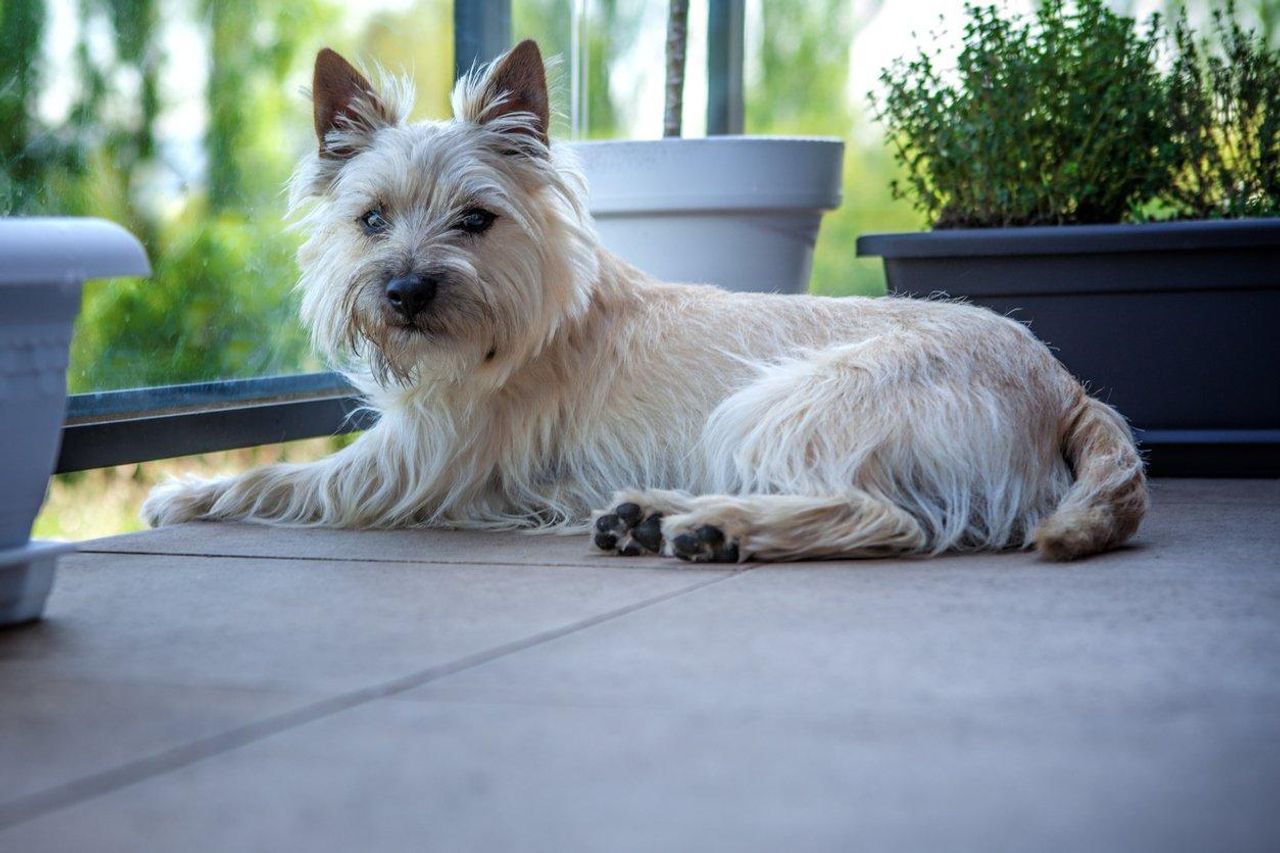
Alopekis are small dogs with fox-like features, typically standing at an average height of 25–30 centimeters (9.8–11.8 inches) at the withers and weighing between 4–7 kilograms (8.8–15.4 pounds). Their bodies are longer than their height, with a robust and symmetrical build. A notable characteristic is their wedge-shaped head, which contrasts with their round eyes and broad chest. Their erect ears are often triangular, and they have a sickle-shaped tail that can vary in length, but it never curves up to the back.
The breed features a double coat that can be short and smooth, semi-long and tufted, or semi-long and wiry. The coat is never thin, sparse, or silky, as it is a robust breed designed for outdoor living. Alopekis are very clean dogs, tending to keep themselves well-groomed naturally. The coat can vary in color from white, black, brown, and bicolor combinations to brindle, and while albinism is not accepted, dilute colors may occur.
The coat's maintenance requires regular brushing to prevent mats and to keep the coat in good condition. A proper grooming routine can also help to prevent skin issues and promote the health of the Alopekis's coat.
Temperament and Behavior
Alopekis are intelligent and alert dogs, known for their loyalty and adaptability. They are typically very friendly towards people and protective of their owners and other family members. Despite their small size, Alopekis can be excellent hunters, especially when it comes to dealing with pests like rats. Their natural instincts are well-preserved, as seen in the 19th century when they were employed in rat control on the island of Lesbos.
Their versatility makes them suitable for both urban and rural homes, and they adapt well to various living situations. Alopekis can be good companions for people of all ages, including children, due to their gentle nature and playful demeanor.
As a breed, Alopekis are known for their obedience, quiet nature, and loyalty. They are alert enough to be effective as watchdogs, displaying bravery and strength when necessary, a trait that was recognized during the Greek Independence War when they guarded property and served as messengers.
Historical Usage and Functionality
Historically, Alopekis served as multipurpose farm dogs, acting as hunting dogs, watchdogs, and shepherds. Their small to medium size allowed them to comfortably reside with chickens and ducks in the backyard coop, and they worked well alongside larger Greek sheepdogs and livestock guarding dogs, such as the Molossian LGDs, on the farm. Their ability to exterminate rodents such as rats and mice, as well as protect domestic poultry from predators like foxes, jackals, and ferrets, was crucial for rural Greek farmers.
With their small to medium size, Alopekis could navigate the narrow passages of the Greek countryside, making them effective at controlling vermin. They also had the temperament to live alongside livestock, as they were known for their tolerance and calm nature in the presence of animals they were meant to protect.
Breeder Purpose and Conservation Status
The Alopekis was bred as a primitive dog, reflecting its ancient origins and versatile nature. This breed is not recognized by the Fédération Cynologique Internationale (FCI), which contributes to its rarity and the challenges of maintaining a sustainable population. Its conservation status is currently listed as critically endangered, with estimates of fewer than 1,000 individuals remaining in the wild.
Efforts to preserve the Alopekis are ongoing, particularly by Greek native groups that recognize the breed's importance and historical significance. Organizations like the Hellenic Society for the Prevention of Cruelty to Animals (SPCA) are involved in breeding programs and initiatives aimed at increasing the population of Alopekis. The exact number of remaining Alopekis is unknown, highlighting the urgency of these conservation efforts.
Health and Genetics
Genetically, the Alopekis has been shaped by a history of natural and artificial selection, resulting in a robust and adaptable breed. However, like all breeds, the Alopekis is susceptible to certain health conditions. Hip dysplasia, a common concern in many breeds, may also affect Alopekis.
Buying an Alopekis: Practical Considerations
Cost realism should be considered, as the price of an Alopekis may be higher due to its rarity and the efforts required to preserve the breed. Prices can range from $1,000 to $3,000, depending on the breeder and the individual dog's lineage.
Potential owners should also be prepared to provide a home that meets the breed's needs for companionship, exercise, and mental engagement.
It's important for owners to be attentive to any health concerns that may arise, given the breed's unique health risks. Responsible ownership involves not only providing for the dog's basic needs but also understanding and managing potential health issues.
Frequently Asked Questions
What is the temperament of the Alopekis?
The Alopekis is known for: Intelligent, Alert, Loyal, Adaptable, Energetic, Playful. Its energy level is high.
What size and weight is the Alopekis?
It is a medium-sized dog, typically around 3-7 kg as an adult.
Is the Alopekis easy to care for?
Reliable grooming and shedding ratings are not available. Routine brushing, ear and dental care, and nail trims are still recommended.
Is the Alopekis good with kids and other pets?
Reliable child- and pet-friendliness ratings are not available. Supervised, gradual introductions are recommended.
How much exercise does the Alopekis need?
With a high energy level, it needs walks, play or training matched to its stamina.
Alopekis
Trait Scores
N/A