Origin and Historical Significance
The Mountain Cur, a breed with origins in the Southern United States, particularly the Appalachian and Ozark Mountains, was initially brought to America by European settlers nearly two hundred years ago. These settlers, hailing from Ohio, Virginia, Kentucky, and Tennessee, later extended to Arkansas and Oklahoma, utilized the Mountain Cur for a variety of purposes, including guarding property, chasing game, and aiding in hunting activities. The breed was an invaluable asset during the settlement of the American frontier, providing meat and pelts for settlers, contributing significantly to the survival and prosperity of early American communities.
Mountain Curs were particularly useful for their versatility in the wilderness. They excelled in treeing small game, trailing hogs, and even working with large game such as bear and wild boar. Their intelligence and work ethic made them indispensable to hunters and farmers alike. However, with the onset of World War II, many of the families who bred the Mountain Cur left rural areas to work in factories, leading to a decline in the breed's numbers by the end of the 1940s. The loss of the breed's traditional working environment was a significant factor in its endangerment.
Four individuals, Hugh Stephens, Woody Huntsman, Carl McConnell, and Dewey Ledbetter, are credited with saving the breed from extinction. In 1956, they founded the Original Mountain Cur Breeders' Association, a pivotal moment for the breed. The association worked tirelessly to set the breed standard, ensuring that the characteristics that made the Mountain Cur such a valuable working dog were preserved. Their efforts contributed to the breed's revival and ensured that the Mountain Cur would continue to be a part of American history and culture.
Breed Standard and Appearance
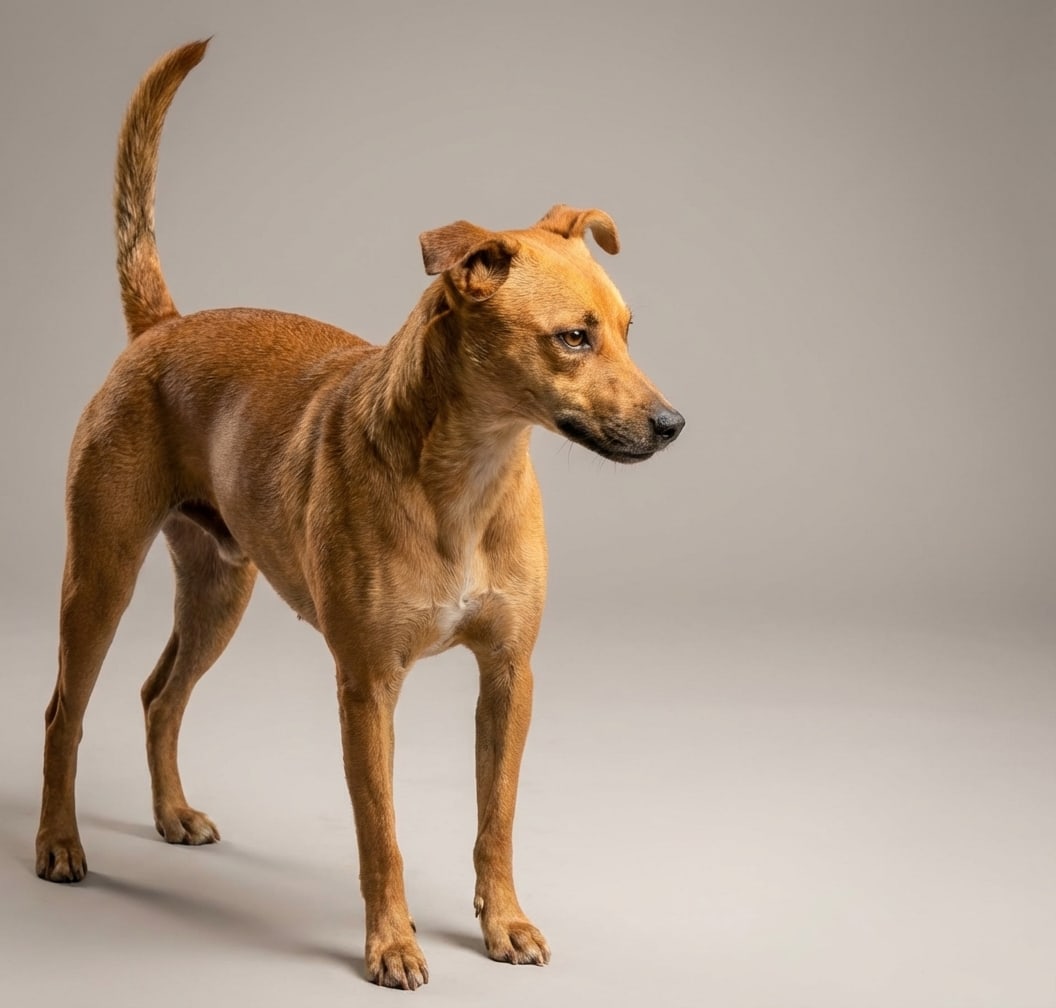
The Mountain Cur is a medium-sized dog, known for its rugged treeing hound and farm dog characteristics. Males typically range in height from 46 to 66 cm, while females stand at 41 to 61 cm. The breed is muscular and robust, with an adult weight ranging from 14 to 27 kg.
Mountain Curs have a short coat, which can come in a variety of colors, including blue, black, yellow, brown, or brindle. Some individuals may exhibit white markings on the face or chest, a trait that is not only visually appealing but also has historical significance. White markings were believed to help hunters distinguish their dogs from the prey, enhancing the effectiveness of the hunt.
According to the Original Mountain Cur Breeders' Association, the breed standard also dictates that Mountain Curs should have a distinctive "hunting type" head, which is broader than long, and a medium-length neck. Their ears are typically semi-erect and set moderately low on the head, contributing to their alert and attentive nature. The breed's body is well-balanced and powerful, with a tail that is commonly docked to enhance its agility and working capabilities.
Temperament and Personality Traits
Mountain Curs are known for their courageous and loyal nature. They are intelligent and easily trained, making them ideal companions for active families or individuals. These dogs are protective and energetic, which can be a double-edged sword if not properly managed. They are generally good with children and other pets, but their protective nature may sometimes manifest as a bit overprotective or territorial. This characteristic can be particularly pronounced when the dog is protecting its territory or family members from perceived threats.
Mountain Curs are known for their strong hunting instincts and may display behaviors such as trailing and treeing. Despite their energetic disposition, Mountain Curs are not overly friendly with strangers, which is a trait that can be both advantageous and challenging. They are generally good with children and other pets, but their protective nature may sometimes result in them becoming overly protective or territorial, especially when children are involved.
If left without a purpose, they may become anxious or bored, highlighting the importance of regular mental and physical stimulation. Owners should ensure that their Mountain Cur has access to a variety of activities, including training, exercise, and interactive play, to keep their dogs mentally and physically engaged.
Breed Development and Recognition
Developed as a working dog for tasks such as treeing and trailing small game, the Mountain Cur has also been utilized for hunting big game, such as bear and wild boar. They are versatile and have even been used as water dogs, showcasing their adaptability and utility in various hunting scenarios.
Registered with the United Kennel Club since 1998, the Mountain Cur has since gained recognition from the American Kennel Club, the National Kennel Club, and the Continental Kennel Club. This recognition reflects the breed's historical significance and its continued relevance as a working dog and family companion. The AKC's recognition in 2009 was a significant milestone for the breed, as it opened the door for further popularity and acceptance in the world of dog shows and competitions.
Health and Longevity
The Mountain Cur is a relatively healthy breed, with an average lifespan of 14 to 16 years. However, like all breeds, they are susceptible to certain health conditions. Common health issues in Mountain Curs include hip dysplasia, elbow dysplasia, and von Willebrand's disease, a bleeding disorder.
Buyer's Checklist and Considerations
- Consider the breed's historical role as a working dog and its current need for regular mental and physical stimulation.
- Assess whether the breed's moderate shedding and energetic nature align with your lifestyle and living situation. Those living in apartments or with limited outdoor space may find a Mountain Cur's high energy levels challenging.
- Understand the breed's loyalty and protective nature, especially when it comes to children and strangers.
- Research reputable breeders who adhere to the Mountain Cur Breeders' Association's standards for responsible breeding. Responsible breeders prioritize the health and temperament of their dogs, ensuring that each pup is well-suited for its future home.
Investing in a Mountain Cur is an investment in a dog with a rich history and a bright future as a loyal and hardworking companion. Owners should be prepared to provide a stimulating environment, proper training, and the care needed to maintain the breed's health and happiness.
Frequently Asked Questions
What is the lifespan of the Mountain Cur?
The average lifespan of the Mountain Cur is about 12-16 years. Good nutrition and regular veterinary care support a healthy life.
What is the temperament of the Mountain Cur?
The Mountain Cur is known for: Courageous, Intelligent, Loyal, Energetic, Protective. Its energy level is high.
What size and weight is the Mountain Cur?
It is a large dog, typically around 14-27 kg as an adult.
Is the Mountain Cur easy to care for?
Reliable grooming and shedding ratings are not available. Routine brushing, ear and dental care, and nail trims are still recommended.
Is the Mountain Cur good with kids and other pets?
Reliable child- and pet-friendliness ratings are not available. Supervised, gradual introductions are recommended.
How much exercise does the Mountain Cur need?
With a high energy level, it needs walks, play or training matched to its stamina.
Mountain Cur
Trait Scores
N/A