Origin and Historical Background
The Istrian Shorthaired Hound, known as istarski kratkodlaki gonič in Croatian, originates from the Istria Peninsula in Croatia, a region rich in history and culture. This breed has its roots in a very old type of scenthound, making it a part of the oldest hound breeds in the Balkan region, with its history potentially dating back to the Roman era.
The breed was recognized as a distinct type in 1719 when Bishop of Đakovo Petar Bakić provided a detailed description of the breed, which included its appearance, hunting abilities, and temperament. The Istrian Shorthaired Hound shares a region of formation with the Croatian Littoral and Dalmatia, and is the smaller counterpart to the Istrian Coarse-haired Hound, also from the same area, which is a larger and more robust hunting dog.
In 1924, a stud book was established to document the breed, which was a crucial step in preserving its genetic lineage and characteristics. The breed was officially accepted by the Fédération Cynologique Internationale (FCI) in 1949, gaining international recognition. The first breed standard was published in 1973, ensuring a standardized description of the breed for international recognition and maintaining consistency across breeders.
This hound was primarily bred for hunting hare and fox in the mountainous terrain of Istria, which required a dog with excellent scenting abilities, a strong voice to communicate with hunters, and a robust constitution to handle the rugged landscape. The breed is still valued for these hunting abilities in its homeland and nearby areas, and it is also known for its loyalty and willingness to work with humans.
Physical Characteristics
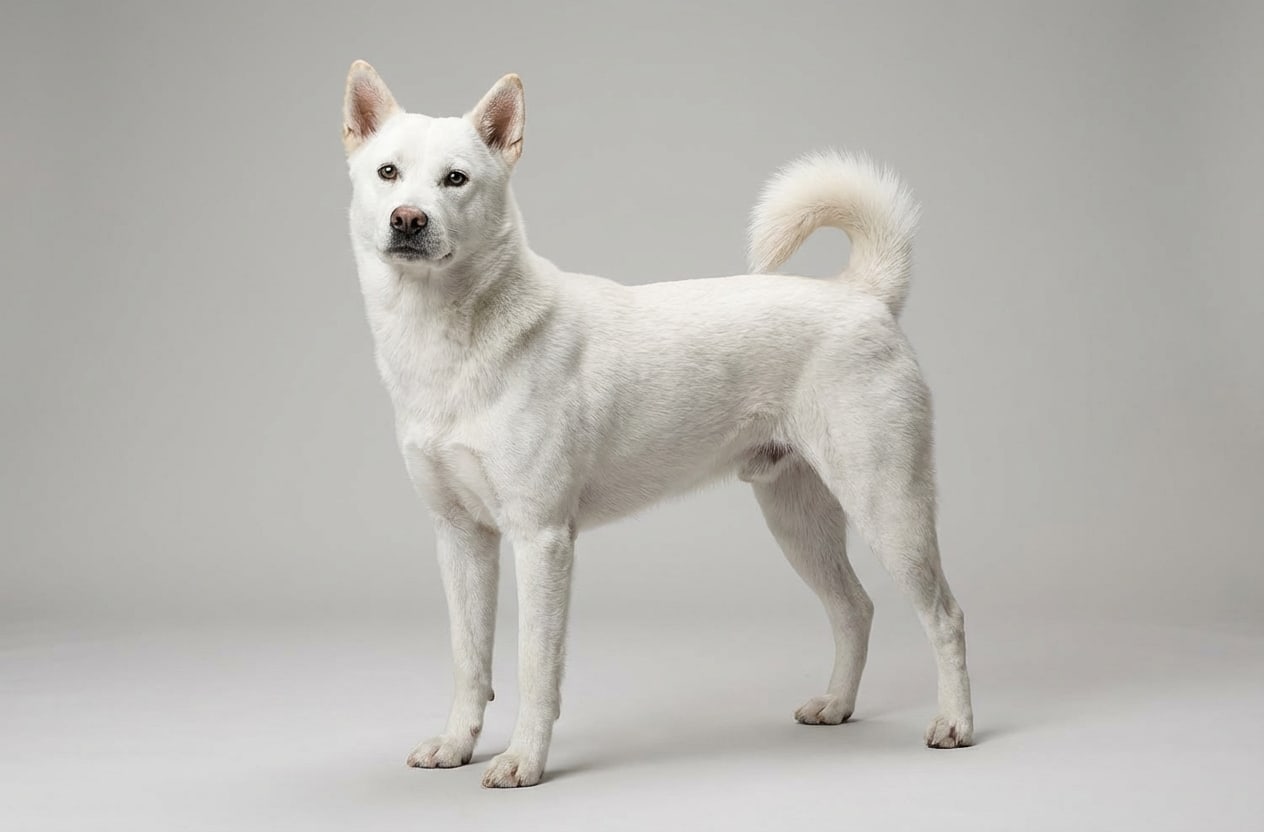
The Istrian Shorthaired Hound is a medium-sized dog with a noble-looking appearance. It features a short, smooth, glossy, and hard coat that is predominantly white, with sparse patches of orange, which can vary in intensity from light to dark. The coat is designed to be water-resistant, providing protection in the rugged terrain of Istria.
Its body is well-muscled, with long legs that allow it to cover ground quickly and a long tail that is often carried in a sickle shape when the dog is in motion. The head is broad and flat, with short, triangular drop ears that hang close to the head, a characteristic of East European hounds, which helps the dog to channel its scenting abilities effectively.
Male dogs typically stand at a height of 48-59 cm (19.5-23.2 in) at the withers, weighing between 16-25 kg (35-55 lb). Female dogs are slightly smaller, with a height of 46-57 cm (18.1-22.4 in) and a weight of 16-23 kg (35-51 lb).
Temperament and Personality
The Istrian Shorthaired Hound is described as having an ideal temperament that is docile and calm in everyday life. This breed is known for its gentle nature and is often described as a "velvet dog," indicating its soft and affectionate demeanor. However, when hunting, they become lively and enthusiastic, driven by their instinct to track and locate game.
Their temperament suggests a balance between a gentle nature and the high energy needed for hunting.
Health and Genetics
No specific health problems or claims of extraordinary health have been documented for the Istrian Shorthaired Hound. The breed is generally considered healthy, with no notable genetic health issues reported.
Owners should be vigilant about any signs of illness or discomfort and seek prompt veterinary attention if needed.
Training and Exercise Needs
The Istrian Shorthaired Hound is highly trainable, with a high level of intelligence. Their strong, sonorous voice and keen sense of smell make them effective hunting dogs, and these traits can also be utilized in training for other activities, such as obedience or tracking.
They respond well to positive reinforcement training methods and enjoy the mental challenge of learning new tasks.
Living with an Istrian Shorthaired Hound
Despite their medium shedding level, the Istrian Shorthaired Hound may not be the best choice for those with allergies due to the lack of a hypoallergenic flag.
They are social animals that enjoy the company of both humans and other dogs. However, their independent nature means they may not be the best choice for families with very young children, as they might not be as tolerant as some other breeds.
The Istrian Shorthaired Hound requires a secure and enclosed environment due to their strong hunting instincts, especially when it comes to small animals like rabbits and foxes.
Choosing an Istrian Shorthaired Hound
They are best suited for active individuals or families with a lifestyle that includes regular physical activity. The Istrian Shorthaired Hound's energy level requires a home that can accommodate their need for exercise and mental stimulation.
Due to their intelligence and loyalty, these dogs can be excellent companions, but they may not be the best choice for first-time dog owners due to their training and exercise needs. Owners should be prepared to invest time and resources into their dog's training and care.
Owners should also be prepared for the costs associated with pet ownership, including food, grooming, and veterinary care. The average lifespan of an Istrian Shorthaired Hound is 12-15 years, so a long-term commitment is required.
- Research the breed thoroughly to understand its characteristics and care requirements.
- Consider the space and resources available to provide a suitable environment.
- Visit reputable breeders to ensure the health and well-being of the dog.
- Be prepared for long-term commitment, given the breed's average lifespan of 12-15 years.
Frequently Asked Questions
What is the lifespan of the Istrian Shorthaired Hound?
The average lifespan of the Istrian Shorthaired Hound is about 12-15 years. Good nutrition and regular veterinary care support a healthy life.
What is the temperament of the Istrian Shorthaired Hound?
The Istrian Shorthaired Hound is known for: Alert, Energetic, Intelligent, Independent, Gentle, Loyal. Its energy level is high.
What size and weight is the Istrian Shorthaired Hound?
It is a large dog, typically around Male: 16-25; Female: 16-23 kg as an adult.
Is the Istrian Shorthaired Hound easy to care for?
Reliable grooming and shedding ratings are not available. Routine brushing, ear and dental care, and nail trims are still recommended.
Is the Istrian Shorthaired Hound good with kids and other pets?
Reliable child- and pet-friendliness ratings are not available. Supervised, gradual introductions are recommended.
How much exercise does the Istrian Shorthaired Hound need?
With a high energy level, it needs walks, play or training matched to its stamina.
Istrian Shorthaired Hound
Trait Scores
N/A