Origin and Development
The Hanoverian Scenthound, also known as the Hanover Hound, Hanoverian Scent hound, and Hannover Schweißhund, has its origins traced back to the Celtic period, around 500 BC. This breed descended from the Segusiehund, which evolved from the Celtic hound, a type of dog that was known for its scenting abilities. The Hanoverian Scenthound is a direct descendant of the lead hound, a blood hound primarily used for tracking blood from wounded animals. It was first introduced into France in the 1980s and is still considered a rare breed, with a relatively small population compared to other hound breeds.
Developed in Germany, the Hanoverian Scenthound was specifically bred to track wounded game for hunters. Its ancestry can be linked to the Celtic people in Central Europe and evolved into the lead hound, known for its distinguishing characteristics such as a blunt muzzle and a broad nose. The breed was crossbred with the Bavarian Hound in 1912, resulting in a lighter, more agile tracking dog better suited for rough terrain. This crossbreeding also contributed to the breed's ability to scent and track over long distances.
In 1885, the Hanover hound was given its name "Hanoverian Bloodhound" or "German Bloodhound. " The Hirschmann Association was founded in 1888 to preserve the Hanoverian Scent hound breed. The breed was officially recognized by the Fédération Cynologique Internationale (FCI) in 1964, and by the United Kennel Club (UKC) in 1996, marking its acceptance into the international canine community.
Appearance
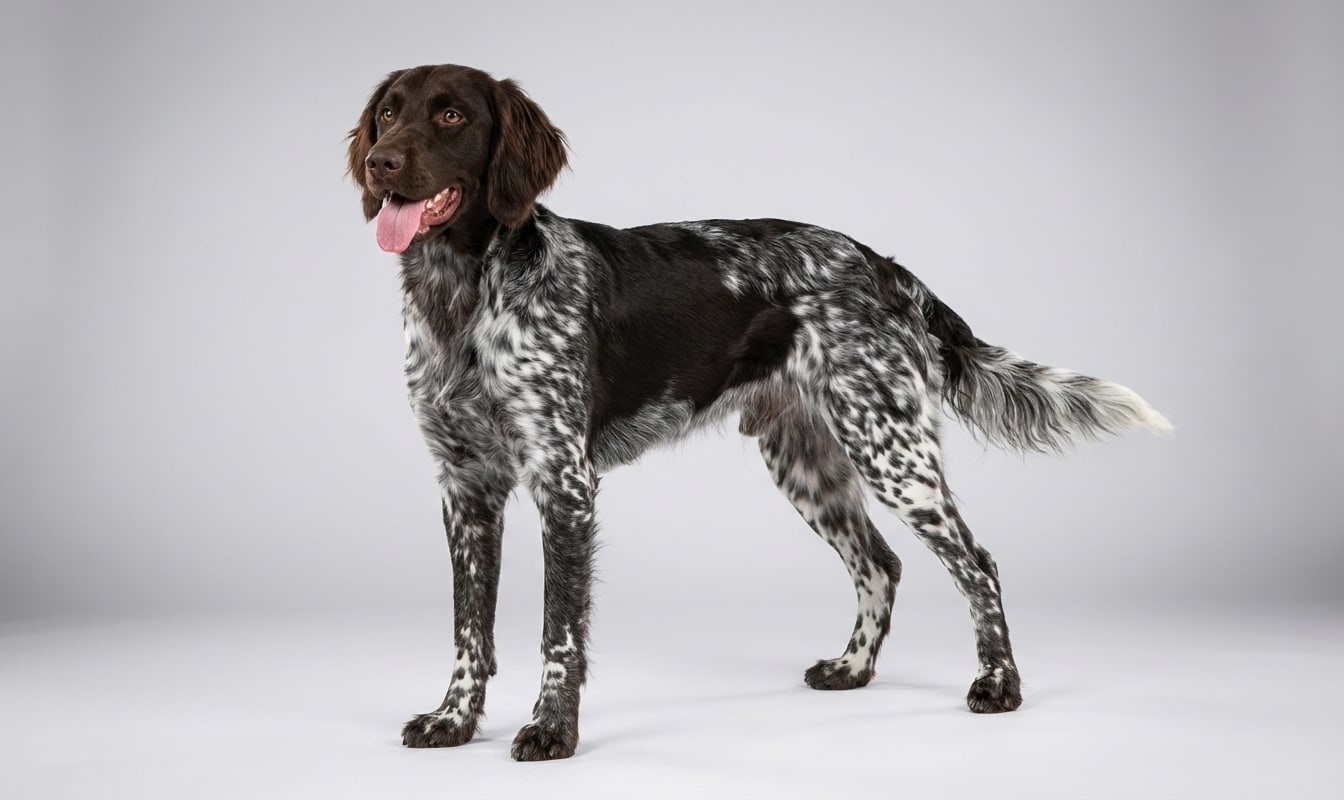
The Hanoverian Scenthound is a robust medium-large scenthound with a sturdily built body, designed for endurance and agility. These short-haired dogs range in color from light to dark reddish fawn with a brindled appearance, which can also include a mask around the eyes. Males typically stand between 19.5 and 21.5 inches (50–55 cm) tall and weigh 66–88 pounds (30–40 kg), while females are usually slightly smaller, standing 19–21 inches (48–53 cm) and weighing 55 to 70 pounds (25–32 kg). Their overall appearance is one of elegance and power, balanced with a keen sense of smell.
Their heads are large with strong jaws and a deep chest, essential for the physical demands of tracking. The forehead is slightly wrinkled, and the skull is broadest between the ears, slightly rounded. The ears are high, broad, and smooth, usually bluntly rounded at the tips, and set high on the head. The tail is high set, long, and barely curved, often carried horizontally when the dog is working.
Temperament
The Hanoverian Scenthound is known for its calm and assured temperament, as well as its persistent and single-minded nature when tracking. This breed is best suited for living in an area where it can exercise, as it may not be ideal for city living. It tends to keep to itself around strangers but is kind and friendly towards other dogs, especially those it has been raised with.
Like other working dogs, the Hanoverian Scenthound requires a living environment that allows for sufficient exercise. Its temperament is a blend of loyalty, determination, and independence, which can make it a suitable companion for those who appreciate a dog with a strong sense of purpose and a keen sense of smell.
Health and Genetics
The Hanoverian Scenthound is a relatively healthy breed, but like all dogs, it can be prone to certain health issues. Specific health conditions that may affect this breed include hip dysplasia, which can cause pain and difficulty in movement, and glaucoma, a condition that leads to increased pressure within the eye and can result in vision loss. Additionally, this breed may be susceptible to skin allergies, which can cause discomfort and require veterinary attention.
Genetic testing for conditions like hip dysplasia can be beneficial for breeders and owners in identifying potential health issues early.
Breed Characteristics
The Hanoverian Scenthound is a large breed with a medium-length coat that is typically short and dense, requiring minimal grooming. Its energy level is moderate, making it a suitable choice for active families or individuals who can provide the necessary exercise and mental stimulation.
This breed has a moderate trainability, requiring consistent and patient training. Its intelligence and determination make it capable of learning, but it can also be independent, which may require a firm yet gentle approach to training.
Life Span and Care
The Hanoverian Scenthound has a life span of 10-14 years, which is average for a large breed.
Given its size and energy level, the Hanoverian Scenthound requires a living environment that can accommodate its size and exercise needs.
Buyer's Checklist
- Research the breed's history and temperament to ensure it fits your lifestyle, considering its size, energy level, and exercise requirements.
- Look for a reputable breeder who can provide health clearances, including hip and eye certifications, and ensure the dog's well-being.
- Consider the dog's size and energy level when choosing a living environment, such as a house with a yard or a rural setting.
Cost Realism and Household Matching
The Hanoverian Scenthound may not be the best choice for households with young children or other pets, as its independent nature and low friendliness towards strangers may lead to challenges. However, for those who appreciate a calm, loyal, and determined companion with a strong sense of smell, the Hanoverian Scenthound can be a wonderful addition to the family.
Frequently Asked Questions
What is the lifespan of the Hanoverian Scenthound?
The average lifespan of the Hanoverian Scenthound is about 10-14 years. Good nutrition and regular veterinary care support a healthy life.
What is the temperament of the Hanoverian Scenthound?
The Hanoverian Scenthound is known for: Calm, Loyal, Determined, Independent. Its energy level is low.
What size and weight is the Hanoverian Scenthound?
It is a large dog, typically around 36-45 kg as an adult.
Is the Hanoverian Scenthound easy to care for?
Reliable grooming and shedding ratings are not available. Routine brushing, ear and dental care, and nail trims are still recommended.
Is the Hanoverian Scenthound good with kids and other pets?
Reliable child- and pet-friendliness ratings are not available. Supervised, gradual introductions are recommended.
How much exercise does the Hanoverian Scenthound need?
With a low energy level, it needs walks, play or training matched to its stamina.
Hanoverian Scenthound
Trait Scores
N/A