Origin and History
The Greenland Dog, known as Kalaallit Qimmiat in Greenlandic and Grønlandshund in Danish, is a breed with ancient origins tracing back to dogs brought from Siberia to North America by the Thule people around 1000 years ago. This breed is one of the world's oldest, with its lineage rooted in the Arctic regions, where it has been a draught animal for centuries.
The first dogs appeared in Greenland around 4,000 years ago, and the breed's genetic closeness to the now-extinct Taimyr wolf of North Asia is indicative of its adaptation to the harsh Arctic environment. The breed was recognized by the Kennel Club at its foundation in 1880, and Roald Amundsen used Greenland dogs in his 1912 expedition to the Antarctic, where they played a crucial role in his historic journey.
Efforts are being made to safeguard the breed's purity in Greenland, with strict regulations in place in certain regions to prevent the import of dogs from outside. Since 2017, all dogs in these regions must be microchipped and registered in the Greenland dog database. The population of the breed has been declining, and projects have been initiated to preserve the breed and its sledding culture.
Physical Characteristics
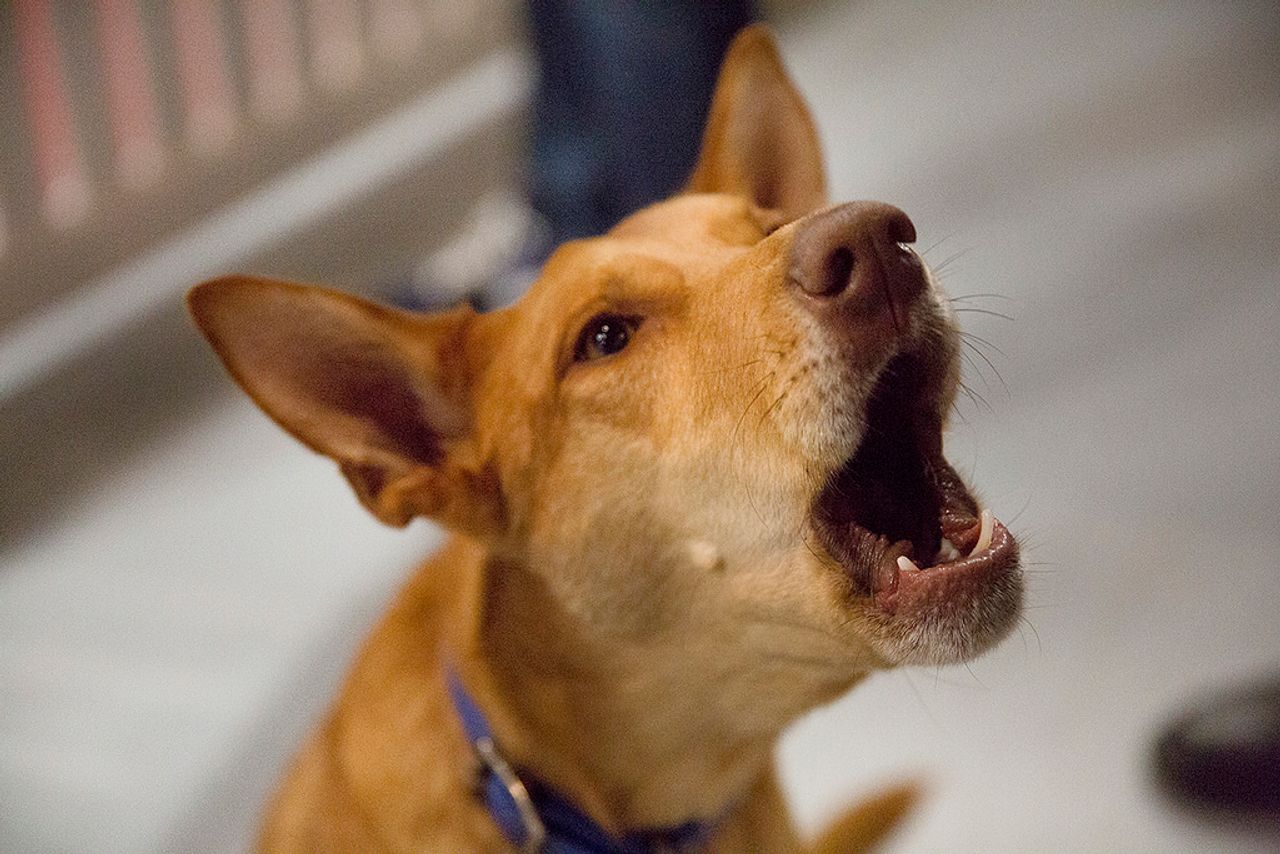
The Greenland Dog is a powerful and heavy-built spitz-type dog, known for its thick double coat that provides insulation in the harsh Arctic conditions. The coat is of medium length, consisting of an inner layer of short wool-like fur and an outer layer of longer, coarser, water-repellent fur.
Characteristic features include a broad, wedge-shaped head, slightly tilted eyes, and small, triangular ears covered with thick fur. The tail is usually curled over the back, often covering the nose when the dog lies down. The breed comes in all colors, excluding albino dogs and merle patterning, with blue eyes and heterochromia considered disqualifications.
Males typically stand at 58-70 cm and weigh 30-32 kg, while females are slightly smaller at 50-61 cm and the same weight. A distinctive trait of the breed is the "úlo," a triangular area on the shoulders named after a common woman's-knife from Greenland.
Temperament and Behavior
The Greenland Dog is known for its independent, energetic, and courageous temperament. It is loyal and athletic, with a high level of confidence. The breed is bred for working purposes, which is reflected in its strong work ethic and endurance.
Despite its high energy level, the Greenland Dog has a low level of friendliness, which means it may not be the best choice for families looking for a dog that is overly affectionate towards strangers. The breed is moderately trainable and requires a firm but fair handler.
Health and Genetic Information
The Greenland Dog is a relatively healthy breed, but like all dogs, it can be prone to certain genetic conditions. One study found that the breed has a genetic closeness to the now-extinct Taimyr wolf, which could indicate an increased risk for certain health issues associated with high-latitude breeds.
A genetic study in 2020 revealed that the Greenland sled dogs have been isolated from other breeds since their arrival in Greenland with the Inuit 850 years ago. This isolation has preserved a genomic history that traces back to their ancestors' remains found on Zhokhov Island in northeastern Siberia, which are 9,500 years old. This study highlights the breed's ancient heritage and its significance as one of the oldest dog breeds.
The breed's lineage, which predates colonization, is distinct from Siberian Huskies, Alaskan Huskies, and Malamutes, despite their genetic similarities. The maternal mitochondrial DNA sequences of the Inuit dogs, including the Greenland Dog, were classified as haplotype A31, indicating a common female ancestor and a unique genetic heritage.
Working and Sled Dog Abilities
The Greenland Dog is highly valued as a sled dog due to its physical strength, endurance, and ability to move fast and easily over difficult terrain. Its natural capacity for load pulling and endurance in harsh working environments has made it an invaluable asset in the Arctic regions for centuries.
The breed's historical role as a sled dog has shaped its physical characteristics, including its powerful body and heavy coat.
While the breed's primary purpose is as a working dog, it can also be a great companion for active individuals or families who can provide the necessary exercise and mental stimulation. The Greenland Dog's working background means it is not suited for a sedentary lifestyle and requires an owner who understands and appreciates its need for activity.
Culture and Conservation Efforts
The Greenland Dog holds significant cultural and historical importance to the people of Greenland. It is considered a national treasure and efforts are being made to preserve its purity and ensure its survival. In regions such as western Greenland north of the Arctic Circle, it is illegal to import any dog from outside, except for police and assistance dogs with a special permit.
Since 2017, all dogs in these regions must be microchipped and registered in the Greenland dog database, furthering the efforts to maintain the breed's integrity. As the population has been declining, projects have been initiated to ensure that the breed's sledding culture, knowledge, and use are not lost.
The breed's ancient heritage and its role in human history make it a unique and valuable part of the world's dog breeds. Efforts to conserve the Greenland Dog are not only important for the breed itself but also for the preservation of the cultural heritage and knowledge associated with it.
Buying a Greenland Dog: What to Consider
Look for breeders who are committed to maintaining the breed's purity and health.
The Greenland Dog is not suited for a sedentary lifestyle and requires an owner who can provide an active environment.
Frequently Asked Questions
What is the lifespan of the Greenland Dog?
The average lifespan of the Greenland Dog is about 10-14 years. Good nutrition and regular veterinary care support a healthy life.
What is the temperament of the Greenland Dog?
The Greenland Dog is known for: Independent, Energetic, Courageous, Loyal, Athletic, Confident. Its energy level is high.
What size and weight is the Greenland Dog?
It is a large dog, typically around 30-32 kg as an adult.
Is the Greenland Dog easy to care for?
Reliable grooming and shedding ratings are not available. Routine brushing, ear and dental care, and nail trims are still recommended.
Is the Greenland Dog good with kids and other pets?
Reliable child- and pet-friendliness ratings are not available. Supervised, gradual introductions are recommended.
How much exercise does the Greenland Dog need?
With a high energy level, it needs walks, play or training matched to its stamina.
Greenland Dog
Trait Scores
N/A