Origin and Development
The German Roughhaired Pointer, also known as the Deutsch Stichelhaar, is a medium-sized breed of pointing dog developed in Germany. In the early 19th century, several varieties of rough-haired pointers existed throughout Germany, including the Hanoveraner, the Brandenburger, and the Westphalian Pointer. These varieties were used for hunting waterfowl and upland game. However, there were few attempts to standardize them as breeds. The breed's name, "stichelhaariger," translates to "rough-haired," reflecting the introduction of old German shepherd dog blood into the breed, which was done to improve the hunting abilities and temperament of the dogs. By the middle of the 19th century, the Roughhaired Pointer was nearly extinct, primarily due to overhunting and lack of interest in the breed. It was saved by the efforts of a single breeder, Herr von Stichelhaar, who began breeding the dogs with the goal of preserving the breed. Serious attempts to standardize the breed began in the second half of the century, and by the end of the century, it was accepted as a district breed. The breed was first recognized by the German Kynological Federation (SKK) in 1897.
This breed has never gained the popularity of other German pointer breeds like the German Shorthaired Pointer or the German Wirehaired Pointer and is rarely seen outside of Germany, making it a relatively rare sight internationally. The breed's rarity is often attributed to its specific hunting role, which is more niche than the general hunting capabilities of other German pointer breeds.
Physical Description
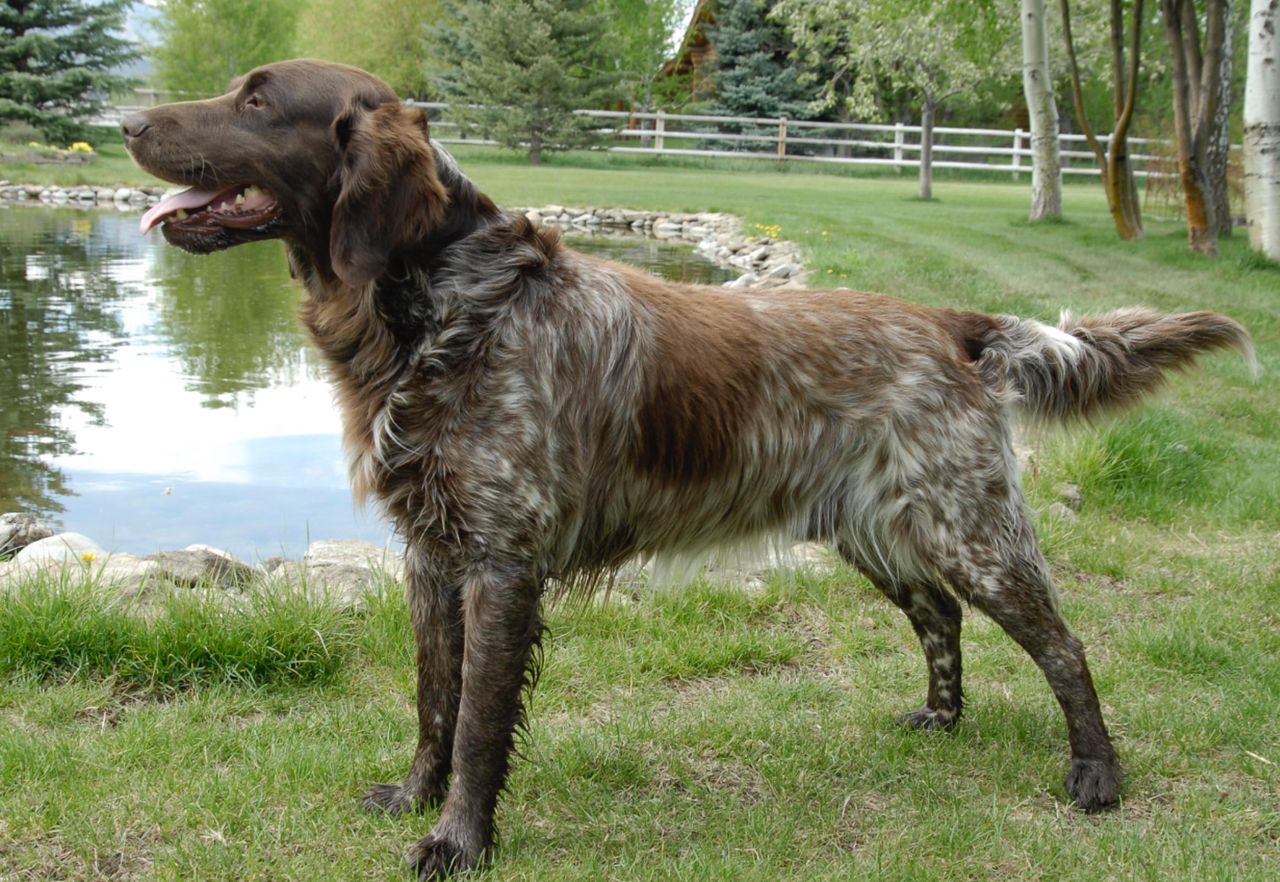
The German Roughhaired Pointer is a medium-sized breed with a robust yet not overly heavy appearance. They stand between 58 and 70 centimeters (23 and 28 inches) in height, with males typically ranging from 60 to 70 centimeters (24 to 28 inches) and females between 58 and 68 centimeters (23 and 27 inches). Their head is heavier and broader, a trait inherited from their shepherd forebears, with hanging ears and particularly long eyebrows that give them an almost threatening appearance. The breed's coat is stiff, harsh, and bristly, usually around 37 millimeters (1.5 inches) long. They can be found in colors such as solid brown, brown roan, or light roan, with some having a white patch on their chest and others displaying brown patches in their roan coats. The coat's texture is a significant factor in the breed's ability to withstand harsh weather conditions, a trait highly valued in a hunting dog.
One distinct feature of the German Roughhaired Pointer is their dense, harsh, bristly weatherproof coat, which is a defining characteristic of the breed and contributes to their reputation as a noble hunting companion.
Temperament and Behavior
The German Roughhaired Pointer is known for its strong pointing instincts and calm, even temperament. They are intelligent, loyal, energetic, and confident, making them ideal as a versatile hunting companion. Despite their strong work focus, they can be somewhat reserved with strangers, which is a trait inherited from their shepherd lineage.
Owners of the German Roughhaired Pointer should be prepared for a dog that is highly focused on the hunt and may exhibit intense concentration during these activities.
Health Considerations
While the German Roughhaired Pointer is generally a healthy breed, there are some potential health issues to be aware of. The breed's heavier head and broad face can lead to problems with the eyes, such as glaucoma or entropion, which is a condition where the eyelids roll inward, causing irritation and potential damage to the eye. Additionally, the breed's dense coat can be prone to matting if not properly maintained, which can lead to skin irritations or infections. Other health concerns include hip dysplasia, which can be a problem in larger breeds, and epilepsy, which may affect some individuals.
Owners should be vigilant about signs of eye issues and keep the coat well-groomed to ensure the overall health and comfort of their German Roughhaired Pointer.
Exercise and Grooming Needs
The German Roughhaired Pointer requires a substantial amount of exercise to maintain their physical and mental health. Mental stimulation is also crucial, as this breed is intelligent and can become bored or destructive without enough mental challenges. Activities that challenge their problem-solving skills, such as scent work or agility training, can be particularly beneficial.
During shedding seasons, more frequent brushing may be necessary to manage the increased amount of loose fur. Bathing should be done as needed, typically every 4-6 weeks, to keep the coat clean and healthy. Their weatherproof coat does not require frequent bathing, which can strip away natural oils.
Training and Socialization
The German Roughhaired Pointer is highly trainable, which is a result of their intelligence and work-focused nature. They respond well to positive reinforcement training methods and are eager to please. Exposure to different people, animals, and environments during puppyhood can help prevent future behavioral issues. Socialization should be an ongoing process throughout the dog's life to ensure they remain well-rounded and comfortable in various situations.
Training should be consistent and challenging to keep the German Roughhaired Pointer engaged and stimulated. The breed's natural hunting instincts can sometimes lead to a strong prey drive, so training should focus on managing this behavior and ensuring the dog's focus is on the handler during training sessions.
Living with a German Roughhaired Pointer
Living with a German Roughhaired Pointer requires a commitment to their high energy levels and grooming needs. They are best suited for households with spacious yards and access to outdoor activities. Given their history as a hunting dog, the German Roughhaired Pointer enjoys the outdoors and may not be the best choice for apartment living. They require a secure area to exercise and explore, as their strong hunting instincts may lead them to chase small animals or wildlife.
This breed is also known for their loyalty and attachment to their family, which can be a double-edged sword. While their loyalty is a wonderful trait, it can also result in separation anxiety if left alone for extended periods. Owners should be prepared to provide ample attention and companionship to their German Roughhaired Pointer.
Breed-Specific Challenges
One of the challenges of owning a German Roughhaired Pointer is managing their strong prey drive. These dogs are bred to hunt and may have a strong urge to chase after small animals, which can be dangerous for both the dog and the prey.
Another challenge is the breed's potential for separation anxiety. As mentioned, the German Roughhaired Pointer is highly attached to their family and may exhibit destructive behavior or anxiety when left alone for long periods. This behavior can be mitigated through training, socialization, and providing the dog with appropriate chew toys or activities to engage in while the owner is away.
Buying a German Roughhaired Pointer: A Practical Checklist
Ensure the puppy has been properly socialized and vetted for any health issues, including eye problems, hip dysplasia, and epilepsy. It is also crucial to ensure your lifestyle and living situation can accommodate the energy and space requirements of a German Roughhaired Pointer.
Consider the following checklist when looking to buy a German Roughhaired Pointer:
- Research breeders with a reputation for health and temperament
- Visit the breeder's facility to ensure it is clean and well-maintained
- Ask about the puppy's health history and any known genetic issues
- Ensure the puppy has been properly socialized with people and other animals
- Check the puppy's vet records for any health issues
- Assess your lifestyle and living situation to ensure it can accommodate the needs of a German Roughhaired Pointer
Frequently Asked Questions
What is the lifespan of the German Roughhaired Pointer?
The average lifespan of the German Roughhaired Pointer is about 12-14 years. Good nutrition and regular veterinary care support a healthy life.
What is the temperament of the German Roughhaired Pointer?
The German Roughhaired Pointer is known for: Intelligent, Loyal, Energetic, Confident, Work-focused. Its energy level is high.
What size and weight is the German Roughhaired Pointer?
It is a large dog, typically around Male: 30-35; Female: 26-32 kg as an adult.
Is the German Roughhaired Pointer easy to care for?
Reliable grooming and shedding ratings are not available. Routine brushing, ear and dental care, and nail trims are still recommended.
Is the German Roughhaired Pointer good with kids and other pets?
Reliable child- and pet-friendliness ratings are not available. Supervised, gradual introductions are recommended.
How much exercise does the German Roughhaired Pointer need?
With a high energy level, it needs walks, play or training matched to its stamina.
German Roughhaired Pointer
Trait Scores
N/A