Origin and Development
The German Longhaired Pointer, known as the Deutsch Langhaar, originated in Germany and is closely related to other German pointer breeds, including the German Shorthaired Pointer, the German Wirehaired Pointer, and the Large Münsterländer. The breed was definitively accepted by the Fédération Cynologique Internationale in 1954, marking a significant milestone in its recognition.
Selective breeding for the German Longhaired Pointer began in 1879, a time when hunting dogs were highly valued for their hunting abilities. The Verein zur Veredelung der Jagdhundrassen of Hannover initially drew up breed standards, but they were found unsatisfactory. In response, the Club Langhaar was established in 1893 by Friedrich von Schorlemer-Alst, a prominent figure in the breed's development. In 1897, von Schorlemer-Alst drew up the breed standard that serves as the foundation for the modern Langhaar.
Between 2010 and 2024, the annual average number of new registrations for the German Longhaired Pointer in Germany was approximately 509, with a low of 352 and a high of 587. The total number of registrations over this period was 7632, accounting for about 0.68% of the total registrations of 1,127,154 dogs. This data highlights the breed's steady but not overwhelming popularity within the country of origin.
Physical Characteristics
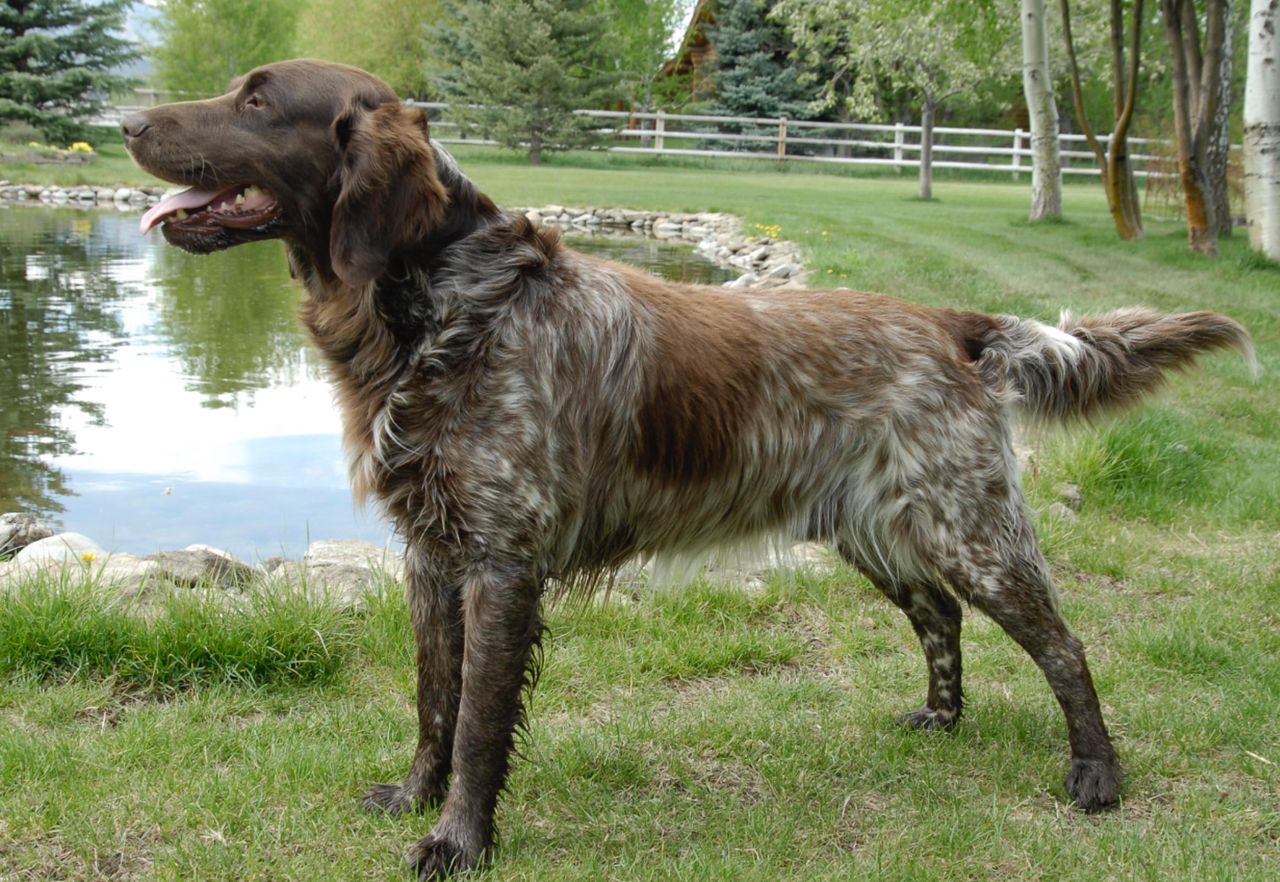
The German Longhaired Pointer is a medium to large gundog with an elegant build, designed for agility and endurance. Males typically weigh between 25 to 36 kilograms, while females weigh between 20 to 32 kilograms. The height at the withers for males ranges from 61 to 71 centimeters, and for females, it is 58 to 66 centimeters, reflecting the breed's athletic proportions.
The breed has a distinctive long, silky, weather-resistant coat with feathering, which is about 3.5 centimeters long on the body, shorter on the head, and somewhat longer on the underside of the neck and body. This coat is thick, with a dense undercoat, and lies close to the body, providing insulation against harsh weather conditions. The color of the coat can vary, including solid brown, brown with white markings, dark roan with patches of dark brown, pale roan with patches of pale brown, white with small brown spots, and brown-and-white with or without spotting, each color variation adding to the breed's visual appeal.
Temperament and Personality
The German Longhaired Pointer is known for its noble and versatile nature, which has made it a favorite among hunters and pet owners alike. It is an intelligent breed, gentle, calm, loyal, eager to please, and work-focused. These traits make it well-suited for various activities, including hunting and companion work. The breed's temperament is further characterized by its adaptability and sociability, making it a great choice for families with children.
Despite its high intelligence, the German Longhaired Pointer has a low energy level, which is beneficial for owners who prefer a more relaxed pet. This trait, combined with its medium friendliness and shedding level, as well as its high trainability, contributes to its adaptability as a family pet and working dog.
Breeder Purpose and Use
The primary purpose of breeding the German Longhaired Pointer is for sporting activities. It is a versatile hunting dog, purpose-bred to hunt, point to, and retrieve game on land and from water. This dual-purpose capability makes it highly valued in the hunting community, where its skills are put to the test in various hunting scenarios.
The breed's adaptability and intelligence also make it suitable for other activities, such as field trials, obedience training, and as a companion dog. Its calm and loyal nature contributes to its popularity as a family pet, where it can be a reliable and affectionate companion. The German Longhaired Pointer's versatility is not limited to hunting; its gentle demeanor and eagerness to learn make it a valuable asset in many different contexts.
Health Considerations
Specific health conditions that may affect this breed include hip dysplasia, which can cause lameness or arthritis, and eye disorders such as progressive retinal atrophy (PRA), which can lead to blindness. These conditions are of particular concern for breeders and owners, as they can significantly impact the quality of life for affected dogs.
Living with a German Longhaired Pointer
Here is a practical checklist to help you prepare for life with a German Longhaired Pointer:
- Engage in training and socialization from a young age to ensure good behavior and adaptability. This includes exposing the dog to various people, dogs, and environments to develop a well-rounded temperament.
- Ensure access to fresh water at all times and provide a comfortable living environment. This includes a secure yard for exercise and a comfortable indoor space for relaxation.
- Be prepared for the breed's high intelligence and trainability. This means investing time in training and providing mental stimulation to keep the dog engaged and happy.
By considering these factors, you can help ensure a happy and healthy life for your German Longhaired Pointer.
Frequently Asked Questions
What is the lifespan of the German Longhaired Pointer?
The average lifespan of the German Longhaired Pointer is about 12-14 years. Good nutrition and regular veterinary care support a healthy life.
What is the temperament of the German Longhaired Pointer?
The German Longhaired Pointer is known for: Intelligent, Gentle, Calm, Loyal, Eager to Please, Work-focused. Its energy level is low.
What size and weight is the German Longhaired Pointer?
It is a large dog, typically around Male: 25-36; Female: 20-32 kg as an adult.
Is the German Longhaired Pointer easy to care for?
Reliable grooming and shedding ratings are not available. Routine brushing, ear and dental care, and nail trims are still recommended.
Is the German Longhaired Pointer good with kids and other pets?
Reliable child- and pet-friendliness ratings are not available. Supervised, gradual introductions are recommended.
How much exercise does the German Longhaired Pointer need?
With a low energy level, it needs walks, play or training matched to its stamina.
German Longhaired Pointer
Trait Scores
N/A