Origin and Historical Development
The German Hound, known as the Deutsche Bracke, has its origins in the Westphalia region of Germany, a region known for its rich history of hound breeds. This scenthound breed was formally recognized in 1900, with the merging of various local types of Bracke into a single breed. The breed was officially designated as Deutsche Bracke, replacing old regional names like "Olpe Bracke", "Sauerländer Bracke", and "Westphalian Bracke". The German Hound was the first Bracke to be registered as a distinct breed, and it was recognized by the Fédération Cynologique Internationale as breed number 299 in Group 6 (Scenthounds), Section 1.3 (Small hounds).
Historically, hunting with the Bracke was conducted by hunters on horses, following the hounds as developed by the ancient Celts. A method developed in the 16th century, known as Brackade, utilized firearms and did not require the expense of horses and large kennels. This method involved hounds tenaciously following the game while voicing cries to communicate their location and the type of game being tracked. The German Hound's role in the Brackade method highlights its adaptability and resilience.
The German Hound, while a hunting dog, is also affectionate and benefits from living with the family rather than in a kennel. It is a persistent tracking dog with a good sense of direction, making it well-suited for hunting deer, rabbits, and foxes. The breed club recommends a minimum area of 1,000 hectares (2,471 acres) for hunting with a pack of hounds, reflecting the breed's need for ample space to roam and track.
Appearance and Physical Characteristics
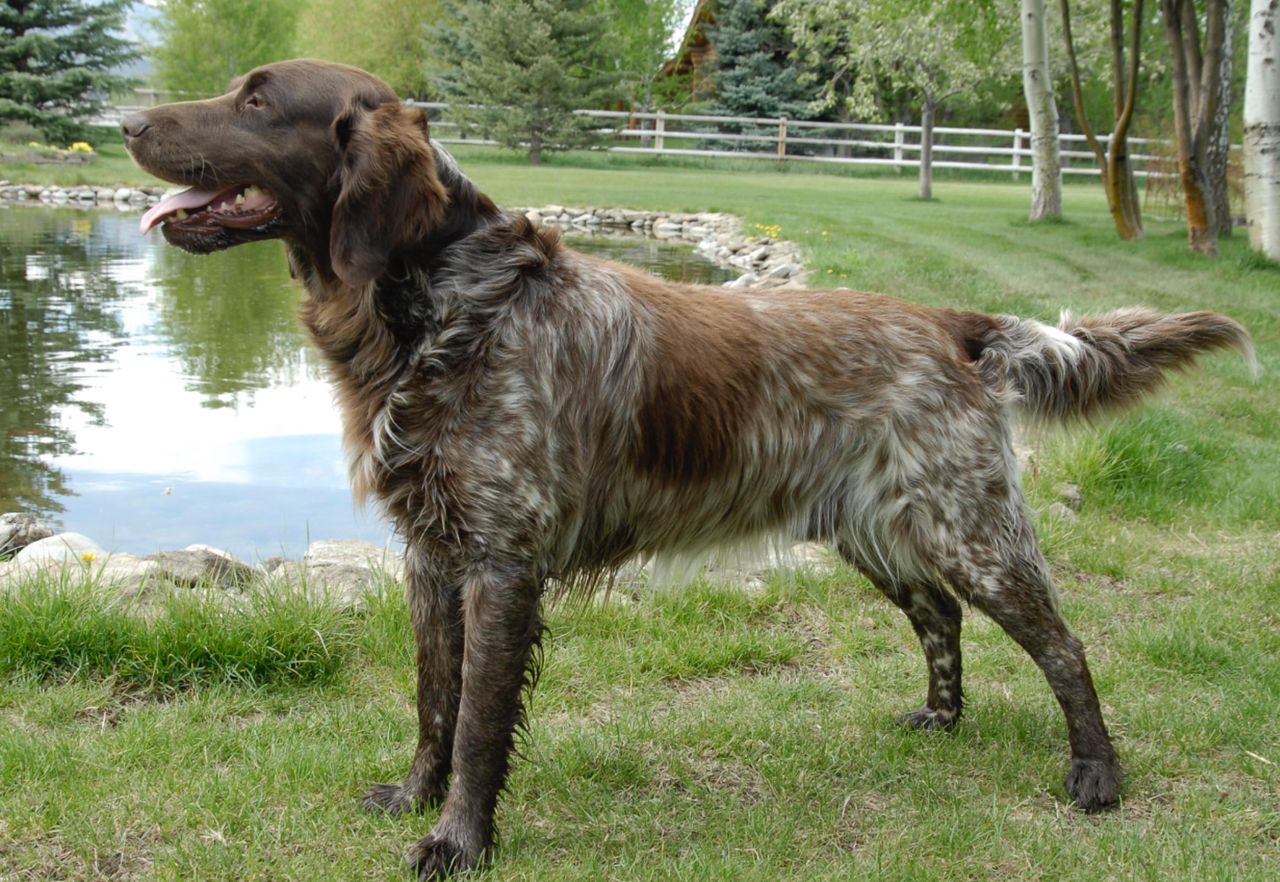
The German Hound is a medium-sized scent hound with an athletic build. It stands at a height of 48-53 cm (19-21 inches) for males and 46-51 cm (18-20 inches) for females at the withers. The breed is characterized by its long, drooped ears and a long, narrow tail. Its coat is short, hard, and almost bristly, typically tricolor with red to yellow fur and a black mantle, featuring white markings known as Bracken marks.
These markings include a white muzzle, chest, legs, collar, and tip of the tail, as well as a blaze on the head. The breed's structure is described as elegant, with a rectangular body and a confident, resilient demeanor. The tricolor coat and distinctive markings are a direct result of the breed's development in the German countryside, where these traits were favored for hunting purposes.
Temperament and Personality
The German Hound is known for its intelligent and loyal nature. It is energetic and calm, with a confident disposition. This breed is highly trainable and is often used as a hunting dog, which requires a strong sense of direction and persistence. Despite its hunting instincts, the German Hound is affectionate and benefits from living with a family, rather than being kept in a kennel. The breed's temperament makes it a great companion for active families who can provide the necessary mental and physical stimulation.
Its low friendliness level suggests that it may be reserved with strangers, which is a common trait among hunting breeds. This characteristic is often advantageous in hunting scenarios where a dog's alertness to unfamiliar individuals is beneficial.
Breeding and Recognition
The German Hound is bred for its hunting abilities and is recognized by the Verband für das Deutsche Hundewesen (German Kennel Club), which oversees breeding and hunt testing. The breed's history of hunting and its role in traditional hunting practices are preserved through the Deutschen Bracken Club, which was formed in 1896 and continues to influence breeding practices. The club's efforts ensure that the breed maintains its hunting prowess while also being a suitable family pet.
The German Hound was the first Bracke to be registered as a distinct breed, and it is recognized by the Fédération Cynologique Internationale. In the English-speaking world, only the United Kennel Club in the U. S. recognizes the German Hound, placing it in its Scenthound Group. This breed is also recognized by many minor registries, rare breed groups, hunting clubs, and internet registry businesses under various names, including its original name and regional variations.
Health and Genetics
No specific diseases or claims of extraordinary health have been documented for the German Hound. For example, the breed has been known to suffer from hip dysplasia, a condition that can cause pain and mobility issues. Additionally, some German Hounds may experience issues with skin allergies, which can be managed with proper veterinary care.
Its persistent tracking nature and good sense of direction make it an excellent hunting companion, but also a loving and loyal family pet.
Related Breeds and Genetic Influences
The German Hound is related to other scenthound breeds, including the Westfälische Dachsbracke (Westphalian Dachsbracke), the Drever (Swedish Dachsbracke), the Finnenbracke from Finland, and the Alpenländische Dachsbracke (Alpine Dachsbracke) and the Tiroler Bracke (Tyrolean Hound) from Austria. These breeds share similar hunting backgrounds and physical characteristics, reflecting the influence of ancient scenthound breeding practices. The German Hound's genetic lineage includes the Bracke, a coastal marsh dog known for its scenting abilities. The breed's development over time has resulted in a dog that is both an excellent hunter and a loyal family companion.
The German Hound's genetic diversity, influenced by its relationship with other scenthound breeds, contributes to its adaptability and resilience. This diversity also helps to reduce the risk of certain genetic disorders that can affect purebred dogs.
Buying a German Hound: Practical Considerations
- Research the dog's background, especially if registered with a minor registry that requires little documentation.
- Ensure the dog has proper veterinary care and is well-socialized from a young age.
- Be prepared for the breed's high energy level and provide ample opportunities for exercise and mental stimulation.
- Consider the breed's hunting instincts and its need for a family environment rather than a kennel setting.
Purchasing a German Hound should be approached with an understanding of the breed's history, temperament, and care requirements. This breed is a wonderful choice for those who appreciate its hunting heritage and its affectionate, loyal nature as a family pet. Potential owners should be prepared to provide a loving and active home that caters to the German Hound's unique needs.
Frequently Asked Questions
What is the lifespan of the German Hound?
The average lifespan of the German Hound is about 10-14 years. Good nutrition and regular veterinary care support a healthy life.
What is the temperament of the German Hound?
The German Hound is known for: Intelligent, Loyal, Energetic, Calm, Confident. Its energy level is high.
What size and weight is the German Hound?
It is a large dog, typically around 18-25 kg as an adult.
Is the German Hound easy to care for?
Reliable grooming and shedding ratings are not available. Routine brushing, ear and dental care, and nail trims are still recommended.
Is the German Hound good with kids and other pets?
Reliable child- and pet-friendliness ratings are not available. Supervised, gradual introductions are recommended.
How much exercise does the German Hound need?
With a high energy level, it needs walks, play or training matched to its stamina.
German Hound
Trait Scores
N/A