Origin and Development
The Dunker, also known as the Norwegian Hound, has its roots in the picturesque country of Norway. This breed was meticulously developed by Wilhelm Dunker in the early 19th century, a time when the breed's primary purpose was to hunt rabbits by scent rather than sight. Dunker's creation involved crossing a Russian Harlequin Hound with reliable Norwegian scent hounds, a process that took several years to refine.
This breed is quite rare, with only an average of 150 puppies born each year. Despite its rarity, the Dunker remains primarily in its homeland and in neighboring Sweden, where it has found a niche as an exceptional hunting companion. The breed's limited distribution is indicative of its specialized role in hunting, particularly in waterfowl retrieval.
The Dunker breed, with its roots in Norway, was named after Wilhelm Dunker, its creator. This breed's development stands out in dog breeding history, producing a distinctive hunting dog with specialized traits ideal for hunting purposes.
Physical Appearance
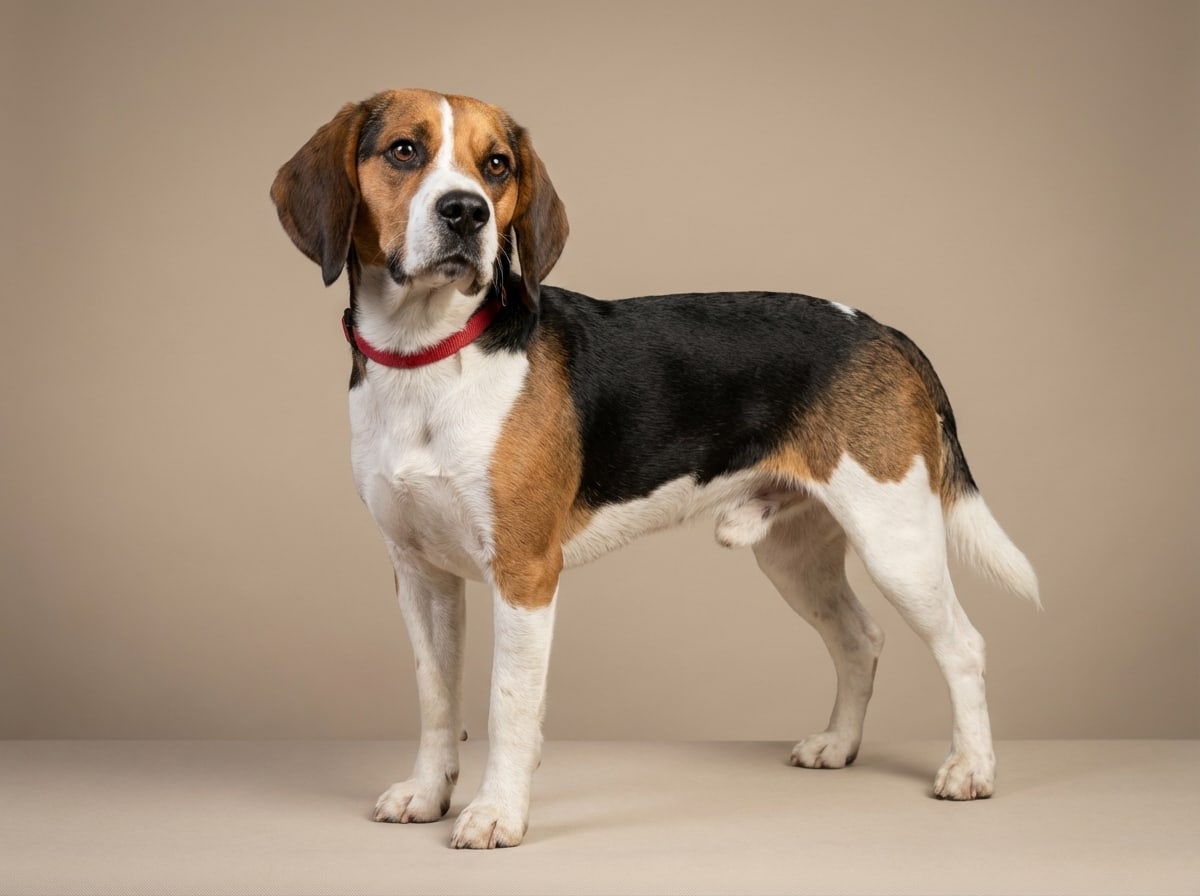
The Dunker boasts a medium-sized, athletic build, making it a robust and agile hunting dog. Its head is long and noble, characterized by parallel planes of the skull and muzzle, carried low without a wedge shape. The skull is slightly domed, with a defined stop and clean cheeks, while the muzzle is long and square-cut with a straight and broad nasal bridge.
The Dunker's teeth are evenly spaced and display a scissor-bite, a common trait in hound breeds. Its black nose is complemented by wide nostrils, and the eyes are round, large, and dark. The ears are low-set, wide, flat, and hang close to the head and the middle of the muzzle, adding to the breed's distinctive appearance.
Its neck is long with no throatiness, and the shoulders slope gracefully. The forelegs are straight, and the topline is level. The back is strong and broad, with muscular loins, and the chest features a slight tuck-up. The hindquarters are well-angulated, with broad thighs and hocks, and the feet are arched, well-knit, with firm pads and hair between the toes. The tail is set on level with the topline, strong at the root, and carried in a slight upward curve, reaching to the hock, adding to the breed's overall elegance and balance.
Coat and Coloration
The Dunker's coat is a standout feature, characterized by its straight, hard, dense texture that is not too short. The most desirable coat colors include black or blue marbled with pale fawn and white markings. These colors are preferred over warm brown or predominant black reaching from the muzzle and beyond the hock joint, a black mask, or overmarked white.
More than fifty percent white in the coat is a disqualification in the breed standard, highlighting the breed's preference for solid coloration. The coat's dense texture offers water resistance, a beneficial trait for a hunting dog frequently working in wet environments. Regular grooming is essential to preserve the coat's health and luster.
Temperament and Personality
The Dunker is a friendly, calm, and gentle breed, known for its intelligence and energetic nature. It is a robust breed that excels as a hunting dog, with a strong operational range, making it one of the few hare hunting dogs capable of hunting in thick snow cover during the winter months.
This breed is highly trainable, especially when positive reinforcement methods like clicker training are used. The Dunker's intelligence and energy require much exercise and mental stimulation, which helps prevent boredom and destructive behavior. Regular training and socialization are essential to ensure the dog's well-being and to develop a strong bond between the dog and its owner.
Despite its hunting instincts, the Dunker can be a good family dog if it is also used for hunting. It is generally quiet outside of hunting and is considered a good match for families that can provide the necessary physical and mental activities to keep it engaged. The breed's temperament is well-suited for active households where the dog can be a valued member of the family.
Size and Weight
On average, a Dunker weighs around 35-39 pounds (16-18 kg). Males typically stand at 19.5-21.5 inches (50-55 cm) at the withers, while females are slightly smaller, standing at 18.5-20.5 inches (47-52 cm). This size range makes the Dunker a medium-sized dog that is both agile and powerful, well-suited for a variety of activities, including hunting and family companionship.
The breed's moderate weight and height make it well-suited for a variety of activities, including hunting and family companionship, without requiring excessive space or care. This size and weight also contribute to the breed's ease of handling and its ability to adapt to different environments and activities.
Lifespan and Health Considerations
The Dunker has a lifespan of 12-15 years, which is average for a dog of its size and breed. As with all dogs, they may develop health concerns such as hip dysplasia, a condition more prevalent in large breeds, and other hereditary issues.
Owners should be aware of potential health concerns such as hip dysplasia, which can affect large breeds, and other hereditary conditions. Regular veterinary care is important to monitor the health of the Dunker throughout its life, including regular check-ups and screenings for potential health issues. Maintaining a healthy weight and providing a diet rich in omega-3 fatty acids can also contribute to the breed's overall health and longevity.
Conclusion and Practical Considerations
When considering a Dunker, potential owners should be prepared for a high-energy, intelligent, and loyal companion. This breed thrives on physical activity and mental stimulation, making it a great fit for active households with individuals who can provide consistent exercise and training. The Dunker's energy and intelligence require a commitment to regular exercise and training, which can be a rewarding experience for both the dog and its owner.
Due to its hunting instincts, the Dunker may require an experienced handler, especially during the training phase. However, this breed can be a wonderful addition to a family looking for a loyal and versatile pet. When purchasing a Dunker, it is important to consider the breed's specific needs for exercise, mental stimulation, and the financial commitment of responsible pet ownership. Ensuring that the Dunker's coat is well-maintained and that it receives regular veterinary check-ups will contribute to a happy and healthy life for this remarkable breed, as they are known for their strong hunting drives and require consistent training to channel these instincts appropriately.
Additionally, potential owners should be aware of the breed's rarity and limited availability. This may affect the cost of acquiring a Dunker and the availability of breed-specific resources and support. Owning a Dunker is a commitment to not only providing for its physical needs but also to preserving the breed's unique heritage and characteristics.
Frequently Asked Questions
What is the lifespan of the Dunker?
The average lifespan of the Dunker is about 12-15 years. Good nutrition and regular veterinary care support a healthy life.
What is the temperament of the Dunker?
The Dunker is known for: Friendly, Calm, Gentle, Intelligent, Energetic. Its energy level is high.
What size and weight is the Dunker?
It is a large dog, typically around 16-22 kg as an adult.
Is the Dunker easy to care for?
Reliable grooming and shedding ratings are not available. Routine brushing, ear and dental care, and nail trims are still recommended.
Is the Dunker good with kids and other pets?
Reliable child- and pet-friendliness ratings are not available. Supervised, gradual introductions are recommended.
How much exercise does the Dunker need?
With a high energy level, it needs walks, play or training matched to its stamina.
Dunker
Trait Scores
N/A