Origin and Recognition
The Drentse Patrijshond, affectionately known as the Dutch Partridge Dog, originated in the Drenthe province of the Netherlands. Its history is rich and dates back to the 16th century, with the breed being well-documented in 17th-century paintings, showcasing its long-standing presence. In 1943, the breed was formally recognized by the Dutch Kennel Club, the Raad van Beheer op Kynologisch Gebied, and later internationally by the Fédération Cynologique Internationale (FCI). The United Kennel Club (UKC) in the United States recognizes the breed, albeit with the FCI standard from February 1994, which is an older version.
Today, the Drentse Patrijshond is not only cherished in the Netherlands but also in other countries. Approximately 5,000 dogs are registered with the breed club in the Netherlands. Breed clubs have also been established in Belgium, Denmark, Scandinavia, and North America, reflecting the breed's popularity and adaptability across different regions.
Tracing its origins to the Spioenen, a breed that originated in Spain and France, the Drentse Patrijshond shares a heritage with the Small Münsterländer of Germany and the Epagneul Français of France. This diverse heritage has contributed to the breed's versatility and adaptability over the centuries.
Appearance and Physical Characteristics
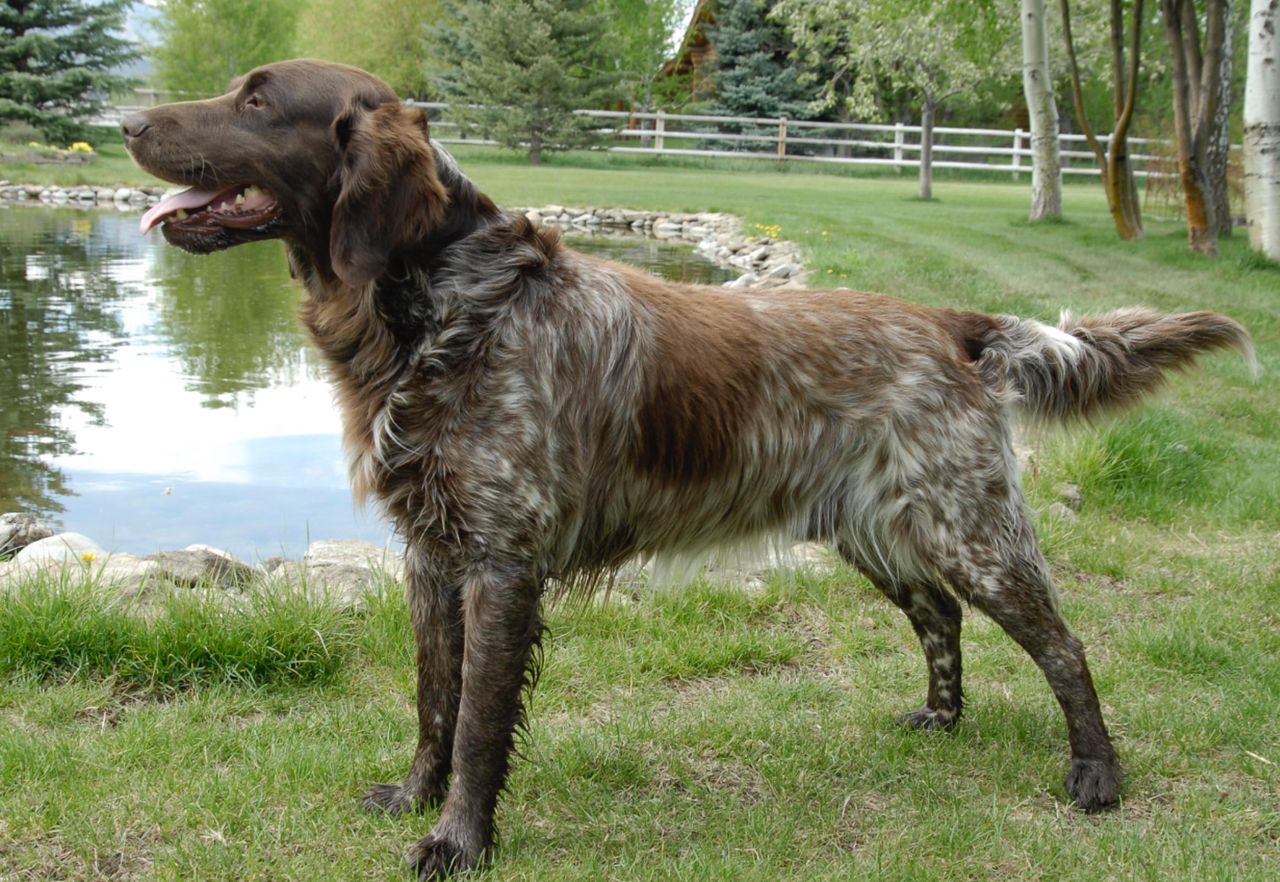
Medium in size, the Drentse Patrijshond boasts males weighing between 23-33 kg (51-73 lbs) and females between 22-25 kg (49-55 lbs). Males stand at 57-63 cm (22.5-25 in) at the withers, while females are slightly shorter at 55-60 cm (21.5-24 in). Their coat is predominantly white, adorned with orange/brown markings and large brown plates (spots) on the body. The medium-length coat features feathers on the legs and a longer mane on the chest, creating an illusion of a longer-haired dog.
Distinctive features of the breed include the absence of white on the eyes or ears, and there is usually one large plate covering the backside above the tail. While a mantle, a large marking across the back, is permissible, it is less desired.
Temperament and Personality
Renowned for its friendly and loyal nature, the Drentse Patrijshond possesses a gentle and energetic temperament. These dogs are alert and intelligent, making them excellent companions for both hunting and family life. In the field, they exhibit a strong hunting instinct, while at home, they tend to be more relaxed, forming strong bonds with family members and displaying a sweet disposition, particularly with children.
Despite their hunting background, Drentse Patrijshonds are generally well-suited to family life. However, they require adequate exercise and mental stimulation to prevent behavioral issues and maintain their overall health and happiness.
Health Concerns and Genetic Screenings
Responsible breeders screen for various health concerns, including progressive retinal atrophy (PRA), a degenerative eye disorder that can lead to blindness, and hereditary stomatocytosis, a rare blood disorder. Hip dysplasia, elbow dysplasia, and hereditary eye disorders are also recommended for screening before breeding. These measures help ensure the overall health and well-being of the breed, reducing the incidence of these conditions.
History and Development
The Drentse Patrijshond's history is deeply rooted in the rural province of Drenthe, where the breed was initially developed in the 16th century. This versatile dog was used for hunting, acting as a watchdog, and serving as a child's playmate. The breed's development was influenced by the Spioenen dogs, which originated in Spain and France and were introduced to the Netherlands through France. Over time, the Drentse Patrijshond evolved into an all-around dog, capable of hunting both birds and small mammals, such as rabbit, hare, and fox.
The breed's development was also shaped by the common gentry in Drenthe, who were allowed to hunt. This led to the creation of dogs that could perform a variety of tasks, contributing to the breed's versatility and adaptability.
Breeder Purpose and Use
The primary purpose of breeding Drentse Patrijshonds is for sporting activities, reflecting their natural hunting instincts. They are highly valued as gun dogs in their native country of the Netherlands, where approximately 5,000 dogs are registered with the breed club. The breed's versatility also makes it suitable for other activities, such as agility competitions and hunt tests, as recognized by the American Kennel Club (AKC) since 2010.
The Drentse Patrijshond's role as a versatile hunting dog is particularly well-suited to the smaller plots available in Drenthe. These dogs are thorough and efficient in finding all the game, with good speed and the ability to point and retrieve, making them invaluable to hunters.
Exercise and Activity Needs
While they can be content at home when not active, these dogs are not suited to a sedentary lifestyle. Insufficient exercise can lead to behavioral issues and poor health.
Buying a Drentse Patrijshond: A Practical Checklist
- Research reputable breeders who prioritize health and temperament.
- Ensure the dog has been screened for common health concerns like PRA and hereditary stomatocytosis.
- Check if the breeder offers a health guarantee and ask about after-purchase support.
- Visit the dog in person to assess its temperament and interaction with family members.
Frequently Asked Questions
What is the lifespan of the Drentse Patrijshond?
The average lifespan of the Drentse Patrijshond is about 11-14 years. Good nutrition and regular veterinary care support a healthy life.
What is the temperament of the Drentse Patrijshond?
The Drentse Patrijshond is known for: Friendly, Intelligent, Loyal, Gentle, Energetic, Alert. Its energy level is high.
What size and weight is the Drentse Patrijshond?
It is a large dog, typically around Male: 23-33; Female: 22-25 kg as an adult.
Is the Drentse Patrijshond easy to care for?
Reliable grooming and shedding ratings are not available. Routine brushing, ear and dental care, and nail trims are still recommended.
Is the Drentse Patrijshond good with kids and other pets?
Reliable child- and pet-friendliness ratings are not available. Supervised, gradual introductions are recommended.
How much exercise does the Drentse Patrijshond need?
With a high energy level, it needs walks, play or training matched to its stamina.
Drentse Patrijshond
Trait Scores
N/A