Origin and History
The Danish Spitz hails from Denmark, a country renowned for its picturesque landscapes, including the Jutland Peninsula where the breed was particularly valued. This breed has been known by various names, including Samoyed Spitz, Wolf Spitz, Greenland Spitz, and White Spitz, which historically made tracking and breeding efforts challenging. It was primarily owned by the bourgeoisie in the past, but in the 1930s, it gained popularity as a farm dog, particularly in Jutland, due to its role in taking care of children. However, the breed nearly became extinct in the late 20th century, only to be reconstructed and preserved in the late 1980s. The breed's current registration in Denmark is managed by the Danish Kennel Club (DKK), which registered it under the Fédération Cynologique Internationale (FCI) starting from January 1, 2013, though it is not yet officially recognized by the FCI. The breed's resurgence was attributed to the efforts of enthusiasts like Mrs. Else Schou, who worked tirelessly to preserve the breed.
The Danish Spitz was once widely recognized and exhibited in Denmark and the Nordic countries. Today, despite its historical significance, it remains less known in the broader international context, with only a few hundred registered dogs worldwide. The breed's rarity has contributed to its appeal among dog enthusiasts seeking a unique and historically significant companion.
With a rich history rooted in companionship and a focus on nurturing children, the Danish Spitz has maintained its place as a beloved breed in its native Denmark and the surrounding regions, where it continues to be cherished for its loyalty and protective nature.
Breed Standard and Characteristics
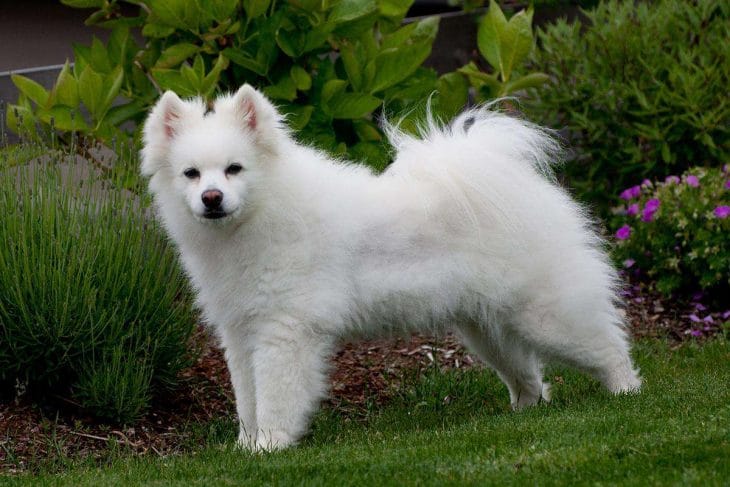
The Danish Spitz is a medium-sized, compact spitz-type dog characterized by a dense white double coat, pricked ears, and a curled tail that is carried over the back. The male stands at 40-49 cm in height, while the female reaches 39-46 cm, showcasing a distinct and endearing physique. Males typically weigh between 12-18 kg, and females range from 10-15 kg, which reflects the breed's moderate size and build. The breed's coat color is strictly white, with a biscuit shade permissible only in the ears and around the eyes.
The Danish Spitz is energetic, intelligent, and friendly, with a temperament that is lively and alert. Its coat, which is of medium length, sheds moderately throughout the year and comes in white to biscuit colors. The coat is flat and should not stand out from the body, with slight feathering at the backs of the thighs and legs. The tail is bushy and, when calm, is allowed to hang. This breed is non-sporting and has not been bred with the specific intent of participation in dog sports, which has allowed it to retain its natural instincts and characteristics.
Despite its energy and alertness, the Danish Spitz's coat is considered hypoallergenic to a limited extent, as indicated by a rating of 0 on the hypoallergenic scale, suggesting it may be suitable for individuals with mild allergies. This has made the breed appealing to those seeking a dog that is less likely to trigger allergic reactions.
Temperament and Personality
The temperament of the Danish Spitz is one of its defining traits, described as lively, friendly, curious, and brave. This breed is particularly suited for families due to its patient nature with children, making it an excellent choice for those seeking a loyal and protective companion. Its friendly disposition is balanced by its alertness, making it a suitable pet for households that desire a watchdog without the need for excessive barking. The breed's loyalty is further enhanced by its tendency to form strong bonds with its owners, contributing to a fulfilling and rewarding companionship.
Intelligence is a hallmark of the Danish Spitz, contributing to its high trainability. This breed responds well to training, which can be beneficial in managing its high energy levels and ensuring it remains a well-rounded member of the family. The breed's adaptability and eagerness to please make training sessions both enjoyable and effective.
Its temperament is also marked by a strong sense of loyalty, which means the Danish Spitz will be dedicated to its owners, forming strong bonds that can lead to a fulfilling and rewarding companionship. This loyalty is a key aspect of the breed's personality, making it a reliable and devoted companion.
Health and Care
The Danish Spitz typically has a lifespan of 12-15 years, which is consistent with the average for similar breeds. However, certain health conditions may affect this lifespan, including hip dysplasia, patellar luxation, and eye disorders such as progressive retinal atrophy (PRA).
This breed is known for its moderate shedding, especially during the spring and fall when shedding peaks. The Danish Spitz's coat, which is white to biscuit in color and medium in length, is designed to protect the dog from extreme temperatures. It serves as insulation against cold in the winter and provides some cooling effect in the summer, reflecting the breed's adaptability to a variety of environments.
Exercise is a crucial part of the Danish Spitz's care routine. This breed requires adequate exercise to prevent behavioral issues such as hyperactivity or destructiveness.
Breeding and Registration
The Danish Spitz has been recognized by the Danish Kennel Club (DKK) since January 1, 2013, allowing for formal registration of the breed under the Fédération Cynologique Internationale (FCI). Despite this, the breed is not yet officially recognized by the Fédération Cynologique Internationale (FCI), which can affect its status and recognition on an international level. The breed's current status as a non-officially recognized breed means that it is less common and may be harder to find, making it a more specialized choice for dog enthusiasts who appreciate rare and historically significant breeds.
With efforts to rebuild and register the breed on the X-register of the Danish Kennel Club, there is a commitment to preserving and promoting the Danish Spitz for future generations. This process involves careful selection of breeding stock to maintain the breed's unique characteristics and health.
Choosing a Danish Spitz: Practical Considerations
Given its friendly and lively nature, the Danish Spitz is best suited for households with children or those who appreciate an active, social companion.
Investing in proper training from a young age will help shape the behavior of a Danish Spitz and ensure they are well-mannered and adaptable to various environments. By considering these practical aspects, potential owners can make an informed choice about whether a Danish Spitz is the right fit for their lifestyle and home environment.
Frequently Asked Questions
What is the lifespan of the Danish Spitz?
The average lifespan of the Danish Spitz is about 12-15 years. Good nutrition and regular veterinary care support a healthy life.
What is the temperament of the Danish Spitz?
The Danish Spitz is known for: Friendly, Alert, Intelligent, Energetic, Loyal. Its energy level is high.
What size and weight is the Danish Spitz?
It is a large dog, typically around Male: 12-18; Female: 10-15 kg as an adult.
Is the Danish Spitz easy to care for?
Reliable grooming and shedding ratings are not available. Routine brushing, ear and dental care, and nail trims are still recommended.
Is the Danish Spitz good with kids and other pets?
Reliable child- and pet-friendliness ratings are not available. Supervised, gradual introductions are recommended.
How much exercise does the Danish Spitz need?
With a high energy level, it needs walks, play or training matched to its stamina.
Danish Spitz
Trait Scores
N/A