Origin and History
The Bruno Jura Hound originated in the rugged Jura Mountains, a mountain range that extends over the French-Swiss border. This medium-sized scent hound is believed to have descended from the St. Hubert Hound, which has its roots in the 7th century, with St. Hubert of Liège being a historical figure associated with hounds. The breed's development began around the late 19th century, with the breed being officially recognized in Switzerland in 1892 by the Swiss Canine Association. This recognition came after years of selective breeding to enhance its scenting abilities and hunting prowess.
Its historical role has been that of a hunter, particularly in the challenging terrain of the Jura Mountains. The Bruno Jura Hound has been utilized by hunters for pursuing fox, hare, and small deer, showcasing its remarkable ability to follow faint scents in the mountainous landscape.
This breed's development has been influenced by its environment and purpose, resulting in a dog with a keen nose, endurance, and strong tracking instincts. The mountainous terrain required a dog that could withstand harsh conditions and maintain its scenting ability over long distances. Essential for hunting in the Jura Mountains, the Bruno Jura Hound's physical and genetic makeup reflect these selective pressures.
Physical Description
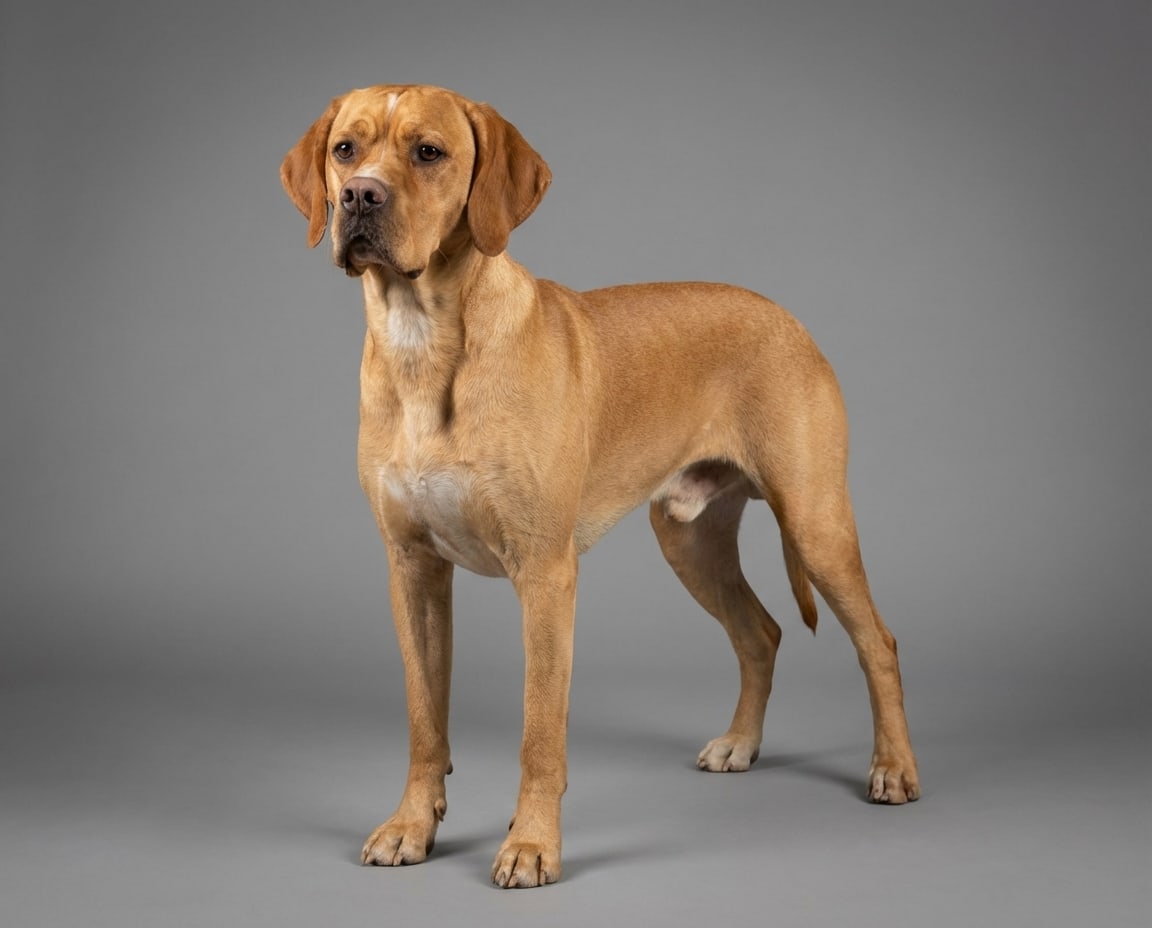
The Bruno Jura Hound is a medium-sized dog, typically weighing between 15-22 kg for males and 15-20 kg for females. Males stand at a height of 46-59 cm, while females are slightly shorter at 43-57 cm. Their coat is characterized by a tan to black coloration, often in a two-tone brown pattern, with no white markings. The distinctive black saddle is a hallmark of this breed, serving as a visual identifier of the breed and reflecting its hunting heritage.
Physically, the Bruno Jura Hound features long, dropped ears that are typical of scent hounds, and a gentle, sometimes melancholic expression that reflects its breed character. This expression may also be a result of the breed's intense focus and the challenging work it performs in the field. Its build is suited for hunting, with a lean and agile body that allows for endurance and agility in the mountainous terrain, essential for navigating the rugged landscape of the Jura Mountains.
Temperament and Personality
Temperament-wise, the Bruno Jura Hound is independent, alert, intelligent, and gentle. These traits make it well-suited for its work as a hunter and for living in a household. The breed's independent nature means that it can sometimes be headstrong, but this is balanced by its intelligence and responsiveness to training.
Despite its independent streak, the Bruno Jura Hound can be affectionate and gentle, forming strong bonds with its owners. Its sometimes melancholic expression might be attributed to its intense focus and the challenging work it performs, but it also adds to its noble and dignified demeanor. This combination of traits makes the Bruno Jura Hound a companion that is both reliable and endearing.
Health and Genetics
Specific conditions that affect the Bruno Jura Hound are not mentioned in the reference text. However, as with any breed, there are potential health concerns that can arise. Common health issues in dogs can include hip dysplasia, elbow dysplasia, and eye disorders such as cataracts and progressive retinal atrophy. Given the breed's genetic background, closely related to the St. Hubert Hound and French hounds, there may be a predisposition to certain conditions, although detailed genetic information is not available to confirm this.
Breeders who specialize in the Bruno Jura Hound often perform health screenings on their dogs to identify and manage potential health issues early on.
Training and Exercise
Given its high trainability, the Bruno Jura Hound responds well to training. Its intelligence and willingness to work make it a suitable candidate for obedience training and other dog sports, such as tracking and scent work. Consistency and positive reinforcement are key in training this breed, as they appreciate clear guidance and structure. The breed's natural hunting instincts can be channeled into activities that mimic its work, providing mental stimulation and physical exercise.
Training should begin early and be ongoing to keep the Bruno Jura Hound engaged and well-behaved. Socialization is also important, as this breed can be somewhat reserved with strangers. Exposure to various people, animals, and environments during puppyhood can help mitigate any potential shyness or aggression in adulthood.
Coat and Grooming
Regular brushing not only helps keep the coat of the Bruno Jura Hound in good condition but also provides an opportunity to check for any skin issues or parasites. The breed has a short, dense coat that requires minimal grooming. During the shedding seasons, which typically occur twice a year, brushing becomes more frequent to manage the increased shedding. Grooming is an essential part of maintaining the overall health and well-being of this breed, and it also serves as a bonding opportunity between the dog and its owner.
Living with a Bruno Jura Hound
Living with a Bruno Jura Hound requires an understanding of its needs and characteristics. Its medium energy level and strong hunting instincts mean it is best suited for active households with space for exercise.
Its independent nature and gentle temperament make it a good fit for families with older children who can appreciate and respect its boundaries. The Bruno Jura Hound is not recommended for first-time dog owners due to its specific care requirements and intense work ethic. This breed is highly valued for its keen sense of smell and tracking abilities, traits that can be harnessed in various dog sports and activities, including obedience, tracking, and search and rescue.
This breed is also known for its loyalty and dedication, which makes it a great companion for individuals or families looking for a loyal and intelligent pet.
Buying a Bruno Jura Hound: What to Consider
- Research reputable breeders who specialize in the Bruno Jura Hound to ensure the health and temperament of the puppy. Look for breeders who are members of recognized kennel clubs or breeding organizations.
- Be prepared for the ongoing costs of pet ownership, including food, veterinary care, grooming, and training. The Bruno Jura Hound may require specialized training and care, which should be factored into the overall cost of ownership.
- Assess your lifestyle and living situation to ensure it can accommodate the needs of a Bruno Jura Hound, including space for exercise and the time required for training and care. This breed requires a commitment to an active lifestyle.
- Understand the breed's temperament and working background to provide the appropriate environment and activities for your dog.
Frequently Asked Questions
What is the lifespan of the Bruno Jura Hound?
The average lifespan of the Bruno Jura Hound is about 12-14 years. Good nutrition and regular veterinary care support a healthy life.
What is the temperament of the Bruno Jura Hound?
The Bruno Jura Hound is known for: Independent, Alert, Intelligent, Gentle, Work-focused. Its energy level is moderate.
What size and weight is the Bruno Jura Hound?
It is a large dog, typically around Male: 15-22; Female: 15-20 kg as an adult.
Is the Bruno Jura Hound easy to care for?
Reliable grooming and shedding ratings are not available. Routine brushing, ear and dental care, and nail trims are still recommended.
Is the Bruno Jura Hound good with kids and other pets?
Reliable child- and pet-friendliness ratings are not available. Supervised, gradual introductions are recommended.
How much exercise does the Bruno Jura Hound need?
With a moderate energy level, it needs walks, play or training matched to its stamina.
Bruno Jura Hound
Trait Scores
N/A