Origin and History
The Braque du Bourbonnais, a medium-sized French pointing dog, originated in the Bourbonnais region of France, which is located in the central part of the country. Its history is marked by a decline in registrations during the post-World War II period, with no dogs registered in the LOF (French studbook) from 1963 to 1973. This period saw a focus on secondary characteristics such as coat color and tail length over hunting capabilities, leading to a less suitable breed for hunting. The breed was nearly lost until Michel Comte's efforts in the 1970s to restore the breed's pure lineage, which included registering the first Bourbonnais on the LOF in 1973.
The Club du Braque du Bourbonnais was recreated in 1981, with Michel Comte serving as its president until 2001. This period saw the breed thrive due to successes in field trials. The first Bourbonnais was introduced to the USA in 1988, marking the beginning of its growth in that country. The breed's resurgence was also attributed to the work of breeders such as the French kennel "Les Pierres de Vaux," which played a significant role in the breed's recovery.
During its historical development, the Braque du Bourbonnais faced challenges such as a decrease in births and a shift in breeding priorities. However, dedicated breeders and enthusiasts have worked to restore and preserve the breed's original characteristics and hunting abilities. This dedication was pivotal in maintaining the breed's distinctiveness and functionality as a hunting dog.
Physical Description
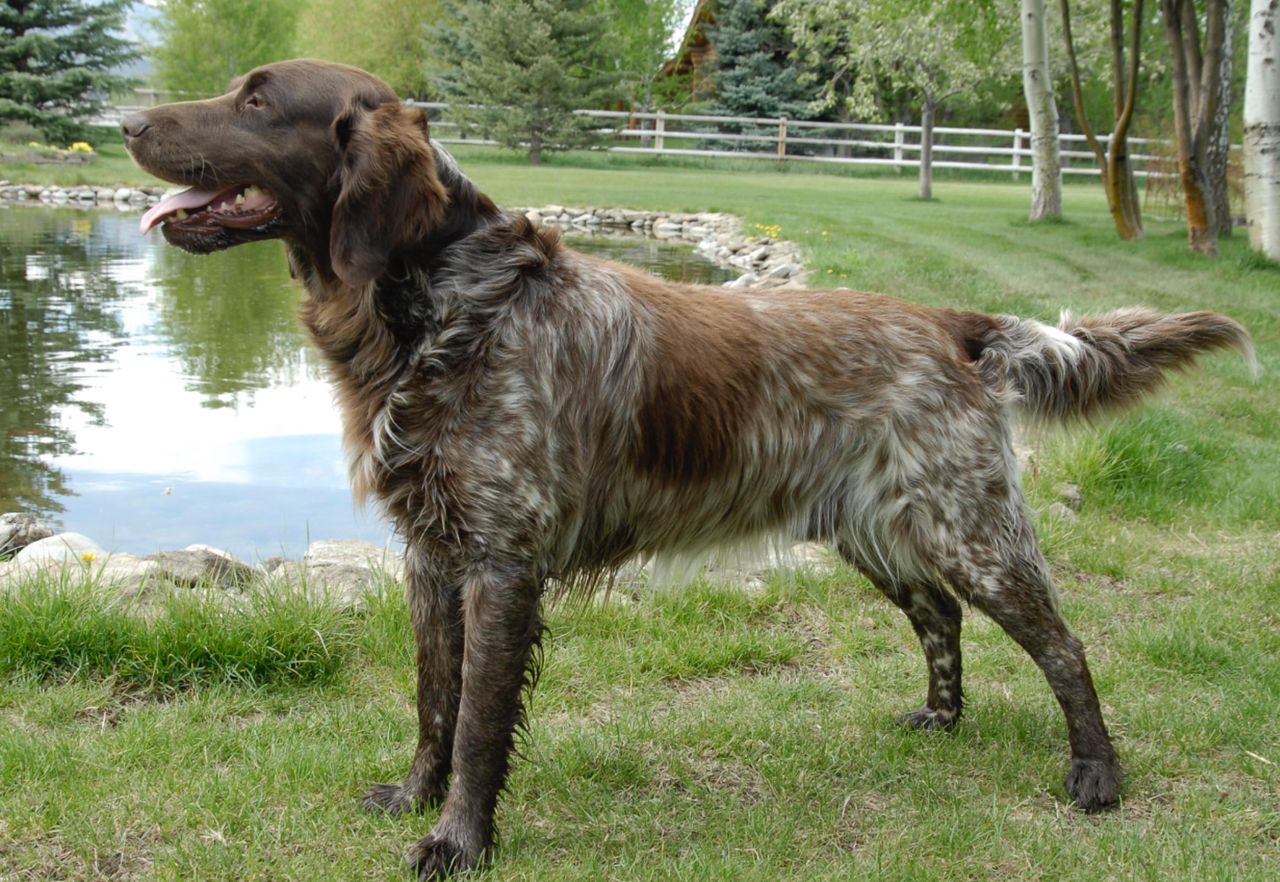
The Braque du Bourbonnais has a compact and agile build, known for its distinctive ticked speckled coat and naturally short tail. The head is rounded in every direction with well-developed parietal bones and zygomatic arches. The skull and muzzle axes are parallel or slightly divergent towards the front, and the head position is high or prolonging the shoulder. The breed is characterized by its gentle and intelligent temperament, loyalty, and calm nature.
Coat colors in the Braque du Bourbonnais include Liver, also called "wine dregs" or "faded lilac," and Fawn, also known as "peach blossom. " The breed's coat may feature spots, but they should not exceed the size of a palm. On the head, the two eyes must not be inside the same spot. The females of the breed are generally thinner, more elegant, and longer than the males. The coat's texture is short and fine, and the undercoat is dense, which contributes to the breed's ability to withstand various weather conditions.
One notable feature of the Braque du Bourbonnais is the occurrence of a short tail, which can be a result of the brachyury gene, the same as found in the Brittany breed. This characteristic is often referred to as the "short-tail pointer" or "anury" when the dog is born without a tail at all. The gene is autosomal dominant, meaning that a single copy of the gene from either parent is sufficient to produce the short-tail trait.
Temperament and Behavior
The Braque du Bourbonnais is known for its gentle temperament, intelligence, loyalty, and calm nature. These dogs are very loyal to their families and enjoy being close to their owners. However, when out hunting, they become highly attentive and motivated. Their activity level is moderate, with a natural pace of gallop but capable of trotting under cover. They can change direction quickly, resembling the sport of polo, and their hunting style is described as a "pointing" dog, where they will freeze in place when they find game.
The breed is a good agreement dog, displaying a blend of affectionate family dog and hardworking hunter.
Health and Genetics
The Braque du Bourbonnais has a lifespan of 12-15 years, which is typical for a medium-sized breed. Common health concerns for this breed include hip dysplasia, a genetic condition that can affect the hip joint, and elbow dysplasia, which can lead to joint problems.
The gene responsible for the breed's short tail has been identified as autosomal dominant, the same as in the Brittany breed. This genetic trait is a distinctive feature of the Braque du Bourbonnais and is worth noting for potential breeders and owners.
Breed Standards and Preservation
The Braque du Bourbonnais has a specific breed standard that emphasizes its hunting capabilities, temperament, and physical characteristics. The breed's standard is designed to ensure that future generations maintain the qualities that make the Braque du Bourbonnais a valued hunting companion and a beloved family pet. The standard includes details such as the dog's size, weight, coat color, and structure, as well as specific behavioral traits expected of the breed.
The breed's club, the Club du Braque du Bourbonnais, plays a crucial role in preserving the breed's heritage. Established in 1981, the club has worked tirelessly to restore and promote the breed's original characteristics and ensure its continued existence. The club's efforts have contributed to the breed's thriving status, especially in countries like the USA and France. The club also provides resources for breeders and owners, including information on health issues, training techniques, and breed history.
Breed-Specific Numbers
According to the American Kennel Club (AKC), the Braque du Bourbonnais is one of the less common breeds in the United States. The breed's registry numbers reflect this status, with fewer than 1000 registered dogs as of the latest available data. Despite its lower numbers, the breed has a dedicated following and is recognized for its unique qualities and contributions to hunting and companionship.
Buying a Braque du Bourbonnais
- Visit reputable breeders who can provide health clearances and lineage information. Reputable breeders will have a history of breeding healthy dogs and will be transparent about the health issues that may affect the breed.
- Observe the behavior and temperament of the dogs to ensure they are well-socialized and adaptable. The breed's temperament should be gentle and intelligent, and the dogs should be comfortable with people and other animals.
- Ask about the breeder's experience with the breed and their commitment to preservation and improvement. An experienced breeder will be knowledgeable about the breed's history, characteristics, and challenges.
- Be prepared for the long-term commitment of caring for a dog with a lifespan of 12-15 years.
- Consider the breed's specific traits, such as its moderate energy level, adaptability, and hunting instincts, when making the decision to bring a Braque du Bourbonnais into your home.
Purchasing a Braque du Bourbonnais should be a well-informed decision that considers the breed's unique characteristics, including its moderate energy level, adaptability, and hunting instincts.
Frequently Asked Questions
What is the lifespan of the Braque du Bourbonnais?
The average lifespan of the Braque du Bourbonnais is about 12-15 years. Good nutrition and regular veterinary care support a healthy life.
What is the temperament of the Braque du Bourbonnais?
The Braque du Bourbonnais is known for: Gentle, Intelligent, Loyal, Calm, Affectionate, Adaptable. Its energy level is low.
What size and weight is the Braque du Bourbonnais?
It is a large dog, typically around Male: 18-26; Female: 16-24 kg as an adult.
Is the Braque du Bourbonnais easy to care for?
Reliable grooming and shedding ratings are not available. Routine brushing, ear and dental care, and nail trims are still recommended.
Is the Braque du Bourbonnais good with kids and other pets?
Reliable child- and pet-friendliness ratings are not available. Supervised, gradual introductions are recommended.
How much exercise does the Braque du Bourbonnais need?
With a low energy level, it needs walks, play or training matched to its stamina.
Braque du Bourbonnais
Trait Scores
N/A