Origin and History
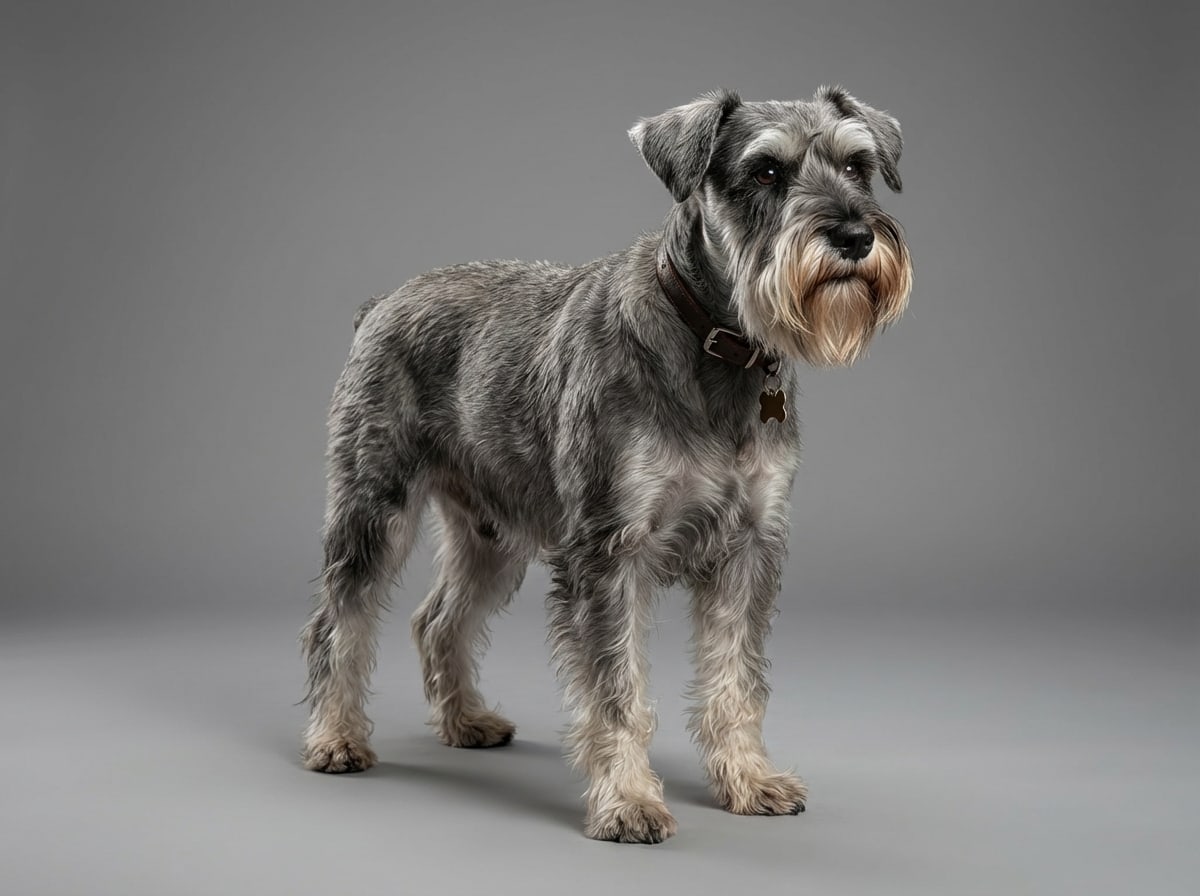
The Black Russian Terrier, known as the Chornyi Terrier in Russian, is a breed that originated in the USSR during the late 1940s and early 1950s. Developed at the Red Star (Krasnaya Zvezda) Kennel, it was initially bred for military and working purposes. The breed's development was driven by the need for a hardy, intelligent, and protective dog to serve in various roles within the military, including guard duties, search and rescue, and as a companion dog for soldiers. The Red Star Kennel imported breeding stock from countries where the Red Army was active during World War II, particularly from East Germany. This resulted in a diverse genetic pool, incorporating breeds such as the Giant Schnauzer, Airedale Terrier, Rottweiler, Newfoundland, Caucasian Shepherd Dog, and South Russian Shepherd Dog. The goal was to create a dog with the strength and endurance of the Newfoundland, the intelligence and trainability of the Airedale, and the protective instincts of the Rottweiler and Caucasian Shepherd.
The first working examples of the Black Russian Terrier were showcased in 1955 at a Moscow exhibition, and the first Breed Standard was published in 1958. This standard was later adopted by the Fédération Cynologique Internationale (FCI) in 1984. The breed spread to other parts of the USSR and beyond, gaining recognition in various cynological organizations and countries, including the United States, Canada, Australia, and the UK, where it was first introduced in 1996. The breed quickly gained a reputation for its loyalty and protective nature, making it a popular choice for security work and as a family companion in countries where it was exported.
According to the FCI standard, the Black Russian Terrier stands between 68 and 76 cm for males and 66 and 74 cm for females. Males weigh between 50 and 60 kg, while females weigh between 45 and 50 kg. The breed has a double coat with a dense, hard outer layer and a soft undercoat, and its color is predominantly black or black with scattered gray hairs. The coat is known for its ability to protect the dog from harsh weather conditions, a trait that was essential for its original purpose as a working dog. Dogs participating in conformation shows should be groomed at least every three weeks to ensure their coat is in optimal condition.
In the 1960s and 1970s, the Black Russian Terrier gained recognition in the Soviet Union for its performance in various working dog trials. One notable dog, named Zaschita (meaning "Protection"), was a champion show dog and working dog who demonstrated the breed's capabilities in obedience and protection trials. Zaschita's success helped to solidify the Black Russian Terrier's reputation as a versatile and reliable working dog. By the 1980s, the breed had spread to Eastern Europe and began to gain popularity in Western countries, although it remained relatively rare compared to more established breeds.
Temperament and Traits
Characterized by a confident and courageous demeanor, the Black Russian Terrier is known for its intelligence, protective nature, and loyalty. These dogs are highly trainable and excel in obedience competitions and other dog sports like agility and Schutzhund training. Their temperament makes them excellent working dogs and companions.
The Black Russian Terrier requires early training and firm, consistent handling. This breed has a low-shedding coat that needs grooming several times a week, and dogs participating in conformation shows should be groomed at least every three weeks. Young Black Russian Terriers grow rapidly and may become hyperactive if not provided with enough exercise and mental stimulation. Once they reach maturity, their energy levels decrease, and they become content with spending time near their owner.
One of the most notable traits of the Black Russian Terrier is its intelligence. These dogs are quick learners and can be trained to perform a wide variety of tasks, from simple obedience commands to more complex tasks like search and rescue or agility. However, their intelligence also means that they can be stubborn at times, and training must be done with patience and consistency. Positive reinforcement techniques are generally more effective than harsh training methods, as this breed responds best to encouragement and praise.
The breed's protective nature is another defining trait. Black Russian Terriers are naturally alert and will bark to alert their owners to potential threats. Proper socialization from a young age helps to ensure that they grow into well-balanced adults who are comfortable in a variety of environments.
Health Considerations
The Black Russian Terrier has a life expectancy of approximately 10.9 years, which is slightly lower than the average for purebred dogs. The breed is prone to certain hereditary conditions, including hip and elbow dysplasia, which can affect mobility, hyperuricosuria, which can lead to kidney and urinary tract issues, and juvenile laryngeal paralysis and polyneuropathy, which can affect the dog's ability to breathe and walk.
Other health concerns include hypertrophic osteodystrophy and panosteitis, both of which are developmental diseases affecting young, heavy, fast-growing puppies. These conditions can cause pain and lameness, and they may require rest, medication, or in severe cases, surgery. Heart disease, such as aortic stenosis and mitral valve dysplasia, is also a common concern. Aortic stenosis is a condition where the aorta is narrowed, which can lead to exercise intolerance and fainting. Mitral valve dysplasia is a condition where the mitral valve does not function properly, which can lead to heart failure.
Eye issues like ectropion, entropion, and conjunctivitis are also prevalent in the Black Russian Terrier. Ectropion is a condition where the eyelid droops outward, which can cause dry eye and irritation. Entropion is a condition where the eyelid rolls inward, which can cause the eyelashes to rub against the eye and cause irritation. Conjunctivitis, or pink eye, is an inflammation of the conjunctiva, which can be caused by allergies, infections, or irritants. Allergies can manifest in various forms, including food, contact, and inhalant allergies. Symptoms of allergies can include itching, redness, and inflammation of the skin, as well as respiratory issues like sneezing and coughing.
These check-ups can help to detect and manage health issues early on, which can improve the dog's quality of life and extend its lifespan. Responsible breeders will conduct genetic testing on their breeding stock to reduce the risk of passing on hereditary conditions to their puppies. Potential owners should also be aware of the breed's health risks and be prepared to provide their dog with the necessary care and attention.
Coat and Grooming
The Black Russian Terrier has a double coat with a coarse outer guard hair and a softer undercoat. The coat is low-shedding and should be trimmed to a length between 5 and 15 cm to maintain its appearance and hygiene. Proper grooming not only ensures the coat stays in good condition but also helps identify any skin issues or infections early on. The dense and hard coat provides the Black Russian Terrier with excellent protection against the elements, a trait that was essential for its original purpose as a working dog.
During shedding season, which occurs twice a year, the breed may require more frequent grooming to manage the increased amount of hair loss. Professional grooming may also be necessary to trim the coat to the desired length and to keep the dog's nails trimmed.
Matting can occur if the coat is not brushed regularly, and it can be painful for the dog and difficult to remove. In severe cases, matting may require professional grooming to be corrected.
Lifestyle and Exercise Needs
They were bred as working dogs and have a strong work ethic, which can make them unhappy without an outlet for their energy. They do well with structured exercise routines, such as daily walks, play sessions, and training activities. Black Russian Terriers need at least an hour of exercise per day, but they can benefit from more if they have the opportunity. Mental stimulation is also essential for this breed, as they are highly intelligent and can become bored if they do not have enough to do.
Despite their powerful build and protective nature, Black Russian Terriers can be gentle and affectionate with their owners. They enjoy spending time with family members and can be a good match for families with older children who understand how to interact with a large and powerful dog. Their low-shedding coat makes them suitable for those with allergies, although their shedding does increase during shedding season.
Black Russian Terriers are generally good with other pets if they are socialized from a young age. The breed is also known to be good with children, but they should always be supervised when interacting with young family members to ensure that playtime is safe for both the dog and the child.
Buying and Owning a Black Russian Terrier
This breed may not be the best choice for first-time dog owners due to their high intelligence and strong protective instincts. Potential owners should be prepared to provide firm, consistent training and to spend time socializing their dog from a young age. The breed's strong will and protective nature can make them challenging to train if they are not given proper guidance and direction.
When looking for a Black Russian Terrier, it is advisable to work with reputable breeders who prioritize health and temperament. Purchasing from a registered kennel ensures that the dog comes with a clear health history and genetic background. It is also essential to consider the cost of ownership, including food, grooming, training, and veterinary care.
- Ensure the dog comes from a registered kennel with a clear health history.
- Invest in a sturdy and secure environment for the dog to ensure their safety and well-being.
Frequently Asked Questions
What is the lifespan of the Black Russian Terrier?
The average lifespan of the Black Russian Terrier is about 10-12 years. Good nutrition and regular veterinary care support a healthy life.
What is the temperament of the Black Russian Terrier?
The Black Russian Terrier is known for: Confident, Courageous, Intelligent, Protective, Calm, Loyal. Its energy level is low.
What size and weight is the Black Russian Terrier?
It is a large dog, typically around 36-59 kg as an adult.
Is the Black Russian Terrier easy to care for?
Reliable grooming and shedding ratings are not available. Routine brushing, ear and dental care, and nail trims are still recommended.
Is the Black Russian Terrier good with kids and other pets?
Reliable child- and pet-friendliness ratings are not available. Supervised, gradual introductions are recommended.
How much exercise does the Black Russian Terrier need?
With a low energy level, it needs walks, play or training matched to its stamina.
Black Russian Terrier
Trait Scores
N/A