Origin and Development
The Bavarian Mountain Hound, known in German as Bayerischer Gebirgsschweißhund, hails from the mountainous regions of Bavaria, Germany. This breed was developed in the 19th century through a crossbreeding of the Hanover Hound with the Tyrolean Hound and other hunting dogs, resulting in a dog that excelled in the challenging terrain of the mountains.
The primary purpose of this breed was to track wounded game, especially deer, in the mountainous environment. This work required a dog that was both agile and tenacious, able to follow the trail of blood left by the wounded animal, a skill that the Bavarian Mountain Hound has mastered. The breed's development was influenced by the need for a dog that could work effectively in the harsh conditions of the Bavarian Alps.
In 1912, the "Klub für Bayrische Gebirgsschweißhunde," a club dedicated to the breed, was founded in Munich. This marked a significant moment in the breed's history, as it helped to solidify its identity and increase its popularity in countries like Austria and Hungary. The club played a crucial role in maintaining the breed's standards and ensuring its continued development.
Physical Characteristics
The Bavarian Mountain Hound is a medium-sized dog, with males typically weighing between 20 and 25 kg and standing at 47 to 52 cm tall. Females are slightly lighter, usually weighing between 17 and 25 kg, with a height range of 43 to 48 cm. The breed's physical characteristics are well-suited to its mountainous hunting environment, with a sturdy build and a coat that protects against the elements.
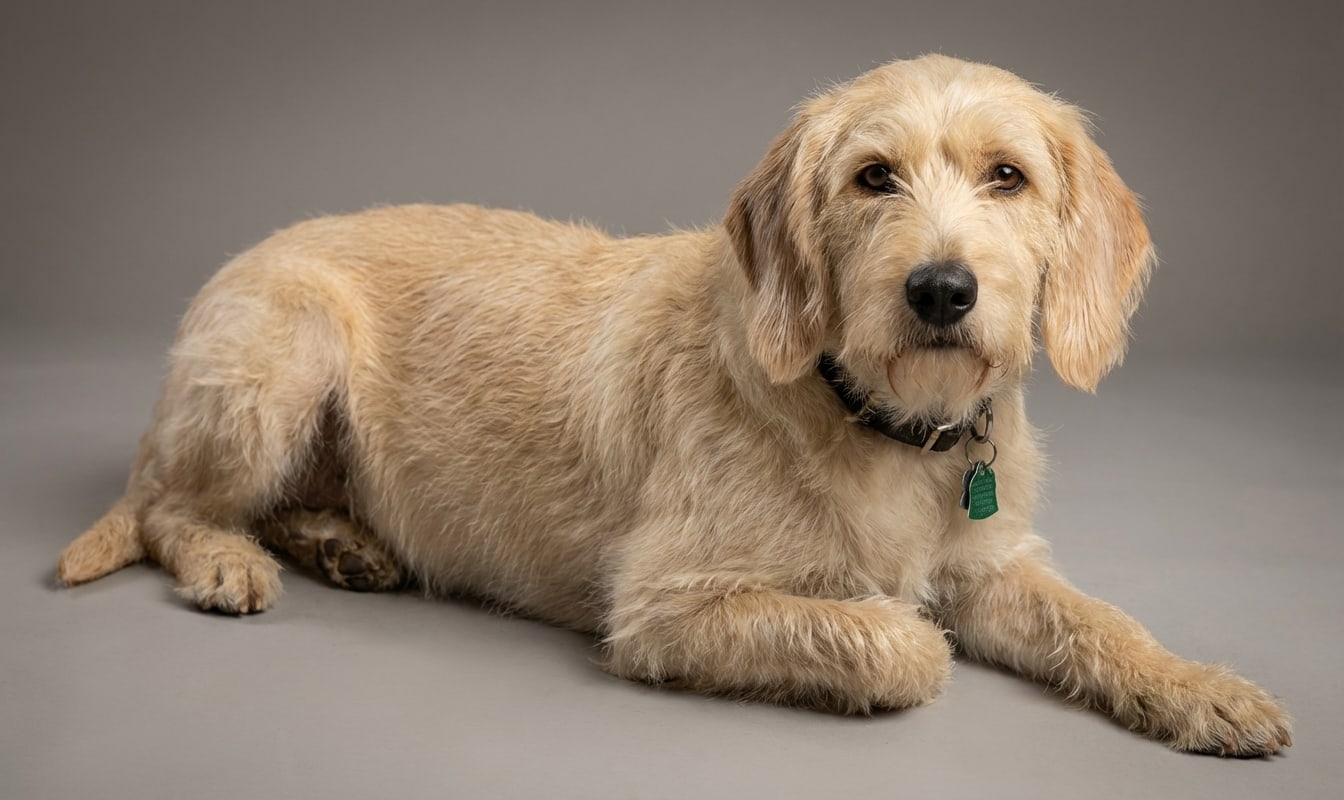
Its head is strong and elongated, with a relatively broad skull and a pronounced stop. The muzzle is broad, with solid jaws and lips that fully cover the mouth. The nose is black or dark red, with wide nostrils, and the ears are high set, medium in length, broader at the base, and rounded at the tips, hanging heavily against the head. These features contribute to the breed's excellent scenting abilities.
The body is slightly longer than it is tall, with a sloping topline that rises slightly upward from the withers to the hindquarters. The chest is well-developed, long, moderately wide, and well let down, with a slight tuck-up. The tail is set on high, medium in length, and carried level to the ground or hanging down, adding to the breed's overall balance and agility.
The coat is short, thick, and glossy, lying flat against the body. It is finer on the head and ears, harsher and longer on the abdomen, legs, and tail. The coat comes in shades of black-masked fawn, red, or brindle, and sometimes features a white marking on the chest. This coat not only protects the dog from the elements but also helps to keep it cool in hot weather.
Temperament and Personality
The Bavarian Mountain Hound is known for its calm and poised demeanor, combined with courage and devotion. These dogs are hardworking and single-minded when hunting, which reflects their intense focus and determination. Their strong sense of smell and tracking ability make them invaluable in the field.
They are highly attached to their family but tend to be reserved with strangers, making them excellent hunters but less suitable as pets for those looking for a more outgoing companion. Their temperament is such that they are not often seen as pets; most are still employed by hunters and trackers. The breed's loyalty and dedication to its work are well-documented in historical accounts and modern hunting practices.
With a life span of 12 to 15 years, the Bavarian Mountain Hound is a reliable and long-term companion for those who understand and appreciate its unique character and abilities.
Health and Genetics
A study conducted in 2009 found that the Bavarian Mountain Hound had an inbreeding coefficient of 4.5% among registered dogs between 1992 and 2004, which was the lowest among the three scent-hound breeds studied. This indicates a relatively low level of inbreeding, which can be a positive sign for the breed's health.
However, like all breeds, the Bavarian Mountain Hound is susceptible to certain health conditions. Hip dysplasia and elbow dysplasia are common concerns, and owners should be vigilant about monitoring their dog's joint health.
Training and Exercise
The Bavarian Mountain Hound is highly trainable due to its intelligence and work-focused nature. They respond well to positive reinforcement and are eager to please their handlers.
Despite their high energy levels during work, the Bavarian Mountain Hound generally maintains a low level of energy in day-to-day life, making them suitable for households with a varied lifestyle. However, they do require regular physical activity to stay healthy and happy.
Given their tracking abilities, these dogs can benefit from activities that allow them to use their scenting skills, such as obedience training or participating in scent work competitions. Such activities not only provide mental stimulation but also strengthen the bond between the dog and its owner.
Breeder Purpose and Hypoallergenic Status
The breeder's purpose for the Bavarian Mountain Hound is as a hound, reflecting its original role in hunting and tracking. While they are not considered hypoallergenic, with a hypoallergenic flag rating of 0, they are known for their short, thick, and glossy coat that is less likely to cause allergic reactions in sensitive individuals. This coat type is a result of the breed's historical development in the mountainous regions of Bavaria, where a shorter coat would be advantageous for warmth and protection.
Despite the breed's lack of hypoallergenic qualities, they remain popular among those who can accommodate their specific needs and who appreciate their unique abilities and personality. The breed's popularity is also due to its versatility, as it can adapt to various environments and lifestyles, provided the owner is willing to meet the dog's exercise and training requirements.
Buying and Owning a Bavarian Mountain Hound
Firstly, potential owners should be prepared for the breed's size, with males typically weighing between 20 and 25 kg and females between 17 and 25 kg. The breed's muscular build and moderate height make them a robust and powerful presence in the home.
Secondly, their height should be considered, with males ranging from 47 to 52 cm and females from 43 to 48 cm. These dogs are medium-sized but have a robust and muscular build, which requires a home with ample space for exercise and play.
It is also crucial to understand the breed's temperament and exercise needs. The Bavarian Mountain Hound requires regular physical activity and mental stimulation to maintain its well-being. This means that owners must be committed to providing their dog with daily exercise, such as long walks, runs, or play sessions in a secure area.
Given their hunting background, these dogs are best suited for households that can provide them with the necessary space and opportunities to exercise, as well as those willing to engage in training and activities that allow them to use their tracking abilities. Potential owners should also be prepared for the breed's loyalty and dedication, which can be a rewarding but also a demanding aspect of owning a Bavarian Mountain Hound.
Frequently Asked Questions
What is the lifespan of the Bavarian Mountain Hound?
The average lifespan of the Bavarian Mountain Hound is about 12-15 years. Good nutrition and regular veterinary care support a healthy life.
What is the temperament of the Bavarian Mountain Hound?
The Bavarian Mountain Hound is known for: Calm, Loyal, Intelligent, Devoted, Courageous, Work-focused. Its energy level is low.
What size and weight is the Bavarian Mountain Hound?
It is a large dog, typically around Male: 20-25; Female: 17-25 kg as an adult.
Is the Bavarian Mountain Hound easy to care for?
Reliable grooming and shedding ratings are not available. Routine brushing, ear and dental care, and nail trims are still recommended.
Is the Bavarian Mountain Hound good with kids and other pets?
Reliable child- and pet-friendliness ratings are not available. Supervised, gradual introductions are recommended.
How much exercise does the Bavarian Mountain Hound need?
With a low energy level, it needs walks, play or training matched to its stamina.
Bavarian Mountain Hound
Trait Scores
N/A