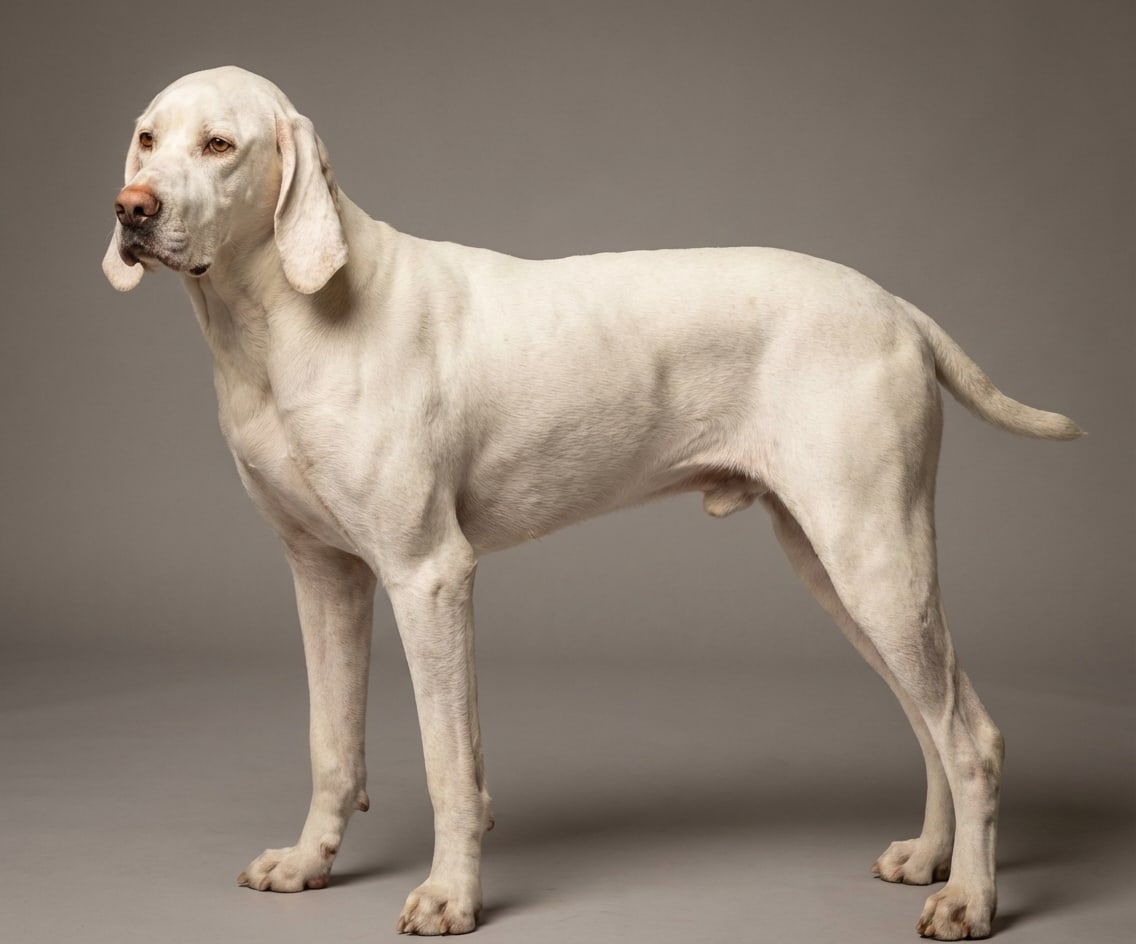
Origin and Recognition
The Basset Bleu de Gascogne, a breed with a rich history, originated in Gascony, France, where it has been a part of the landscape since the Middle Ages. This French native breed is recognized internationally by the Fédération Cynologique Internationale (FCI), in the UK by The Kennel Club, and by the United Kennel Club (UKC) in the United States. The breed's distinctive coat, known as "bleu," contributes to its unique appearance and is a reference to its ticked appearance.
With a history that dates back to the Middle Ages, the Basset Bleu de Gascogne descends directly from the old breed of Grand Bleu de Gascogne. It was once kept by Gaston III of Foix-Béarn for hunting wild boar and wolves, and he is also credited with writing the Livre de chasse, a classic treatise on medieval hunting published in 1365. The Livre de chasse provided detailed insights into the hunting practices of the time and is a significant historical document.
While the breed is rare outside of its homeland, it has gained recognition in various registries. The United Kennel Club recognized the breed in 1991, and both the Fédération Cynologique Internationale and the United Kennel Club list it in the Scenthound Group. However, it is not recognized by the American Kennel Club (AKC) or the Canadian Kennel Club (CKC), which may affect its popularity in North America.
Physical Description
The Basset Bleu de Gascogne is a medium-sized dog with a distinctive long-backed, short-legged body type. They have a predominantly white coat that is ticked to give a bluish appearance, with brown spots and tan markings above the eyes and on the ears. This smooth-coated breed typically stands between 34 and 42 centimeters (13 and 17 inches) at the withers, though the Kennel Club standard specifies a height of 30 to 38 centimeters (12 to 15 inches) for males and 28 to 35 centimeters (11 to 14 inches) for females.
These dogs are not too heavy, weighing between 16 and 18 kilograms (35 and 40 pounds). They possess dark brown eyes and low-set ears that can reach at least the end of their muzzle, which is a characteristic feature of the breed. The breed's head is long, with a flat skull and a moderate stop, and the neck is strong and well-set on the body.
Temperament and Traits
The Basset Bleu de Gascogne is known for its gentle and friendly temperament, making it a suitable companion for families. They are alert and loyal, which is evident in their exceptional tracking abilities. Despite their independent nature, they form strong bonds with their owners and are often referred to as "Velcro dogs" due to their tendency to be very attached to their families.
With a medium trainability, the Basset Bleu de Gascogne can be trained effectively with positive reinforcement techniques. They are known for their intelligence and willingness to please, which aids in training and makes them a pleasure to work with.
Health Considerations
Owners should be aware of several health conditions that may affect the Basset Bleu de Gascogne. Hip dysplasia is a common concern, which can lead to mobility issues. Elbow dysplasia is also prevalent, and this condition can cause pain and lameness in the affected dogs.
The breed may also be prone to other health issues such as glaucoma, a condition that affects the eye and can lead to blindness if not treated promptly. Additionally, Basset Bleu de Gascognes may suffer from skin allergies, which can cause itching and discomfort.
Life Span and Care
The Basset Bleu de Gascogne has a life span of 10 to 14 years, which is considered average for a dog of its size.
Their ears should be checked regularly for signs of infection, and their nails should be trimmed to prevent overgrowth.
Adaptability and Living Conditions
The Basset Bleu de Gascogne is adaptable to various living conditions, but they do best in a home with access to a secure yard for exercise. They are social dogs and enjoy the company of their family, so they may not be the best choice for those seeking a dog that can be left alone for long periods. Their friendly nature makes them suitable for families with children, but supervision is always recommended to ensure a safe and positive interaction.
Given their hunting heritage, Basset Bleu de Gascognes can be prone to chasing small animals.
Buying a Basset Bleu de Gascogne
It is also advisable to meet the puppy's parents to get a sense of the breed's temperament and appearance. Responsible breeders will be transparent about the breed's health and temperament and may conduct genetic testing for certain conditions.
Be prepared for the costs associated with owning a Basset Bleu de Gascogne, including food, veterinary care, grooming, and other supplies. The initial cost of purchasing a puppy can range from $1,000 to $1,500, depending on the breeder and the dog's lineage.
Frequently Asked Questions
What is the lifespan of the Basset Bleu de Gascogne?
The average lifespan of the Basset Bleu de Gascogne is about 10-14 years. Good nutrition and regular veterinary care support a healthy life.
What is the temperament of the Basset Bleu de Gascogne?
The Basset Bleu de Gascogne is known for: Gentle, Friendly, Alert, Loyal, Independent. Its energy level is moderate.
What size and weight is the Basset Bleu de Gascogne?
It is a large dog, typically around 16-18 kg as an adult.
Is the Basset Bleu de Gascogne easy to care for?
Reliable grooming and shedding ratings are not available. Routine brushing, ear and dental care, and nail trims are still recommended.
Is the Basset Bleu de Gascogne good with kids and other pets?
Reliable child- and pet-friendliness ratings are not available. Supervised, gradual introductions are recommended.
How much exercise does the Basset Bleu de Gascogne need?
With a moderate energy level, it needs walks, play or training matched to its stamina.
Basset Bleu de Gascogne
Trait Scores
N/A