Origin and Development
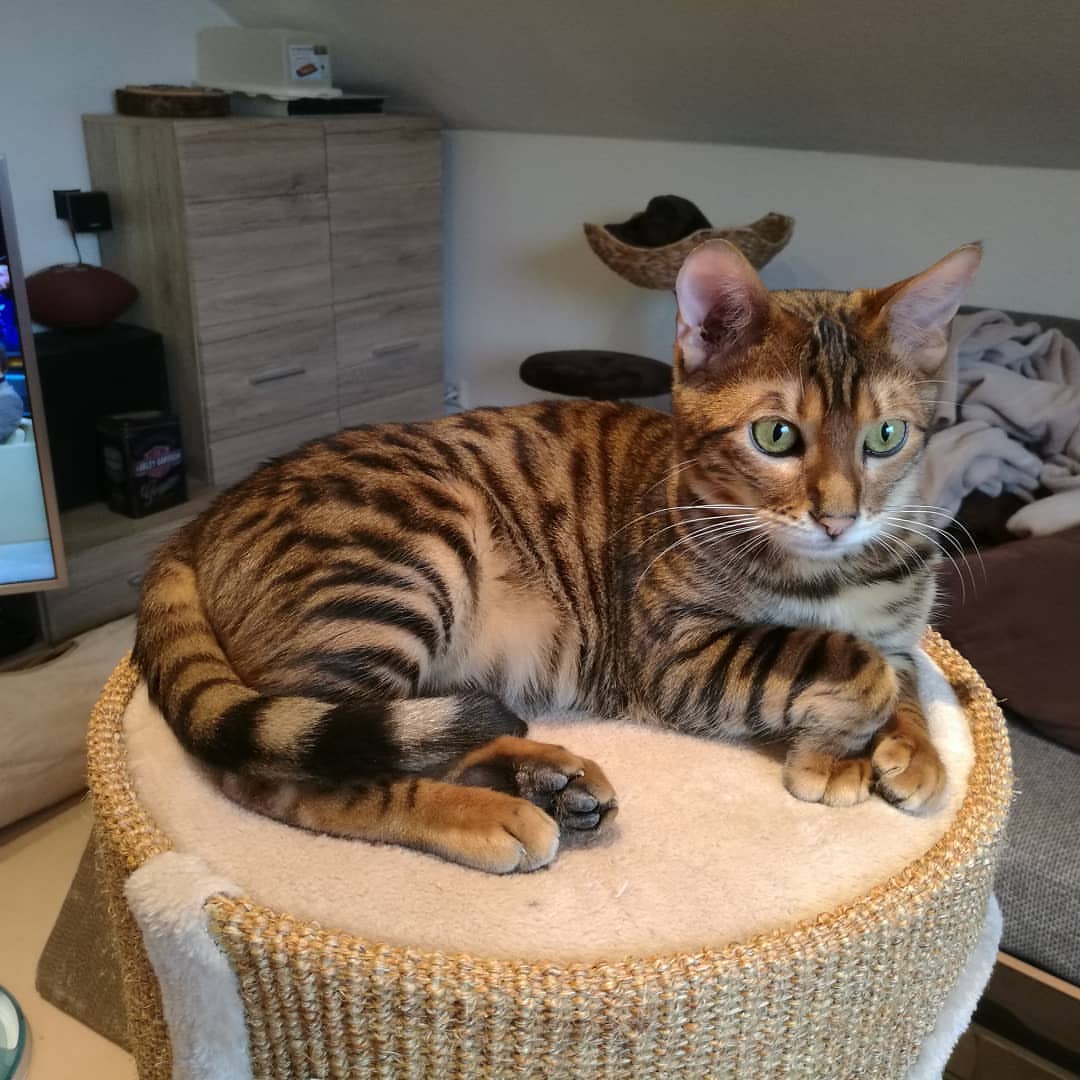
The Toyger is a domestic cat breed that originated in the United States in the 1980s. This breed was developed with the intention of resembling a "toy tiger," with its striking striped coat reminiscent of the tiger's. The breed's originator, Judy Sugden, aimed to inspire a greater awareness and care for tiger conservation in the wild. Recognized by The International Cat Association (TICA) for "registration only" in the early 2000s, the Toyger was later accepted as a full championship breed in May 2007.
Development of the Toyger involved careful breeding of domestic short-haired tabbies, with specific emphasis on the mackerel markings. One of the key contributions to the breed was the importation of a tom cat from India, named "Millwood's Tiki," which had distinctive spotting that broke up the usual tabby lines on the top of the head. Over several years, about forty domestic cats from various countries were selected as foundation stock, including Bengals, unpedigreed domestic short-haired cats with stripes, and a cat from India for its ear markings, which were a significant feature of the breed.
Judy Sugden, the daughter of Jean Mill, who succeeded in creating the Domestic Bengal cat, played a significant role in the development of the Toyger. The breed's recognition by TICA in 1993 and its advancement to new breed exhibition classes in 2000 solidified its status as a recognized breed. Sugden's work was not only about creating a new breed but also about ensuring that the Toyger would be a healthy and happy companion for its owners.
Breed Characteristics
The Toyger is known for its medium size, with adults weighing between 3 to 7 kilograms. While the breed's height is not recorded in centimeters, it is characterized by a high energy level and a friendly, outgoing temperament. This breed is playful and intelligent, making it a great companion for interactive games and activities such as fetch.
The Toyger's coat is uniformly short, with a suggestion of a ruff around the neck and longer fur on the temples. The color and marking pattern of the coat are distinctive, with a mackerel tabby pattern that contrasts the ground color, which can range from bright pumpkin to very dark, depending on the individual cat. The coat texture is soft and dense, with a glossy sheen that is a hallmark of the breed.
The breed standard emphasizes the Toyger's muscular and athletic build, with a well-defined, long, broad, and deep muzzle, suggesting an inverted heart shape from a full face view. The eyes are medium-sized, circular, and set wide apart, with a rich deep color preferred. The ears are small and round, set wide toward the back of the head and oriented at a 45-degree line towards the center of the eyes. These features contribute to the breed's striking appearance and unique personality.
Temperament and Behavior
The Toyger is renowned for its sweet, calm personality and its friendly nature. This breed is outgoing enough to walk on a leash and energetic enough to engage in interactive games like fetch. Their confidence allows them to get along well with other cats and friendly dogs, making them suitable for households with other pets. The Toyger's playful and social behavior is a result of their high energy levels and intelligence.
With a temperament that is playful and social, the Toyger is an intelligent breed, which makes them highly trainable. Their adaptability and affection level are rated highly, making them great companions for families with children. The Toyger's social needs are met through their ability to form strong bonds with their human companions and other pets, contributing to a harmonious household environment.
However, their high trainability and social needs are matched by their high adaptability and affection level, making them a popular choice for many cat lovers. This adaptability also means that the Toyger can adjust well to various living situations, from apartments to homes with large yards.
Health Considerations
Like all cats, Toygers are prone to certain health conditions. Some of the common health issues observed in Toygers include hip dysplasia, a condition where the hip joint doesn't fit together perfectly, which can lead to arthritis; and heart disease, which can manifest as a heart murmur or other symptoms.
Additionally, Toygers may be susceptible to obesity, which can lead to various health problems.
Breed Registration and Cost
The Toyger is registered with TICA, the International Cat Association, and as of 2024, there are 30 active Toyger breeders listed in the Toyger Cat Society database. In 2020, the Pawpeds Database recorded 469 Toygers, and the cost of a Toyger kitten was stated to be up to $5,000, reflecting the breed's popularity and desirability. The high cost is often associated with the breed's rarity and the careful breeding practices required to maintain the Toyger's unique characteristics.
Owning a Toyger requires a commitment not only to the cat's care and well-being but also to the financial investment associated with a purebred cat. Potential owners should consider the cost of purchasing a Toyger, as well as ongoing expenses such as food, veterinary care, and grooming.
This ensures that the Toyger is healthy and has a good chance of living a long and fulfilling life.
Buying a Toyger: What to Consider
When considering the purchase of a Toyger, there are several factors to keep in mind to ensure a successful match for both the cat and the family.
- Research the breed thoroughly to understand the Toyger's temperament, energy level, and grooming needs.
- Visit reputable breeders to ensure the health and temperament of the cat. Look for breeders who are members of TICA and have a good reputation within the cat community. Reputable breeders prioritize the health and welfare of their cats and are often more than willing to provide references and answer questions about their breeding practices.
- Prepare for the financial commitment associated with owning a purebred cat, including the initial purchase price, ongoing care, and vet bills.
- Consider the living situation and whether it is suitable for a Toyger. This includes having enough space for the cat to play and the ability to provide the necessary attention and care the breed requires.
By taking these factors into consideration, potential owners can make an informed decision about whether a Toyger is the right cat for their home. A well-informed decision can lead to a happy and fulfilling relationship between the owner and their Toyger companion.
Frequently Asked Questions
What is the lifespan of the Toyger?
The average lifespan of the Toyger is about 12 - 15 years. Good nutrition and regular veterinary care support a healthy life.
What is the temperament of the Toyger?
The Toyger is known for: Playful, Social, Intelligent. Its affection rating is very high. Its energy level is high.
What size and weight is the Toyger?
It is a medium-sized cat, typically around 3 - 7 kg as an adult.
Is the Toyger easy to care for?
Available ratings indicate low grooming needs, and moderate shedding. Routine brushing, ear and dental care, and nail trims are still recommended.
Is the Toyger good with kids and other pets?
Available ratings indicate high child-friendliness, and very high pet-friendliness. Supervised, gradual introductions are recommended.
How much exercise does the Toyger need?
With a high energy level, it needs walks, play or training matched to its stamina.



