Origin and Development
The Ragdoll cat breed originated in the United States in the 1960s, specifically in Riverside, California. This breed was developed by Ann Baker, an American breeder, who selectively bred a non-pedigreed white domestic longhaired cat named Josephine. Josephine produced several litters of typical cats, which were then further developed into the Ragdoll breed.
Ann Baker's breeding efforts resulted in the first Ragdoll cats, Blackie, an all-black male, and Daddy Warbucks, a seal point with white feet. Daddy Warbucks and Blackie's daughter, Buckwheat, played crucial roles in establishing the breed. They produced litters that contributed to the breed's genetic diversity and characteristic traits.
Baker set up her own registry, the International Ragdoll Cat Association (IRCA), around 1971. The IRCA trademarked the name "Ragdoll" and enforced stringent standards for breeding and selling the breed. These standards included requirements for body type, coat length, color, and behavior. The IRCA remains in existence today, although it is a small registry, especially following Baker's death in 1997. At that time, the IRCA was known for its role in preserving the breed's original traits.
Physical Characteristics
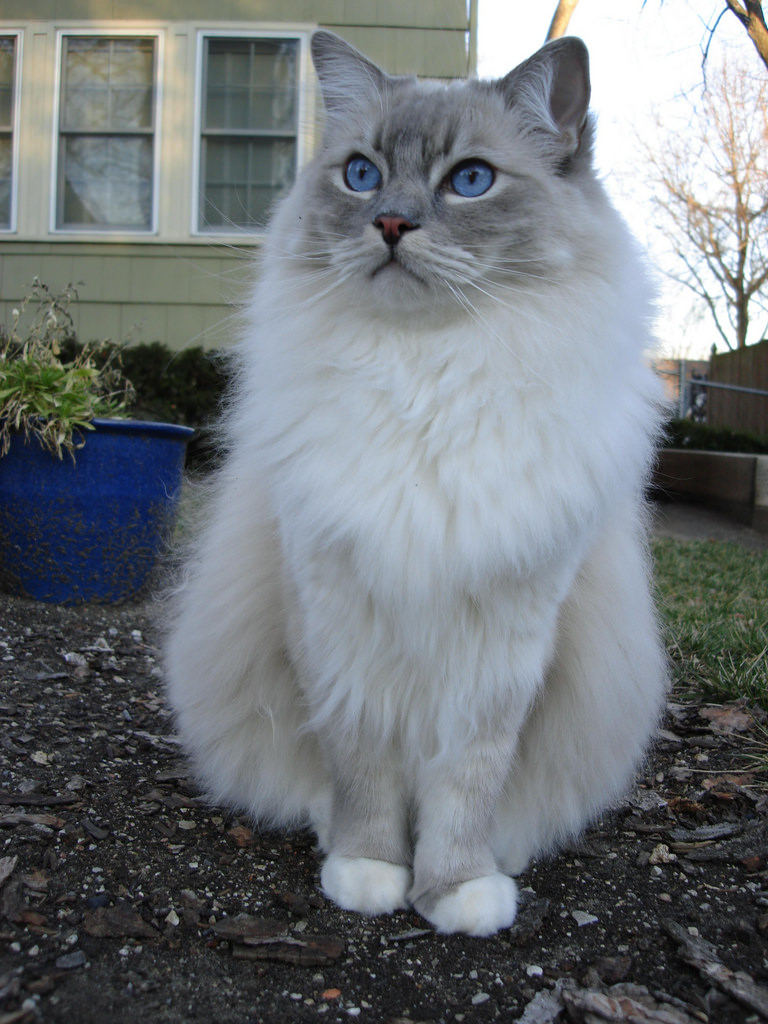
The Ragdoll is recognized for its large and robust build, characterized by a semi-long and silky soft coat. Their bodies are sturdy and bulky, with proportionate legs and a long, muscular structure. Their heads are broad, featuring a flat top and wide space between the ears, giving them a distinct appearance.
Ragdolls have large, round, deep-blue eyes, which are a result of specific genetic traits that define the point coloration of the breed. They have thick limbs, long tails, and paws that are large, round, and tufted, adding to their charming and distinctive appearance. The coat is silky, dense, and of medium to long length, requiring regular brushing to prevent shedding and matting, which is a common challenge for owners.
Adult Ragdolls may develop knickerbockers on their hind legs and a ruff around their necks. These are considered desirable traits within the breed. Kittens are born white, but it takes approximately 3 to 4 years for them to achieve their full color and coat development, which typically includes a mix of the breed's distinct patterns and colors.
Temperament and Behavior
Ragdolls are famous for their affectionate, gentle, and quiet nature. This behavior has led to the breed being described as having a dog-like personality, as they tend to follow their owners around and enjoy the interaction.
Their docile temperament, often resulting in a relaxed and limp body when picked up, is one of their most distinctive traits. This characteristic, combined with their playful nature, is evident from kittenhood and persists into their senior years. The gentle demeanor makes them ideal pets for individuals who prefer a calmer and less energetic companion.
Ragdolls are known to be relatively quiet and easygoing, which makes them well-suited for households with other pets or those seeking a tranquil family pet. Their behavior and temperament contribute to their reputation as a low-maintenance and easy-to-live-with cat breed.
Breed Standards and Variations
The Ragdoll breed features various patterns and colors. The colorpoint and mitted patterns are the most common, characterized by distinctive pointed coloration with lighter body coloration compared to the face, ears, legs, and tail. Mitted Ragdolls have white paws and abdomen, a white belly stripe, and a white chin, adding to their unique appearance.
Other variations include the bicolor, lynx, and tortoiseshell patterns, which are available within the breed's standard color ranges. These patterns enhance the breed's visual appeal and add variety to the coat and color options available to owners.
The mitted pattern was not recognized in the Cat Fanciers Association (CFA) until the 2008-2009 show season. This change reflects the evolving standards and broader recognition of the breed's variations over time. The inclusion of the mitted pattern in the CFA's standard further solidified the breed's recognition and acceptance in the cat fancy world.
Health and Lifespan
Ragdolls are generally long-lived, with the median age at death being 12.85 years according to a 2025 UK study. This is a slight increase from earlier reports that indicated a life expectancy of around 10 years. The study also noted that the lifespan of Ragdolls is comparable to that of non-pedigree cats, making them a desirable choice for pet owners looking for a long-term companion.
However, Ragdolls are prone to certain health conditions, such as hypertrophic cardiomyopathy (HCM), which is caused by an autosomal dominant mutation in the MYBPC group of genes. This mutation can lead to severe HCM in cats with two copies of the mutation, typically between one and two years of age. The condition is life-threatening and can lead to sudden cardiac arrest.
Genetic testing for the R820W substitution, the specific mutation responsible for HCM in Ragdolls, has been shown to reduce the incidence of the condition in the breed and to help in earlier recognition and management of the disease. Responsible breeders have implemented this testing to minimize the prevalence of HCM within the Ragdoll population.
Buying and Owning a Ragdoll
Ragdolls are affectionate and require regular social interaction, making them an ideal choice for households with individuals who appreciate a cat that enjoys close contact with its human companions.
Given their size and gentle nature, Ragdolls may not be suitable for families with very young children who might inadvertently be too rough with them. Owners of Ragdolls should be prepared to provide a calm and gentle environment where the cat can feel secure and loved.
When purchasing a Ragdoll, it is advisable to look for cats from reputable breeders who conduct genetic testing, such as the R820W test for HCM, and maintain high breeding standards. Responsible breeders prioritize the health and well-being of their cats and provide documentation of any health clearances. This ensures that new owners receive a healthy and well-bred Ragdoll kitten.
Frequently Asked Questions
What is the lifespan of the Ragdoll?
The average lifespan of the Ragdoll is about 12 - 17 years. Good nutrition and regular veterinary care support a healthy life.
What is the temperament of the Ragdoll?
The Ragdoll is known for: Affectionate, Friendly, Gentle, Quiet, Easygoing. Its affection rating is very high. Its energy level is low.
What size and weight is the Ragdoll?
It is a medium-sized cat, typically around 5 - 9 kg as an adult.
Is the Ragdoll easy to care for?
Available ratings indicate relatively low grooming needs, and moderate shedding. Routine brushing, ear and dental care, and nail trims are still recommended.
Is the Ragdoll good with kids and other pets?
Available ratings indicate high child-friendliness, and very high pet-friendliness. Supervised, gradual introductions are recommended.
How much exercise does the Ragdoll need?
With a low energy level, it needs walks, play or training matched to its stamina.



