Origin and Development
The Pixie-bob cat breed originated in the United States, stemming from a unique male cat with a spotted tabby coat, a short tail, and polydactyl paws purchased by Carol Ann Brewer in 1985 near Mount Baker, Washington. This cat, named Yorba, was later mated with a neighboring black spotted tabby female cat, leading to the birth of a litter in April 1986. Brewer selectively bred from this litter, establishing the foundation of the Pixie-bob breed.
Brewer introduced 23 cats from the nearby Cascade Range into her breeding program, which were believed to be the progeny of naturally occurring hybrid matings between bobcats and domestic cats. Despite initial claims of bobcat admixture, DNA testing in 1996 reportedly failed to detect bobcat marker genes, leading to the breed being regarded as pure domestic stock. This conclusion was reached by researchers at the University of California, Davis, who conducted the genetic testing.
The Pixie-bob was registered with The International Cat Association (TICA) and the American Cat Fanciers Association (ACFA), gaining Championship status in 1998. The breed was initially classified as a "Native New Breed" but is now considered an established breed. TICA's acceptance of the Pixie-bob into the "Exhibition" category in 1993 was a significant milestone for the breed's recognition.
Physical Characteristics
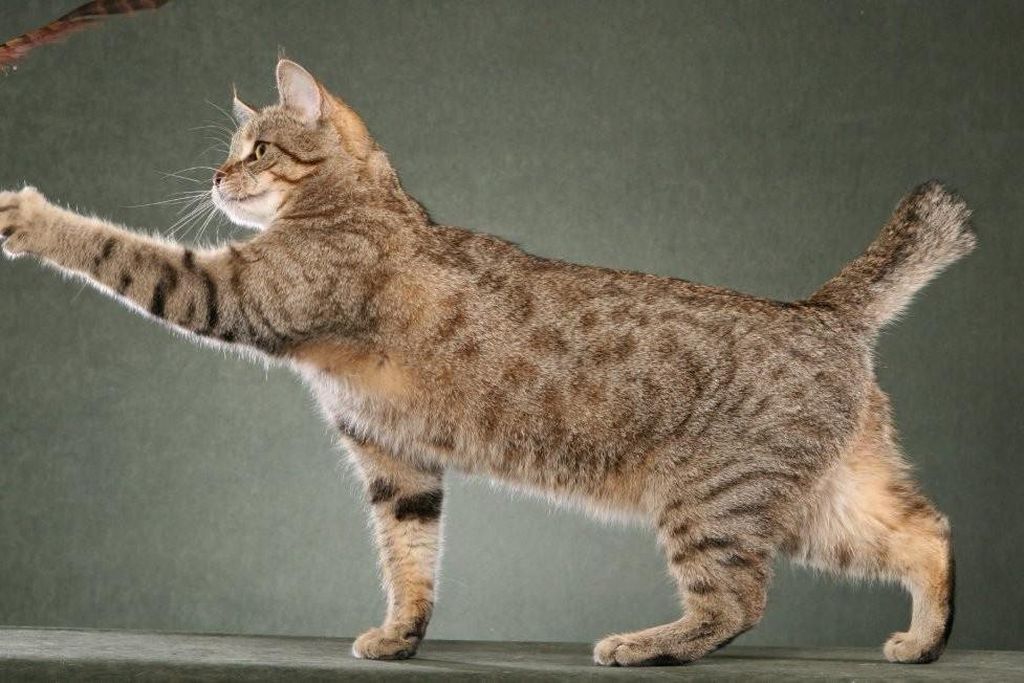
Pixie-bobs are medium-sized cats, with an average weight ranging from 4 to 8 kg. They are larger than the average domestic cat, which typically weighs around 3.5 kg. Males are usually larger than females, with males weighing up to 8 kg and females up to 6 kg.
Their coat is long and may come in a black spotted tabby pattern, often with reddish, apricot, and peach tones. They have black fur and skin on the bottom of their paws, tipped ears, heavy ear-hair, black lips, and white fur around the eyes. The brow is heavy, and the eyes are blue as kittens, changing to green or gold with age. The color of the eyes can also be a factor in the breed standard, with blue, green, gold, or odd-eyed cats being acceptable.
Their tail size ranges from 5 cm to hock length when the leg is extended. It is not yet known what genetic similarities exist between the Pixie-bob and other breeds with suppressed tails, such as the Manx, American Bobtail, and Japanese Bobtail. However, the breed's short tail is a distinctive feature that sets it apart from other cat breeds.
Temperament and Behavior
Pixie-bobs are known for their affectionate and social nature, wanting to be an integral part of the family. They are intelligent, loyal, and capable of understanding some words. They enjoy playing with other animals and are known for their "chirps," chatters, and growls, although they usually meow little. This behavior is often observed in cats that have a strong bond with their owners and enjoy interacting with them.
They are highly sociable, following their owners around the house and preferring to be in the same room. Pixie-bobs are also capable of leash walking and engaging in activities like head butting, ball fetching, and playing. This level of activity and engagement is typical of active, intelligent cat breeds.
These cats are intelligent and can be trained, making them an excellent choice for families with children.
Health and Genetic Considerations
Pixie-bobs are genetically diverse, which makes them less prone to problems caused by inbreeding. However, some health conditions have been recorded, such as cryptorchidism (undescended testicles), dystocia (difficulty giving birth), cystic endometrial hyperplasia (a condition affecting the lining of the uterus), hypertrophic cardiomyopathy (HCM), and blocked tear ducts.
HCM is hereditary in at least 50% of cases and requires annual ultrasound screens to monitor the health of the cats. Breeders use a pedigree disease database, Pawpeds, to ensure health information is recorded and monitored. The use of such databases is a critical step in maintaining the health of the breed over time.
Breeders have established a broad genetic foundation stock through selective breeding, which has contributed to the Pixie-bob's overall health and vigor. This process involves careful selection of breeding pairs to avoid the transmission of genetic disorders and to enhance the breed's positive traits.
Breed Standards and Registration
The Pixie-bob was originally classified as a "Native New Breed" by TICA, but is now considered an established breed. It was accepted into the "Exhibition" category by TICA in 1993, promoted to "New Breed and Colour" status in 1996, and gained Championship status in 1998. The progression through these categories reflects the breed's growing acceptance and recognition within the cat fancy.
Brewer coined the term "Legend Cat" to refer to hybrid cats and has registered a trademark in the U. S. to limit the term to describe permitted outcrosses used in her breeding program. This collaboration with other breeders has helped establish the breed's genetic foundation stock. The trademarking of the term "Legend Cat" was a strategic move to protect the breed's identity and ensure that only specific breeding practices were used.
Frank Ditto attempted to patent the Pixie-bob in 1999, but his application was rejected by the United States Patent and Trademark Office, and successive litigation upheld the rejection. This legal challenge highlighted the complexities of intellectual property law as it applies to animal breeds.
Buying a Pixie-bob: What to Consider
- Check for a healthy and happy demeanor. Look for signs of good health such as bright eyes, a clean coat, and active behavior.
- Ensure the cat has a well-maintained coat and is free from any obvious health issues. Pay attention to the cat's overall appearance and any signs of discomfort or illness.
- Verify that the breeder uses a pedigree disease database to monitor health information. This is an important step in ensuring that the cat's ancestors have been thoroughly evaluated for potential health issues.
- Consider the cat's energy level and sociability, as Pixie-bobs are highly social and enjoy being around people. A cat that is too shy or inactive may not be the best fit for a family looking for an interactive pet.
- Ask about the breeder's experience and reputation within the cat fancy. A reputable breeder will be knowledgeable about the breed and will have a good track record of producing healthy, well-adjusted cats.
- Inquire about the breeder's commitment to health testing and genetic diversity. Responsible breeders prioritize the health and well-being of their cats and work to maintain a healthy gene pool.
Frequently Asked Questions
What is the lifespan of the Pixie-bob?
The average lifespan of the Pixie-bob is about 13 - 16 years. Good nutrition and regular veterinary care support a healthy life.
What is the temperament of the Pixie-bob?
The Pixie-bob is known for: Affectionate, Social, Intelligent, Loyal. Its affection rating is very high. Its energy level is moderate.
What size and weight is the Pixie-bob?
It is a medium-sized cat, typically around 4 - 8 kg as an adult.
Is the Pixie-bob easy to care for?
Available ratings indicate low grooming needs, and moderate shedding. Routine brushing, ear and dental care, and nail trims are still recommended.
Is the Pixie-bob good with kids and other pets?
Available ratings indicate high child-friendliness, and very high pet-friendliness. Supervised, gradual introductions are recommended.
How much exercise does the Pixie-bob need?
With a moderate energy level, it needs walks, play or training matched to its stamina.



