Origin and Development
The Ocicat is a domestic cat breed that originated in the United States in 1964. It was created by Virginia Daly (Dalai) of Berkley, Michigan, through a crossbreeding process involving a black Abyssinian male and a black Siamese female, aiming to combine the Abyssinian's reddish-brown ticked tabby agouti pattern with the Siamese's oriental-built colorpoint pattern.
Daly's efforts led to the birth of a kitten with cinnamon-coloured spots on an ivory background, which was the first Ocicat. This kitten was named Tonga, and Daly later bred his parents together to produce a black ('tawny') spotted male named Dalai Dotson, which further solidified the breed's direction.
As the Ocicat breed evolved, Daly incorporated the American Shorthair into the breeding program to enhance body structure, bone density, and introduce the breed’s silver colouring gene. The Ocicat was first imported to the United Kingdom in 1988, marking its international recognition. This importation was significant as it allowed the breed to gain exposure and recognition outside of the United States.
Breed Recognition and Standards
The Ocicat was first recognized by the Cat Fanciers' Association (CFA) in 1966 for registration purposes only. However, it wasn't until 1987 that it achieved championship status with the CFA. The International Cat Association (TICA) recognized the Ocicat in 1986, followed by the Fédération Internationale Féline (FIFe) in 1992. This recognition from major cat associations helped establish the Ocicat as a legitimate and respected breed.
The Ocicat has also been recognized by the Governing Council of the Cat Fancy, which gave it preliminary recognition in June 1997, promoted it to provisional status in June 2002, and then to championship status in 2006. In 2013, the GCCF recognized the Aztec, a mackerel tabby coated version of the Ocicat, as a separate breed. However, as of 2024, the Aztec has been merged back into the Ocicat, now known as the Ocicat Classic. This change reflects the evolution of the breed and its standards over time.
Physical Characteristics
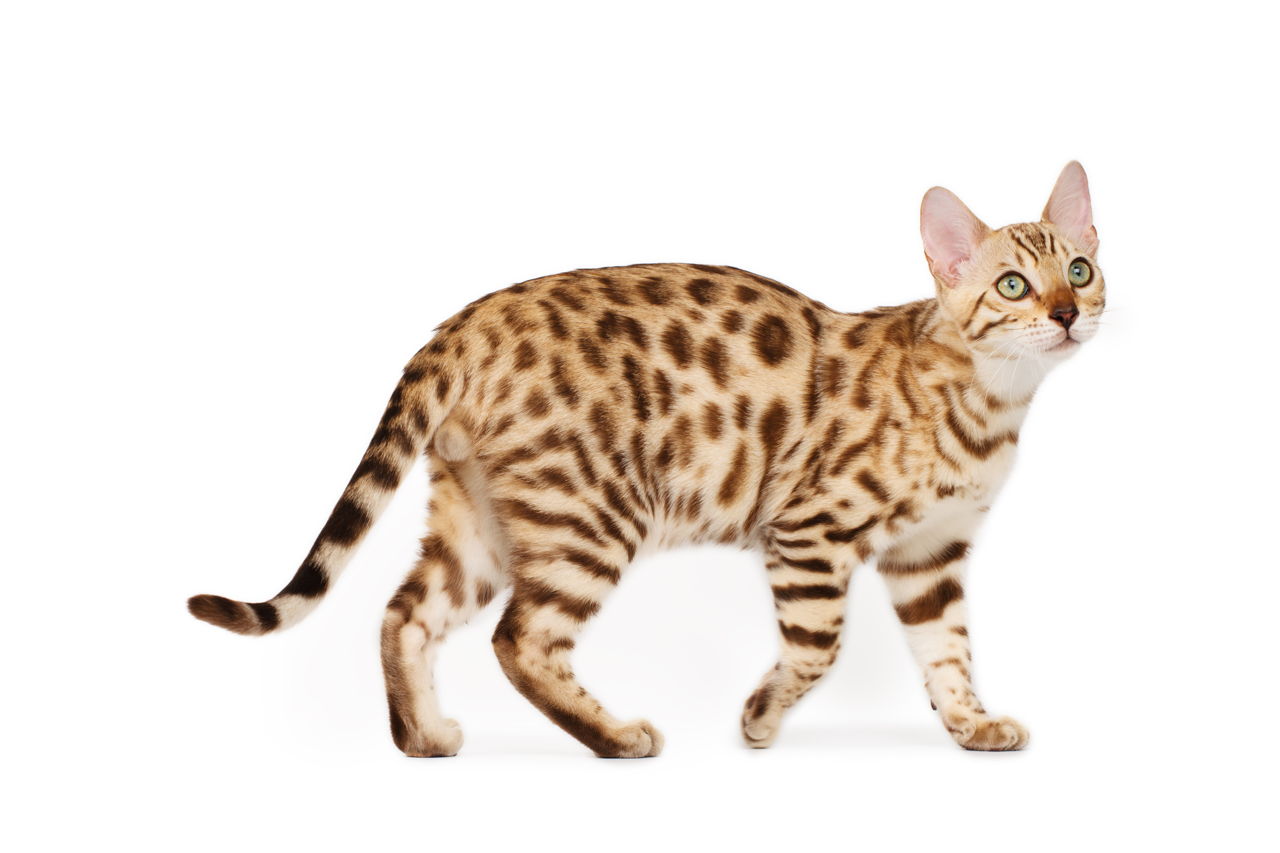
The Ocicat is a medium to large cat with a robust, athletic build, well-muscled, and lithe. It has a broad and well-defined muzzle with a gentle curvature of the head. The ears are set at a 45-degree angle, and the large, almond-shaped eyes are spaced with more than an eye-width gap between them. All eye colours are accepted except blue, which is a distinctive feature of the breed.
The Ocicat has medium to long, well-muscled legs and a long, slim tail with a slight taper and a dark tip. Adult Ocicats weigh between 2.5–6.5 kg (6–14 lb), and the coat is medium in length with a spotted tabby pattern. The markings are darkest at the tip of the tail and lighter elsewhere, and there is a recognizable tabby 'M' pattern on the forehead. This pattern is a hallmark of the breed and is often used to identify Ocicats.
The Ocicat's coat can come in 12 recognized spotted tabby colours, including black ('tawny', 'ebony'), black silver, blue and blue silver, chocolate and chocolate silver, lilac ('lavender') and lilac silver, cinnamon and cinnamon silver, and fawn and fawn silver. The variety of coat colours adds to the Ocicat's appeal and diversity within the breed.
Temperament and Behavior
The Ocicat is known for its temperament that is often described as resembling a "dog in a cat's body. " They are intelligent, confident, outgoing, and can be quite active and playful. Ocicats exhibit many dog-like traits, such as being trainable to fetch toys, walk on a lead, respond to commands like 'speak', 'come when called', and follow other canine-style tricks. This adaptability makes them unique among cat breeds.
This breed is also known for its high level of friendliness and social needs, making it a great companion for families with children and other pets. Ocicats are curious and demand attention, requiring an owner who can provide a stimulating environment and plenty of interaction.
Health Considerations
A review of over 5,000 cases of urate urolithiasis in the US found that the Ocicat had a much higher incidence rate, with an odds ratio of 16.8 compared to most other breeds. This condition involves the formation of crystals in the urine, which can lead to blockages and require veterinary intervention.
Additionally, a Swedish study of pyometra in cats found the Ocicat to have the third highest incidence of the condition, six times the rate for all cats. Pyometra is a potentially life-threatening condition where the uterus becomes inflamed and filled with pus, often requiring emergency surgery.
Lifespan and Maintenance
The Ocicat typically has a lifespan of 12 to 14 years, which is slightly shorter than the average lifespan for domestic cats. The Ocicat's high energy level and social needs require an owner who can provide a stimulating environment and plenty of attention.
Given the breed's intelligence and trainability, owners may consider enrolling their Ocicat in training classes to provide mental stimulation and further strengthen the bond between pet and owner. This can also help with socialization and behavior issues that may arise.
Buying an Ocicat
- Health clearances: Verify that the Ocicat has been checked for potential health issues specific to the breed, such as urate urolithiasis and pyometra.
- Socialization: Ensure the kitten has been exposed to various people, pets, and environments to develop a well-rounded temperament and reduce the risk of behavioral issues later in life.
- Breeder reputation: Research the breeder's reputation, ensuring they follow ethical breeding practices and prioritize the health and welfare of their cats. This includes maintaining accurate health records and providing proper care for their breeding cats.
- Support: Choose a breeder who offers ongoing support and guidance as you transition to owning an Ocicat. This can include advice on diet, training, and general care.
The cost of an Ocicat can vary, but expect to pay several hundred to over a thousand dollars for a purebred kitten. Be prepared for the ongoing costs of pet care, including food, veterinary care, and grooming. The Ocicat's active lifestyle and social needs may also require additional expenses for toys, scratching posts, and other enrichment items.
Frequently Asked Questions
What is the lifespan of the Ocicat?
The average lifespan of the Ocicat is about 12 - 14 years. Good nutrition and regular veterinary care support a healthy life.
What is the temperament of the Ocicat?
The Ocicat is known for: Active, Agile, Curious, Demanding, Friendly, Gentle, Lively, Playful, Social. Its affection rating is very high. Its energy level is high.
What size and weight is the Ocicat?
It is a medium-sized cat, typically around 3 - 7 kg as an adult.
Is the Ocicat easy to care for?
Available ratings indicate low grooming needs, and moderate shedding. Routine brushing, ear and dental care, and nail trims are still recommended.
Is the Ocicat good with kids and other pets?
Available ratings indicate high child-friendliness, and very high pet-friendliness. Supervised, gradual introductions are recommended.
How much exercise does the Ocicat need?
With a high energy level, it needs walks, play or training matched to its stamina.
Is the Ocicat hypoallergenic?
It has some hypoallergenic traits, but reactions vary. Spend time with one and seek professional advice before deciding.



