Origins and Historical Context
The Norwegian Forest Cat, known in Norway as the "norsk skogkatt," hails from the cold climates of Northern Europe, where it has adapted to withstand harsh conditions. Its ancestors are believed to be short-haired cats brought by Vikings around AD 1000 and long-haired cats introduced by Crusaders in the 14th century. This breed was nearly extinct during World War II but was revived through a dedicated breeding program by the Norwegian Forest Cat Club, established in 1938 in Oslo. The club's efforts were crucial in preserving the breed's unique characteristics and genetic diversity.
King Olav V declared the Norwegian Forest Cat the official cat of Norway in the 1950s, reflecting its cultural significance and the nation's pride in this indigenous breed. The breed was not registered with the Fédération Internationale Féline (FIFe) until the 1970s, and it gained recognition in the American Cat Fanciers Association in 1994, marking its acceptance into the international cat fancy.
The Norwegian Forest Cat has a rich history as ships' cats on Viking ships, providing protection and companionship. They were also valued farm companions for their hunting skills, which helped control vermin and pests. They were first discovered by cat enthusiasts in the early 20th century, and their unique traits began to attract attention among breeders and cat lovers alike.
Appearance and Physical Characteristics
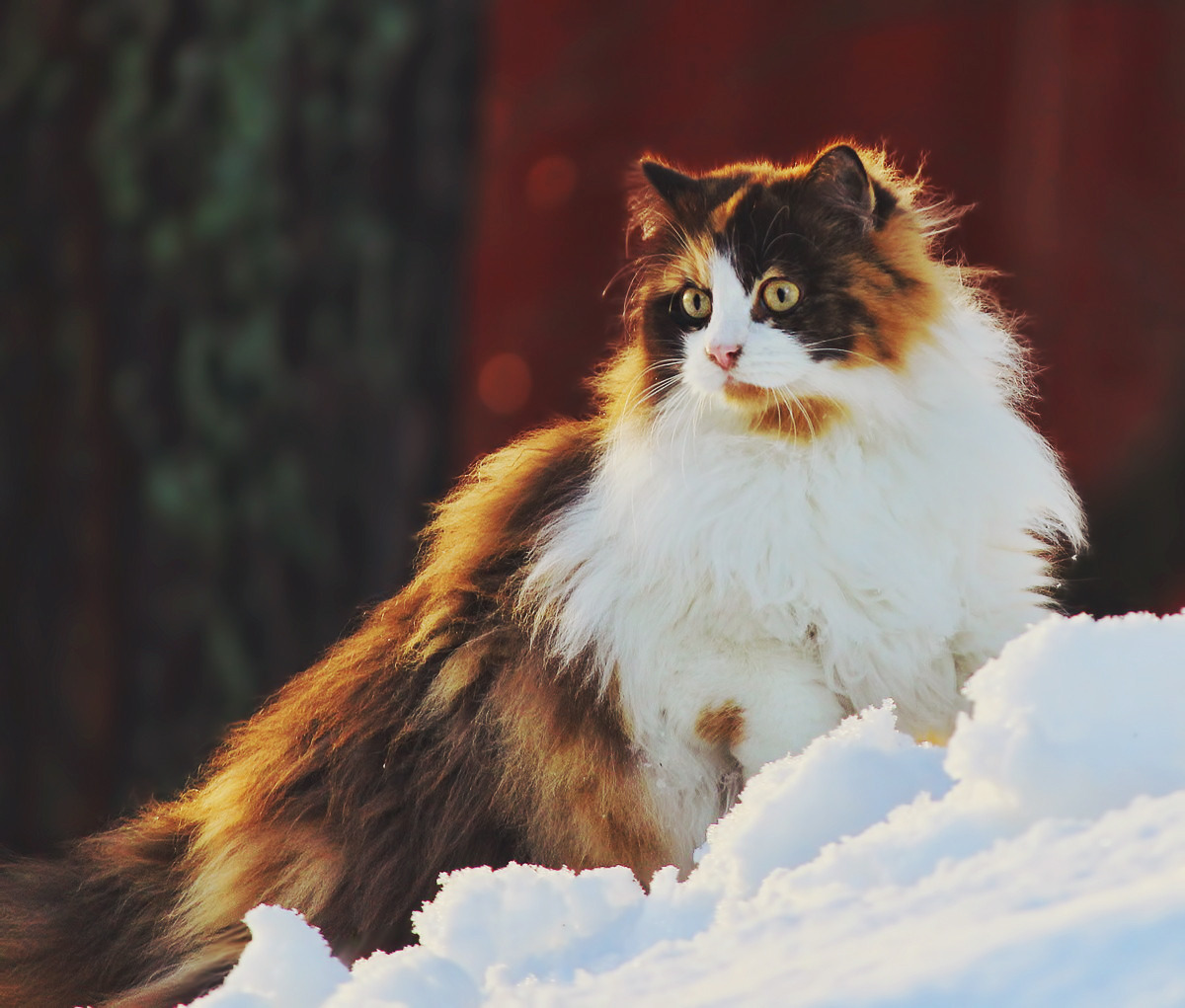
This large breed boasts a robust body, long legs, a bushy tail, and a sturdy frame, making it a strikingly powerful cat. Adult females typically weigh between 3.6 and 8 kg (7.9 to 17.6 lb), while males weigh between 4.5 and 9 kg (9.9 to 19.8 lb). Their long, thick, and glossy coat serves as an excellent insulator against the cold, with the thickest parts located at the legs, chest, and head, resembling a ruff.
The head has a long shape, resembling an equilateral triangle, with a strong chin and a medium-length muzzle. The ears are large, wide at the base, and set high, ending in tufts of hair like those of a lynx, a feature that is particularly pronounced in males. The eyes are almond-shaped and may be of any color, contributing to the cat's mystical appearance and making it stand out among other breeds.
The coat colors and divisions within the traditional, sepia, and mink categories are accepted, reflecting the breed's diverse genetic background. The traditional category includes colors like brown, black, and white, while the sepia and mink categories offer a range of shades from beige to silver.
Temperament and Behavior
The Norwegian Forest Cat is known for its sweet and loving nature, making it an excellent companion for its owners. This breed is active and intelligent, with a strong hunting instinct that can be satisfied by chasing toys as if they were real prey. They are territorial and patrol their territories multiple times each day to ensure everything is in order, a behavior that is a carryover from their days as farm cats.
These cats are also highly social and bond well with their families once they have accepted them. They have a high level of energy and intelligence, which makes them easy to train. While they are adept hunters, they can also adapt to indoor life.
They produce a variety of high-pitched "chirping" vocalizations, which is another distinctive trait of this breed. Their friendly and curious nature makes them popular with both cat lovers and families with children, as they are known to be gentle and patient with young ones.
Health and Genetic Considerations
Despite its robustness, the Norwegian Forest Cat is prone to certain health issues. A complex rearrangement in the Glycogen branching enzyme (GBE1) gene can lead to glycogen storage disease type IV, causing perinatal hypoglycaemic collapse and late-juvenile-onset neuromuscular degeneration. This disorder is rare but can be fatal, and breeders must be vigilant in screening for it.
Hip dysplasia, a partially hereditary condition affecting the hip joint, has also been identified in this breed. An analysis of pedigree records found evidence of hereditary cardiomyopathy, a condition that affects the heart's ability to pump blood effectively, and a 2005 study linked eosinophilic granuloma complex in these cats to a hereditary condition, which can cause skin and soft tissue inflammation.
Lifestyle and Grooming
They enjoy a high level of activity and require regular playtime and interaction to keep them mentally and physically stimulated. This is particularly important for maintaining their strong hunting instincts and preventing boredom.
Despite their long, dense coat, grooming is relatively straightforward due to their water-repellent top layer. They do shed moderately, so vacuuming regularly can help manage the fur around the home and prevent excessive shedding indoors.
This will also help to distribute the natural oils in their coat, keeping it healthy and glossy. Norwegian Forest Cats are known for their water-resistant coat, which is a result of the unique structure of their fur and the presence of an undercoat that repels water. This makes them excellent swimmers and allows them to enjoy bath time without getting too cold.
Registration and Popularity
Since gaining recognition with FIFe in the 1970s, the Norwegian Forest Cat has become increasingly popular. It is particularly favored in Europe, with strongholds in Norway, Sweden, Denmark, Iceland, and France. By 2003, it was the fifth most popular cat breed in France, with approximately 400 to 500 births per year, reflecting the breed's growing popularity and appeal.
In 2024, the Norwegian Forest Cat ranked as the sixth most popular breed according to FIFe statistics, comprising 4.3% of their total registered kittens.
Buyer's Checklist
Research the breed's history and temperament to ensure it aligns with your lifestyle. Look for cats from reputable breeders who prioritize health and genetic diversity. Consider the breed's adaptability to your living situation and whether you can provide the necessary environment and attention.
Frequently Asked Questions
What is the lifespan of the Norwegian Forest Cat?
The average lifespan of the Norwegian Forest Cat is about 12 - 16 years. Good nutrition and regular veterinary care support a healthy life.
What is the temperament of the Norwegian Forest Cat?
The Norwegian Forest Cat is known for: Sweet, Active, Intelligent, Social, Playful, Lively, Curious. Its affection rating is very high. Its energy level is high.
What size and weight is the Norwegian Forest Cat?
It is a medium-sized cat, typically around 4 - 7 kg as an adult.
Is the Norwegian Forest Cat easy to care for?
Available ratings indicate relatively low grooming needs, and moderate shedding. Routine brushing, ear and dental care, and nail trims are still recommended.
Is the Norwegian Forest Cat good with kids and other pets?
Available ratings indicate high child-friendliness, and very high pet-friendliness. Supervised, gradual introductions are recommended.
How much exercise does the Norwegian Forest Cat need?
With a high energy level, it needs walks, play or training matched to its stamina.



