Origin and History
The Maine Coon is a large domesticated cat breed with origins traced back to the United States, specifically the state of Maine, where it is recognized as the official state cat. This breed is known for its size, with the longest Maine Coon on record, "Stewie," measuring an extraordinary 123 cm (48.5 in) from nose to tail. Myths surrounding the Maine Coon's origin include tales of their potential hybrid descent from species such as the raccoon or bobcat, as well as claims of them being descendants of Viking ship's cats, Norwegian Forest cats, or even Marie Antoinette's Turkish Angora cats that supposedly reached Maine.
The breed has a rich history that dates back to the early 1600s when Puritan settlers from the UK brought cats to New England. Over time, these cats interbred with other long-haired breeds, leading to the development of the Maine Coon. The breed was first mentioned in literature in 1861, and by the late 19th century, it was a popular exhibit in cat shows. However, in the early 20th century, the Maine Coon faced a decline in popularity due to the introduction of new long-haired breeds, only to make a comeback in the 1950s with the formation of clubs dedicated to its preservation.
In 1975, the Maine Coon was granted provisional breed status by the CFA, and in 1976, it was approved for championship status. By 1985, the Maine Coon was declared the official state cat of Maine, reflecting its deep roots and cultural significance in the region.
Today, according to FIFe, the Maine Coon is the most popular cat breed globally, accounting for 24.7% of registered kittens in 2024, which translates to 23,775 cats. In 2025, the Maine Coon surpassed the Ragdoll to become the most registered cat breed with the CFA, further cementing its status as a beloved and iconic feline breed.
Physical Description and Traits
The Maine Coon is a medium to large-sized cat, known for its robust and muscular body, broad chest, and rectangular shape. The weight of males can range from 8 to 10 kg (18 to 22 lb), while females weigh between 5 and 7 kg (12 to 15 lb). Despite their large size, Maine Coons are not particularly heavy as they have a solid, yet light build. Their height varies from 25 to 41 cm (10 to 16 in), and their body length can extend up to 97 cm (38 in), including the tail, which can be as long as 36 cm (14 in).
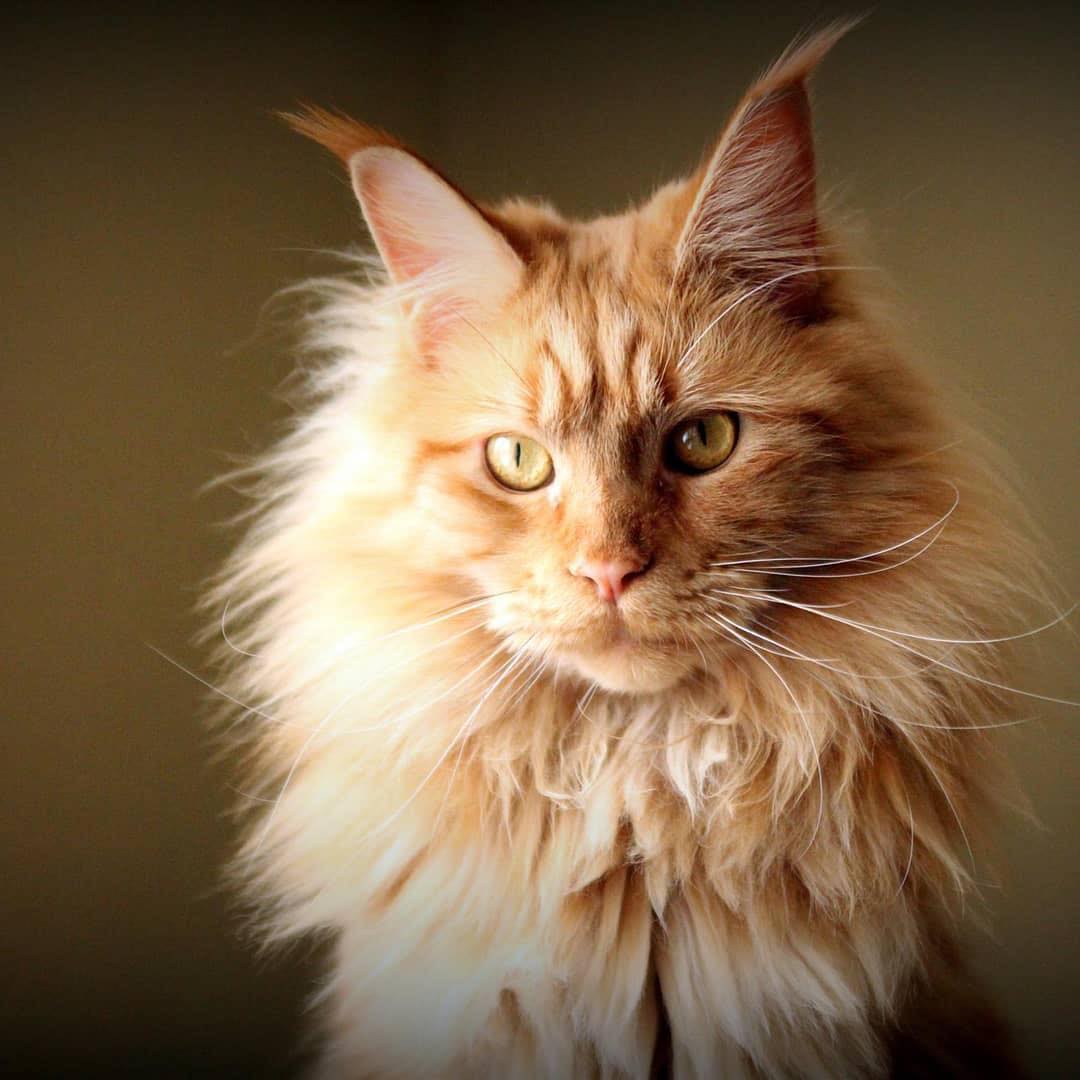
The Maine Coon's coat is a significant characteristic, featuring a soft, silky texture that is shorter on the head and shoulders and longer on the stomach and flanks. Some cats have a distinct "leonine ruff" around their neck. The double coat is self-maintaining, with minimal grooming required due to the light-density undercoat. This coat provides excellent protection in Maine's harsh climate, with denser fur in winter and thinner fur in summer. Their large, well-furred paws resemble snowshoes and help them walk on snow, while long tufts of fur between their toes offer warmth and structural support.
Color and pattern variations are abundant in the Maine Coon breed, with all cat colors accepted except chocolate, lilac, colorpoint patterns, or the "ticked" tabby patterns, which are not universally accepted. Brown tabby is the most common pattern. Eye colors are diverse, with all being acceptable under breed standards except blue or odd-eyes, a trait only present in white cats with certain coat colors.
Maine Coons have a number of physical adaptations for survival in cold climates, such as dense water-resistant fur, a long and bushy tail, and a distinctive snowshoe-like paw structure. Their large, tufted ears and tail tufts also aid in insulation and protection against the elements.
Temperament and Personality
Characterized as "the gentle giant," Maine Coons are known for their friendly, adaptable, and affectionate nature. They enjoy the company of people and are known to follow them around the house, displaying a loyalty and affection that is often described as "dog-like. " Despite their size, they are not overly demanding and adapt well to various lifestyles and personalities. Maine Coons are also highly intelligent, which can make them a bit independent, but not to the extent that they would require excessive attention.
Their moderate energy level makes them suitable for households with varying activity levels, including those with children and other pets. They are adaptable to different environments and get along well with families, other cats, and even dogs, making them a good choice for multi-animal homes. Their gentle nature and loyalty make them a cherished companion for many.
Despite their intelligence and adaptability, Maine Coons are known to be quite quiet. Their vocalization is minimal, which can be a significant factor for those seeking a low-maintenance pet that requires minimal noise.
Breed Standard and Characteristics
According to breed standards, Maine Coons are classified as medium-sized cats with a long and luxurious coat. They have a medium energy level, which allows them to engage in activities without being excessively energetic. Their friendliness is moderate, making them approachable without being overly needy. They have a shedding level that is classified as medium, and they are highly trainable due to their intelligence.
The Maine Coon has several distinct traits, including being highly adaptable and affectionate. Their grooming requirements are lower than those of other long-haired breeds, and they are also quite social, needing a moderate amount of interaction with their owners and other pets. Despite their independent streak, they are considered social creatures and do well in homes with people who spend considerable time with them.
In terms of ratings, Maine Coons score high across the board, with adaptability, affection level, child-friendliness, dog-friendliness, intelligence, and social needs all receiving a 5 out of 5 rating. They also score well in other areas such as shedding level and grooming, with these receiving a 3 out of 5 rating. Their life span is typically between 12 to 15 years, which is average for domestic cat breeds.
Health Considerations and Genetic Traits
While the Maine Coon is generally a healthy breed, like all cats, they can be prone to certain genetic conditions. Polydactylism, the presence of extra toes, is a common trait in the Maine Coon but is not typically seen in show rings due to competition standards. However, some organizations have created to preserve the polydactyl trait within the breed.
Health conditions such as hypertrophic cardiomyopathy (HCM), which affects the heart muscle, have been observed in Maine Coons. This is often identified through a mutation in the MYBPC3 gene and affects approximately 10.1% of the population, with some carriers showing no clinical signs. Kidney disease, in the form of polycystic kidney disease (PKD), is another concern. While renal cysts are observed in Maine Coons, they are not the same as the PKD found in Persian-related breeds and is more closely related to juvenile nephropathy.
Other conditions such as hip dysplasia, an abnormality of the hip joint that can lead to arthritis and lameness, and spinal muscular atrophy, an autosomal recessive condition affecting muscle and skeletal development, can be of concern in this breed.
Caring for a Maine Coon
When considering a Maine Coon as a pet, it's essential to understand the breed's grooming and health requirements.
Early detection and treatment of health issues such as HCM, PKD, or polydactylism can lead to better outcomes.
With their adaptable nature, Maine Coons can adjust well to different living situations, but they do prefer a home with active owners who enjoy interacting with their pets. Providing environmental stimulation through play and mental challenges is also beneficial for maintaining their intelligence and social needs.
This includes conducting genetic testing for health conditions and ensuring the overall well-being of the kittens. By choosing a breeder committed to quality, Maine Coon owners can help ensure a healthy and happy pet.
Buying a Maine Coon: Checklist
Research reputable breeders who specialize in Maine Coons Check for genetic health testing results for potential conditions like HCM and PKD Request documentation of the cat's family health history Observe the cat's behavior and interaction with other animals to gauge compatibility Confirm the kitten is up to date on vaccinations and deworming Ask about the breeder's post-purchase support and care guidelines
Understanding the Maine Coon's needs, health considerations, and the commitment required for their care will ensure a successful and rewarding experience as a pet owner of this charming and unique breed.
Frequently Asked Questions
What is the lifespan of the Maine Coon?
The average lifespan of the Maine Coon is about 12 - 15 years. Good nutrition and regular veterinary care support a healthy life.
What is the temperament of the Maine Coon?
The Maine Coon is known for: Adaptable, Intelligent, Loving, Gentle, Independent. Its affection rating is very high. Its energy level is moderate.
What size and weight is the Maine Coon?
It is a medium-sized cat, typically around 5 - 8 kg as an adult.
Is the Maine Coon easy to care for?
Available ratings indicate moderate grooming needs, and moderate shedding. Routine brushing, ear and dental care, and nail trims are still recommended.
Is the Maine Coon good with kids and other pets?
Available ratings indicate high child-friendliness, and very high pet-friendliness. Supervised, gradual introductions are recommended.
How much exercise does the Maine Coon need?
With a moderate energy level, it needs walks, play or training matched to its stamina.



