Origin and Historical Background
The Donskoy cat breed originated in the Russian city of Rostov-on-Don in 1987. This breed's unique hairlessness was discovered when a blue tortoiseshell kitten named Varvara, bred by Elena Kovaleva, began to lose her fur at four months of age. Following Varvara's mating with a local tomcat, several kittens were born with varying degrees of hairlessness, which became the foundation of the Donskoy breed.
The Donskoy was first officially recognized by the World Cat Federation (WCF) in 1987 and later by The International Cat Association (TICA) in 2005. This recognition marked the breed's acceptance into the international cat community. The breed's acceptance was not without controversy, as concerns about the genetic health of hairless cats were already emerging.
Over time, breeders have learned more about the genetic mutation responsible for the Donskoy's hairlessness. Unlike the recessive mutation found in the Sphynx cat, the Donskoy's mutation is dominant, meaning that all cats with this gene will either be born hairless or lose their coats as they grow. This discovery has led to a deeper understanding of the breed's genetic makeup and the challenges it presents.
Physical Appearance and Characteristics
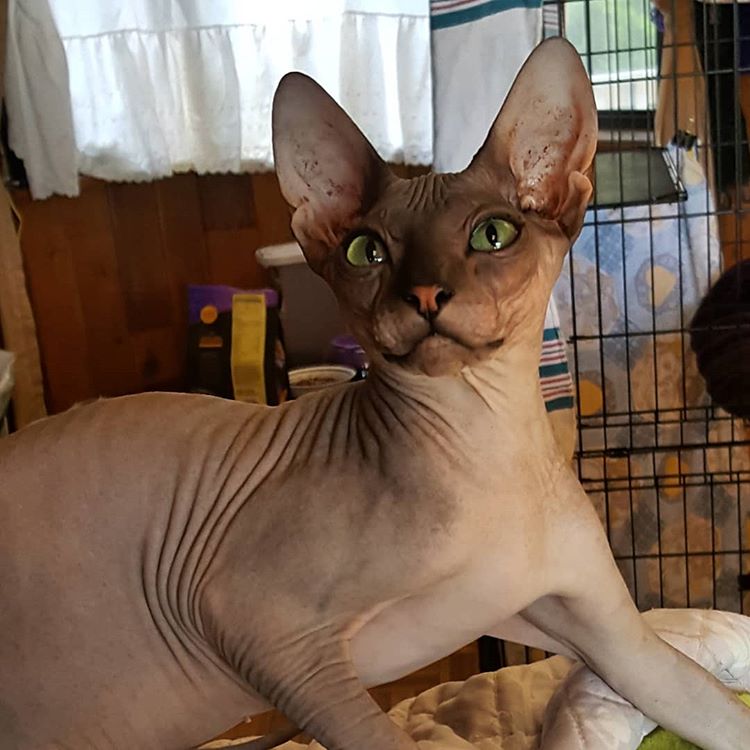
Donskoys are medium-sized, muscular cats with a distinctive build. Their heads are triangular, featuring large ears and almond-shaped eyes that contribute to their elf-like appearance. Their skin is very wrinkled, particularly around the face, neck, chest, and the base of their tails, which can lead to skin issues if not properly cared for.
Despite their lack of fur, Donskoys have a variety of skin and eye colors. Skin patterns tend to appear faded, and eye colors can range from blue, green, amber, orange, yellow, to brown. Some Donskoys may grow a faint fur coat during colder months, but this hair typically falls off as the weather warms. This seasonal change in coat can be a fascinating aspect of the breed's appearance.
The breed has four primary types based on coat and hairlessness: Rubber Bald, Flock Coat, Velour Coat, and Brush Coat. The Brush Coat Donskoy is the only type that is disqualified from the show ring, reflecting the breed's standardization efforts. The Rubber Bald type is the most common and is characterized by its smooth, hairless skin.
Temperament and Personality
Donskoys are affectionate, intelligent, and easy-going cats that demand lots of attention and interaction. They are playful and loyal, with a moderate level of friendliness and social needs. Their temperament is calm, especially considering their hairlessness, which is thought to contribute to their serene demeanor. This calm nature is a desirable trait for many cat owners.
Donskoys are inquisitive and soft-hearted, requiring sufficient stimulation to stay entertained. They are active and spend more time moving around than the average cat, which means they need an environment that supports their energy levels. This high level of activity is a key consideration for potential owners, as it requires a home that can accommodate their needs.
Despite their high social needs, Donskoys do not fare well when left alone for extended periods. This can be a challenge for owners who have busy schedules or work long hours, as the Donskoy's need for companionship and attention must be met.
Breeding and Genetic Considerations
The Donskoy's dominant hairless mutation has raised concerns about the genetic health of the breed. Homozygous forms of this mutation can lead to feline ectodermal dysplasia, a condition that affects dentition, lactation, and sweating ability. Symptoms of this condition mirror those of human ectodermal dysplasia, which also results in sparse or absent hair. This condition is a significant concern for breeders and owners alike.
Since 2014, it has been illegal in the Netherlands to breed with parent cats that carry genetic mutations or physical abnormalities that cause health or welfare issues in offspring. The lack of protective fur in hairless cats, like the Donskoy, is one of the banned mutations in parent cats. This regulation reflects the broader concerns about the health of hairless breeds.
Breeding between Donskoys and the Peterbald, a breed created by crossing Donskoys with Oriental Shorthair cats, is no longer permitted since 2000. Outcrossing is also not allowed, except with the domestic shorthair, due to the effects of the Donskoy's dominant hairless mutation. These restrictions are in place to preserve the breed's genetic integrity and health.
Health and Grooming Needs
Donskoys require frequent grooming, even without a coat. Their skin can become very oily if over-bathed, so careful attention must be given to their bathing routine. Despite their hairlessness, they are not considered hypoallergenic, with a shedding level of 1 on a 0-5 scale. This means that individuals with allergies may still experience reactions to the Donskoy's skin oils.
Additionally, the lack of fur can make Donskoys more susceptible to sunburn, so they should be kept out of direct sunlight for extended periods.
Adaptability and Compatibility
Donskoys are adaptable and can live in a variety of environments, with a rating of 4 on a 0-5 scale for adaptability. They are highly social and do well with other pets, especially other cats, which contributes to their rating of 5 for social needs and stranger-friendliness. This makes them a good fit for multi-pet households.
While they are friendly and intelligent, their energy level is high, which makes them a good fit for active households. However, their playful nature can be challenging for older cats, who may not have the energy to keep up with a Donskoy's activities. This is an important consideration for potential owners with older pets.
Buying a Donskoy: What to Consider
- Research reputable breeders who specialize in Donskoys. Look for breeders who prioritize health and genetic testing.
- Ensure that the breeder provides health clearances and genetic testing for potential health issues, such as feline ectodermal dysplasia.
- Consider the Donskoy's high energy level and social needs, ensuring that your household can accommodate these aspects. This includes having time to interact with and play with your Donskoy daily.
- Be aware of the potential health concerns associated with the breed's dominant hairless mutation, and discuss these with your veterinarian.
Frequently Asked Questions
What is the lifespan of the Donskoy?
The average lifespan of the Donskoy is about 12 - 15 years. Good nutrition and regular veterinary care support a healthy life.
What is the temperament of the Donskoy?
The Donskoy is known for: Playful, Affectionate, Loyal, Social. Its affection rating is high. Its energy level is high.
What size and weight is the Donskoy?
It is a medium-sized cat, typically around 5 - 6 kg as an adult.
Is the Donskoy easy to care for?
Available ratings indicate relatively low grooming needs, and low shedding. Routine brushing, ear and dental care, and nail trims are still recommended.
Is the Donskoy good with kids and other pets?
Available ratings indicate moderate child-friendliness, and moderate pet-friendliness. Supervised, gradual introductions are recommended.
How much exercise does the Donskoy need?
With a high energy level, it needs walks, play or training matched to its stamina.



