Origin and Development
Cyprus cats, also known as Cypriot cats, Saint Helen cats, and Saint Nicholas cats, are a landrace of domestic cat native to the island of Cyprus. This breed has a rich history that dates back to at least 9,500 years ago, with the discovery of Near Eastern wildcat remains in a grave in Cyprus. This finding suggests the earliest known association of cats with humans in the region.
The breed is thought to have developed over time in the mountainous regions of Cyprus from various populations of cats around the island. Their thick, bushy coat is believed to have evolved to cope with hunting large prey such as rats, big lizards, and snakes in the cool, wet mountain weather, although they are also found in the hotter, drier coastal areas of the island.
The legend of Saint Nicholas of the Cats, where Empress Helena of Constantinople is said to have sent hundreds of cats from Egypt or Palestine to Cyprus in 328 AD to control venomous snakes, adds a mystical element to the breed's history. While the story is a legend, it reflects the historical presence of cats on the island.
Efforts to establish a standardized breed began in 2006 with the formation of the Cyprus Cats National Breed Association (CyCNBA) in 2009. The breed was recognized by the World Cat Federation (WCF) as the Aphrodite's Giant in 2012 and later by The International Cat Association (TICA) as the Aphrodite in 2017, with both shorthaired and semi-longhaired versions being recognized.
Breed Characteristics
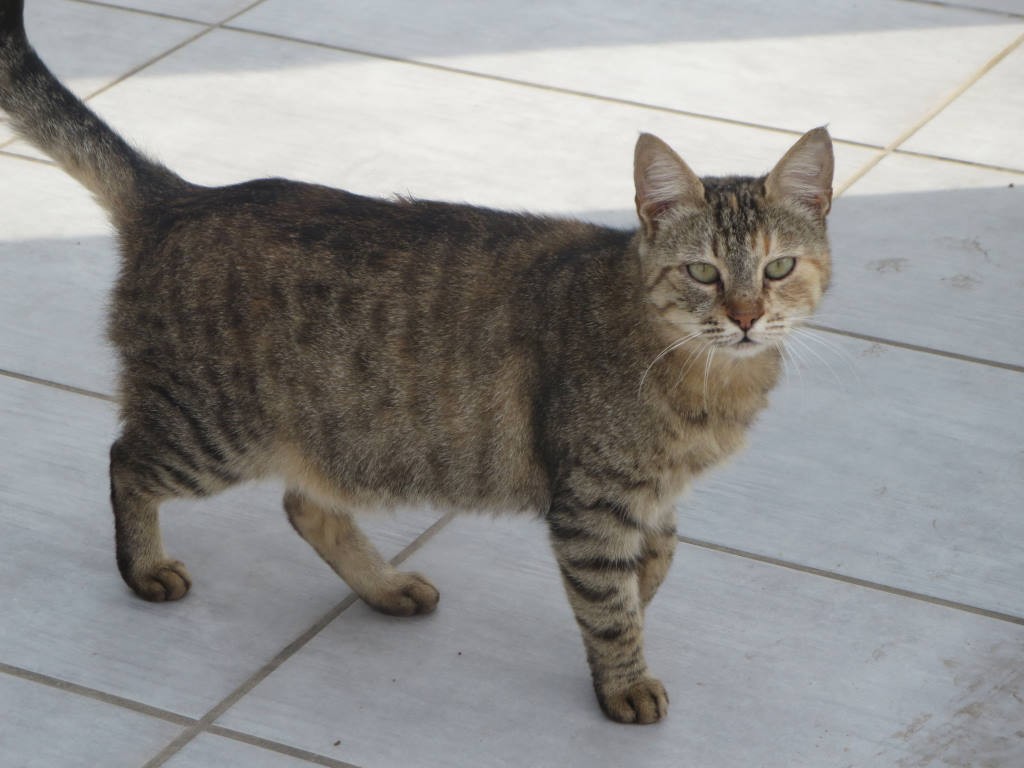
Cyprus cats are medium-sized with a medium-length coat that can be either short or semi-longhaired. They are athletic and energetic, with a strong and muscular build, although not as compact as a cobby type. The breed has a medium to large build, with muscular hips and shoulders, and back legs slightly longer than the front legs, a trait shared with the Manx breed.
Their coat is soft and wooly, with an undercoat that varies seasonally. The WCF standard specifies that the coat should be longer and with an undercoat in winter, and always lacking any top coat except possibly on the back. The tail is medium-long, well-plumed, and commensurate with the body size, and the head is long-triangular with straight cheeks and a long and straight muzzle.
Color and pattern are not restricted by the WCF or TICA standards, except for colorpoint or mink and any white spots if otherwise solid-colored. The eyes are olive-shaped and oblique-set, with any uniform color. The breed is known for its affectionate and social nature, and while there is no evidence that modern cats are descended from ancient Cypriot wildcats, the breed is considered distinct enough to develop a standardized breed from them.
Temperament and Social Behavior
Cyprus cats are described as loving, loyal, social, and inquisitive, forming strong ties with their families. They enjoy being involved in everything that goes on in their surroundings, making them perfect companions for people who seek a laid-back yet engaged feline friend. Their affectionate nature is further highlighted by the breed's high ratings for adaptability and affection level.
While not overly active by nature, Cyprus cats are energetic enough to be playful and enjoy interaction. They have a medium energy level and are generally friendly, which is reflected in their high ratings for dog-friendliness and social needs. Their friendly nature also makes them well-suited to homes with children, as evidenced by their child-friendly rating of 4.
Cyprus cats are generally sociable with people and may exhibit some dog-like behavior towards their keepers, such as greeting their owners at the door.
Health and Genetics
Genetic testing in the early 2010s revealed that Cyprus cats are a distinct population within the Mediterranean, with a lineage as distinct as the Van cats and little mainland admixture in recent times. This distinct genetic makeup supports the development of a standardized breed from this landrace.
While there is no evidence that modern cats are descended from ancient Cypriot wildcats, the breed's development in mountainous regions and the hunting of large prey suggest that they may be more robust and less prone to certain health issues than some other breeds.
The WCF and TICA have not set specific health standards for the breed, but their genetic distinctiveness suggests a lower risk of hereditary health issues compared to cats with more complex genetic backgrounds.
Breed Standards and Registration
The World Cat Federation (WCF) recognizes the Cyprus cat as the Aphrodite's Giant, with standards for both shorthaired and semi-longhaired varieties. The TICA recognizes the breed as the Aphrodite, with similar standards that include size, weight, coat, color, and pattern, as well as specific traits such as the head shape, ear set, and eye shape.
The WCF standard emphasizes the breed's large, strong, and muscular build, with a preference for a long-triangular head, straight cheeks, and a long and straight muzzle. The TICA standard, on the other hand, focuses on the breed's affectionate and social nature, with a requirement for a gentle, non-aggressive temperament.
Both organizations prohibit out-crossing to other breeds, ensuring that the breed's unique characteristics are preserved. The WCC, which regulates breeding under the WCF, also prohibits out-crossing, with the exception of between the longhaired and shorthaired varieties of the breed.
Buying a Cyprus Cat
- Research the breed's history and temperament to ensure it aligns with your lifestyle.
- Seek out a reputable breeder who follows ethical breeding practices and provides health guarantees.
- Prepare for the cost of owning a Cyprus cat, including food, vet care, and supplies.
- Ensure your home is a safe environment for a cat, with appropriate toys and safe places to explore.
Cyprus cats can be a great addition to a family looking for a loyal, affectionate, and social pet. By understanding the breed's unique characteristics and care requirements, you can ensure a happy and healthy life for your new companion.
Frequently Asked Questions
What is the lifespan of the Cyprus?
The average lifespan of the Cyprus is about 12 - 15 years. Good nutrition and regular veterinary care support a healthy life.
What is the temperament of the Cyprus?
The Cyprus is known for: Affectionate, Social. Its affection rating is very high. Its energy level is moderate.
What size and weight is the Cyprus?
It is a medium-sized cat, typically around 4 - 7 kg as an adult.
Is the Cyprus easy to care for?
Available ratings indicate moderate grooming needs, and moderate shedding. Routine brushing, ear and dental care, and nail trims are still recommended.
Is the Cyprus good with kids and other pets?
Available ratings indicate high child-friendliness, and very high pet-friendliness. Supervised, gradual introductions are recommended.
How much exercise does the Cyprus need?
With a moderate energy level, it needs walks, play or training matched to its stamina.



