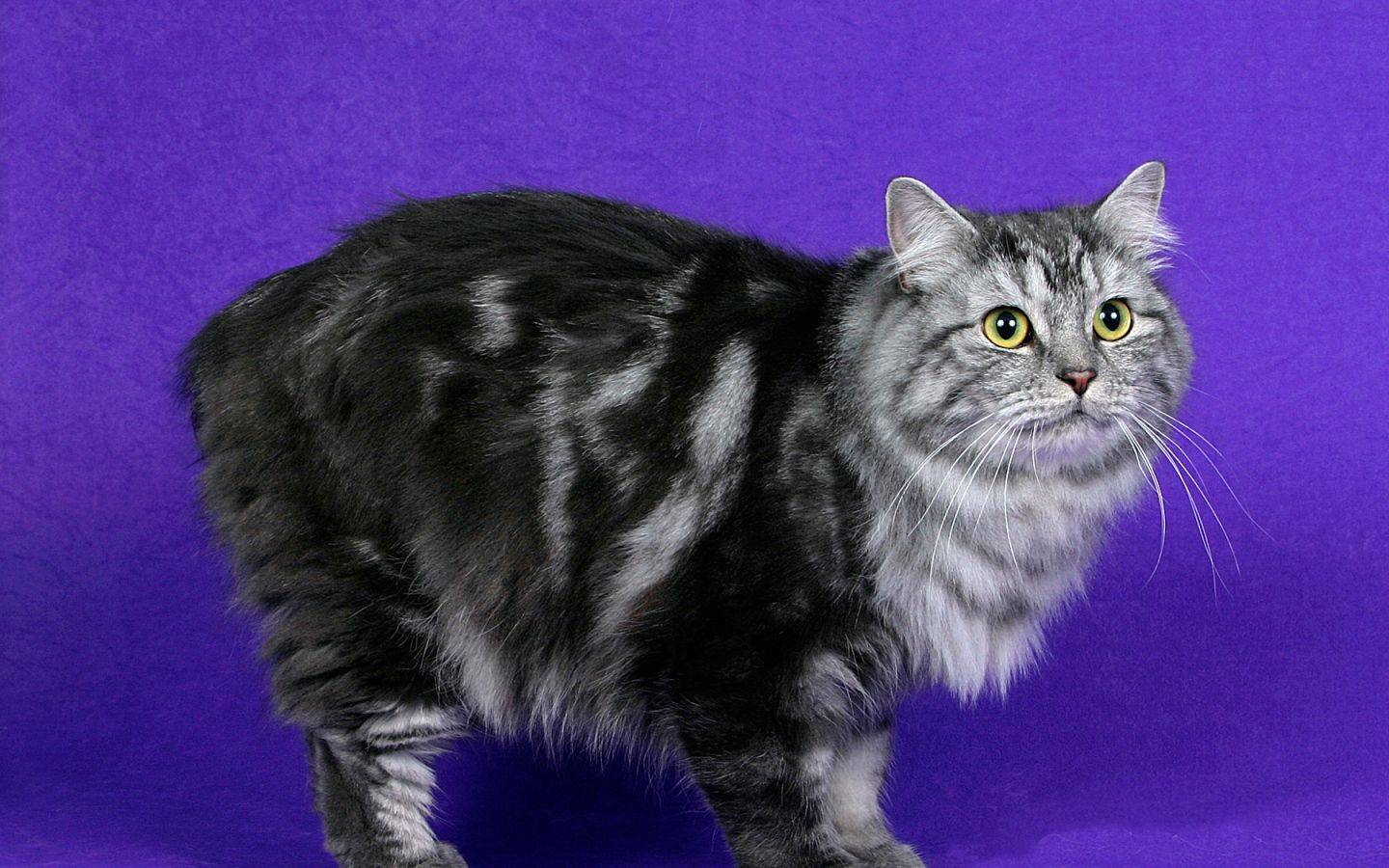
Origin and Development
The Cymric is a Canadian cat breed, with its origins rooted in the Isle of Man. While the breed's Manx bloodline originated from the Isle of Man, the long-haired variant, known as the Cymric, was developed in Canada.
The name "Cymric" comes from Cymru, the Welsh name for Wales, providing a Celtic-sounding moniker for the breed. This name was chosen to give the breed a distinctive identity, despite its non-association with Wales.
Long-haired kittens had been born to Manx cats on the Isle of Man, but were historically discarded as "mutants. " It wasn't until the 1960s in Canada that similar kittens were born and intentionally bred, leading to the increase in Cymric popularity.
Recognition of the Cymric as a separate breed took many years. It wasn't until the mid-1970s that the breed gained popularity, and even then, not all cat associations recognized it as a distinct breed.
Appearance and Physical Characteristics
The Cymric is a muscular, compact, medium to large cat with a sturdy bone structure. Despite the lack of a tail, they can appear small, as the taillessness trait can give them a more delicate appearance.
Males can weigh up to 5 kg (12 lb), while females typically weigh between 4–5 kg (8–12 lb). They have a rounded appearance and their front legs are shorter than their hind legs.
Cymrics have eyes that come in various shades such as amber, green, hazel, copper, gold, yellow, and orange. Their ears are tall, slightly angled outwards, and adorned with moderate ear tufts.
Their semi-long, dense, and resilient double coat consists of a shorter, soft undercoat. The coat is notably long and voluminous around the ruff, extending downward to create a shirtfront and onto the upper portion of the hindquarters above the hock, forming breeches.
Coat and Coloring
The Cymric's coat is semi-long, dense, and resilient, with a shorter, soft undercoat known as an awn. The coat's quality is often more significant than its color or markings in the show ring.
Cymrics can display a wide array of colors and patterns, making each cat unique. The coat extends onto the upper portion of the hindquarters above the hock, creating breeches, which is a distinctive feature of the breed.
In some registries, the Isle of Man Longhair, a fully tailed variant of the Cymric, is recognized as a separate breed. This variant has a thick, long coat similar to the Cymric but with a full tail, and its coat colors are limited to those acceptable in the British Shorthair.
Temperament and Personality
The Cymric is known for its placid and sweet temperament. They are gentle, loyal, intelligent, and playful, making them wonderful companions for people.
They are not easily upset by things happening in their world and adore people, making them excellent family pets. Their intelligence and dexterity are notable, as they have been known to use their paws to open doors or get into cabinets.
Cymrics have a medium level of energy and friendliness, making them adaptable to various living situations. They are also highly trainable, which can be a valuable trait for owners looking for a cat that can be trained for specific tasks or behaviors.
Health Considerations
The genetic mutation responsible for the Cymric's taillessness can also lead to health complications. Spina bifida, a spinal defect, can result in neurological issues, such as difficulty with movement or waste elimination. This condition can sometimes cause a rabbit-like hop in affected Cymric cats.
However, breeding restrictions are in place for Manx cats, including the Cymric, to ensure animal welfare.
Genetic research has led to special breeding restrictions on Manx cats to prevent birth defects and other health issues. These restrictions are in place for the overall well-being of the breed.
Breed Recognition and Standards
The Cymric is recognized as a separate breed by several cat registries, including the Fédération Internationale Féline (FIFe), World Cat Federation (WCF), Canadian Cat Association (CCA-AFC), Australian Cat Federation (ACF), New Zealand Cat Fancy (NZCF), Southern Africa Cat Council (SACC), American Cat Fanciers Association (ACFA), and Cat Fanciers' Federation (CFF). The Cat Aficionado Association (CAA) of China also recognizes the Cymric as a separate breed.
However, the International Cat Association (TICA) recognizes the Cymric as a variety of Manx, not a separate breed with its own standards. The US-based Cat Fanciers' Association (CFA), the Co-ordinating Cat Council of Australia (CCCA), and the UK's Governing Council of the Cat Fancy (GCCF) also recognize the Cymric as a variety of Manx, with the CFA and CCCA calling it the Manx Longhair, while the GCCF uses the term Semi-longhair Manx Variant.
Isle of Man Longhair Variant
The Isle of Man Longhair is a fully tailed variant of the Cymric, recognized as a separate breed only by the New Zealand Cat Fancy (NZCF) with a specific breed standard. These cats have Cymric features but without the Manx taillessness gene.
Coat colors for Isle of Man Longhairs are limited to those acceptable in the British Shorthair. They require the doubled and thick, long coat of the Cymric, making them a visually distinct variant of the breed.
In other international registries, such cats are designated as "Tailed Cymric" or "Tailed Manx Longhair," recognized only as breeding stock. They cannot be shown in cat shows, but they play a significant role in breeding programs for the health and genetic diversity of the Manx and Cymric breeds.
Buying a Cymric: A Practical Checklist
- Research reputable breeders who specialize in Cymrics to ensure the health and quality of the kitten.
- Ask about the kitten's genetic health, including any known Manx syndrome or spinal issues.
- Ensure the kitten has received all necessary vaccinations and health check-ups before bringing it home.
- Consider the Cymric's energetic and playful nature and ensure your home can accommodate an active cat.
- Be prepared for the potential health issues associated with the breed's taillessness, including spina bifida.
Buying a Cymric requires careful consideration and planning, but with the right care and attention, they can be wonderful pets for the right owners.
Frequently Asked Questions
What is the lifespan of the Cymric?
The average lifespan of the Cymric is about 8 - 14 years. Good nutrition and regular veterinary care support a healthy life.
What is the temperament of the Cymric?
The Cymric is known for: Gentle, Loyal, Intelligent, Playful. Its affection rating is very high. Its energy level is high.
What size and weight is the Cymric?
It is a medium-sized cat, typically around 4 - 6 kg as an adult.
Is the Cymric easy to care for?
Available ratings indicate moderate grooming needs, and very high shedding. Routine brushing, ear and dental care, and nail trims are still recommended.
Is the Cymric good with kids and other pets?
Available ratings indicate high child-friendliness, and very high pet-friendliness. Supervised, gradual introductions are recommended.
How much exercise does the Cymric need?
With a high energy level, it needs walks, play or training matched to its stamina.



