Origin and History
The Chartreux, a rare breed of cat, has its origins traced back to France. Its history is shrouded in legends, with one suggesting that the breed descended from cats brought to France by Carthusian monks to live in the Grande Chartreuse monastery in the Chartreuse Mountains. However, the Prior of the Grande Chartreuse denied these claims in 1972, stating that no such records existed. Another legend posits that the Chartreux's ancestors were feral mountain cats from what is now Syria, brought back to France by returning Crusaders in the 13th century. The breed was first documented by the French naturalist Buffon in the 18th century. It faced significant decline during both World Wars, but efforts by European cat fanciers-breeders helped preserve the breed.
The first Chartreux were brought to the United States in 1971 by Helen and John Gamon of La Jolla, California. The breed was advanced to championship status by the Cat Fanciers' Association (CFA) in 1987. As of 2007, there were fewer than two dozen active Chartreux breeders in North America. This limited number of breeders reflects the breed's rarity and the effort required to maintain its unique characteristics.
Historical figures such as the French novelist Colette, poet Charles Baudelaire, and President Charles de Gaulle were known to own Chartreux cats, highlighting the breed's status and popularity even in the past. Colette, in particular, made her Chartreux the protagonist in her novel "La Chatte," further cementing the breed's cultural significance.
Physical Characteristics
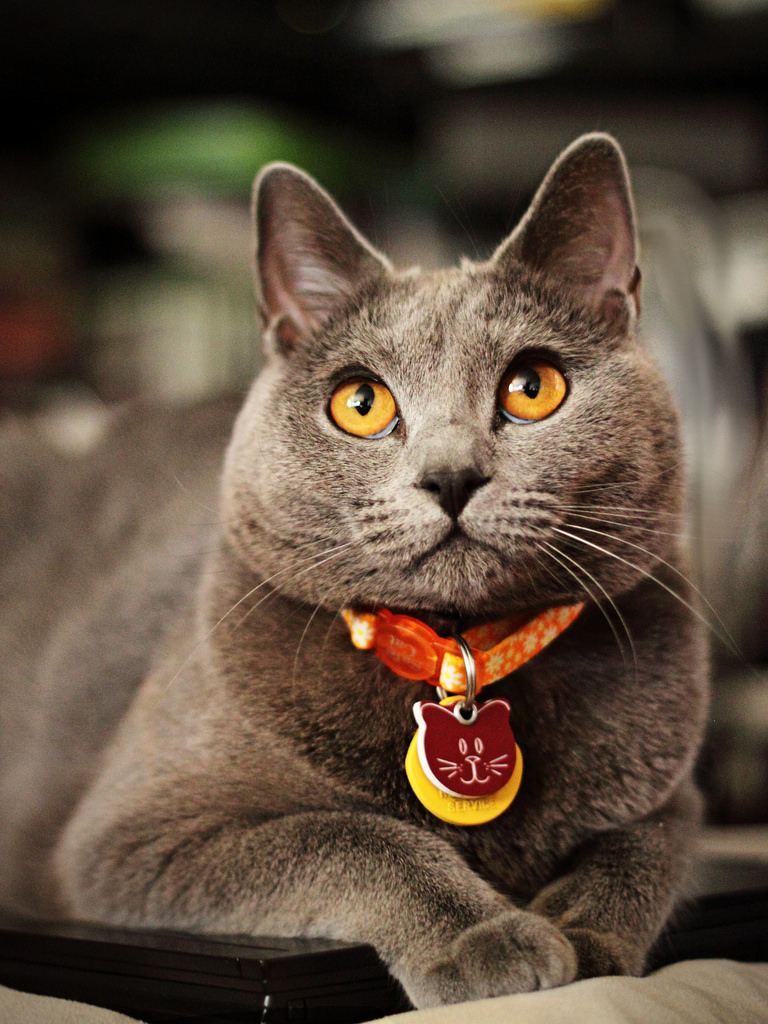
The Chartreux is a large and muscular breed, often referred to as "cobby" due to its robust body type. They possess relatively short, fine-boned limbs and are known for their exceptional reflexes. Their most distinctive feature is their blue (silver-grey) water-resistant short hair double coat, which is often slightly thick and may show "breaks" resembling sheepskin. This coat texture is a result of the breed's heritage and adaptability to various climates.
The Chartreux has orange or copper-colored eyes and is famous for its "smile," which is a result of the breed's head structure and tapered muzzles. This facial structure contributes to their gentle and friendly demeanor. The breed takes approximately two years to reach adulthood, and while their adult weight ranges from 3 to 7 kg, the height of the Chartreux is not recorded. Their coat length is short, and they are known for being hypoallergenic, making them suitable for individuals with allergies. The hypoallergenic quality is attributed to their low level of dander production.
Temperament and Behavior
The Chartreux is a generally silent breed but communicative, often using a soft chirp or trill to convey messages. They enjoy short play sessions mixed with naps and meals, creating the perfect day for them. Despite appreciating the attention they receive, they are not demanding and are content to follow their favored person around the house, sleeping on their bed, and snuggling when needed. This breed is affectionate, loyal, intelligent, social, lively, and playful, retaining their playful nature into adulthood. Some Chartreux can even be taught to fetch small objects, similar to a dog's behavior, showcasing their intelligence and adaptability.
Chartreux cats are good with children and other animals, non-aggressive, and affectionate. They tend to bond with one person in the household, though they remain loving and affectionate to other family members. Their observant and intelligent nature allows them to learn various tricks, such as operating radio on/off buttons and opening screen door latches. This ability to learn and interact with humans makes them a popular choice for families looking for a companionable pet.
Lifespan and Health
The Chartreux has a life expectancy of 12 to 15 years, which is considered average for cat breeds. They are generally very healthy and non-aggressive, making them good travelers and adaptable to various environments. However, like all breeds, they can be prone to certain health conditions. Some of the health issues that may affect Chartreux cats include hip dysplasia, polycystic kidney disease, and heart conditions.
Regular brushing also helps to maintain the coat's water-resistant qualities and to keep the cat comfortable.
Breeder Purpose and Hypoallergenic Flag
There is no specific breeder purpose associated with the Chartreux breed. However, their hypoallergenic flag, which is rated at 1, indicates that they are suitable for individuals with allergies. This rating reflects the breed's overall characteristics and suitability for various lifestyles, particularly those with sensitivities to pet dander.
These ratings are based on a comprehensive assessment of the breed's characteristics, including the amount of dander they produce, the frequency of grooming required, and the shedding cycle of the coat. Breeders select for these traits to ensure that the Chartreux remains a suitable option for those with allergies.
Cultural Significance and Popularity
The Chartreux has made an impact in popular culture, with notable mentions in literature and history. For example, the mascot of the Montreal International Jazz Festival is a blue Chartreux named 'Ste Cat,' in honor of the festival's hub, Sainte Catherine Street in Montreal. This connection to a major cultural event in Canada highlights the breed's cultural significance.
French writer Colette even made one of her Chartreux the heroine of her books "La Chatte" and "Les Vrilles de la Vigne," showcasing the breed's significance in French literature. The breed's historical connections to famous figures and its cultural presence continue to contribute to its popularity and desirability as a pet. With their unique characteristics, gentle nature, and hypoallergenic qualities, Chartreux cats continue to captivate cat enthusiasts around the world.
Buying a Chartreux: A Practical Checklist
- Research reputable breeders to ensure the health and quality of the kitten.
- Verify the kitten's pedigree and ensure it has been bred to minimize potential health issues, such as hip dysplasia or polycystic kidney disease.
- Consider the breed's energy level and adaptability to your lifestyle and living situation, including the space available for play and exercise.
- Be ready to provide a loving and stimulating environment for your new companion, ensuring they receive ample attention and care.
- Understand the grooming requirements of the Chartreux's coat to maintain their health and appearance.
- Prepare for the long-term commitment of pet ownership, as Chartreux cats have an average lifespan of 12 to 15 years.
Frequently Asked Questions
What is the lifespan of the Chartreux?
The average lifespan of the Chartreux is about 12 - 15 years. Good nutrition and regular veterinary care support a healthy life.
What is the temperament of the Chartreux?
The Chartreux is known for: Affectionate, Loyal, Intelligent, Social, Lively, Playful. Its affection rating is very high. Its energy level is high.
What size and weight is the Chartreux?
It is a medium-sized cat, typically around 3 - 7 kg as an adult.
Is the Chartreux easy to care for?
Available ratings indicate low grooming needs, and moderate shedding. Routine brushing, ear and dental care, and nail trims are still recommended.
Is the Chartreux good with kids and other pets?
Available ratings indicate high child-friendliness, and very high pet-friendliness. Supervised, gradual introductions are recommended.
How much exercise does the Chartreux need?
With a high energy level, it needs walks, play or training matched to its stamina.
Is the Chartreux hypoallergenic?
It has some hypoallergenic traits, but reactions vary. Spend time with one and seek professional advice before deciding.



