Origin and History
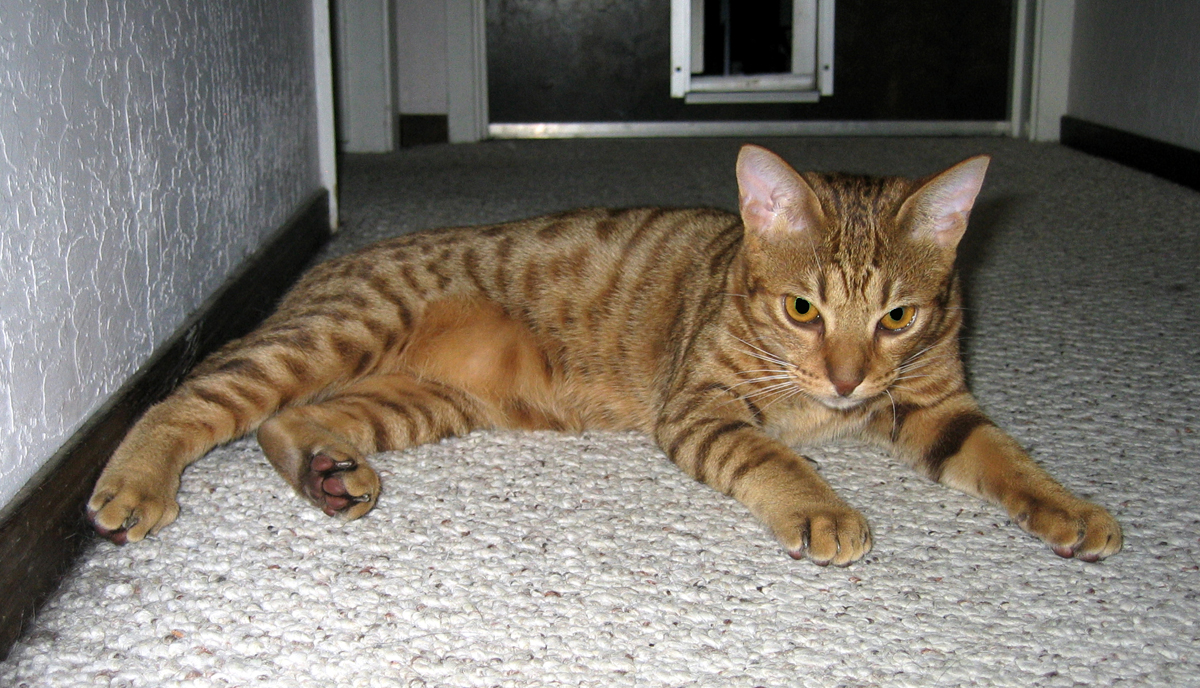
The California Spangled Cat, an experimental breed with a distinctive coat pattern resembling the cheetah or leopard, was developed by Paul Casey in the United States. Inspired by a conversation with Louis Leakey regarding conservation efforts, Casey initiated the breeding process with a female Traditional Siamese and a Turkish Angora. The breed was further enhanced by adding British Shorthair, American Shorthair, Manx, and Abyssinian bloodlines, along with moggies from Malaya and Egypt. By 1985, the breed had achieved its established look and formed the California Spangled Cat Association. The breed gained significant attention when advertised in the Neiman-Marcus catalog, sparking controversy and leading to hundreds of inquiries. Although numbers progressed slowly, a California Spangled Cat won best in show at a Paris fancier competition in 1994.
In 2003, only around 200 California Spangled Cats were recorded to exist, reflecting the breed's limited population. The breed holds experimental recognition with both the American Cat Association (ACA) and The International Cat Association (TICA), showcasing its unique status in the cat breeding world. The breed's recognition by these organizations has been a critical factor in its continued development and conservation.
Appearance and Traits
The California Spangled Cat boasts a coat with well-defined spots that mimic those of a leopard or cheetah, with variations in spot shapes including round, square, triangular, and oval. Eyelet, fish scale, and crescent spots are disallowed in the breed standard. This striking appearance is complemented by a medium-length coat and a medium build, with the cat weighing between 5 and 7 kg. The California Spangled is known for its playful nature, often choosing high locations to showcase its acrobatic skills, reflecting a medium level of energy and a friendly demeanor. The breed's coat comes in a variety of colors, including black, brown, and white, with spots that can be a mix of these colors.
Temperamentally, the California Spangled Cat is affectionate, curious, intelligent, loyal, and sociable. Their striking appearance and friendly disposition make them popular as pets, especially in households with children or other pets.
Breed Development and Conservation Efforts
Paul Casey's initial goal in developing the California Spangled Cat was to create a cat that would evoke public support for conservation efforts. The breed's unique appearance, reminiscent of endangered species, was intended to spark an emotional connection with potential supporters. Despite the breed's experimental status, its limited population underscores the need for ongoing conservation efforts to ensure its survival. In 2003, the breed's population was as low as 200, emphasizing the importance of conservation efforts.
The breed's development process involved careful selection and breeding of cats with specific characteristics, including coat patterns and temperament. By combining the genetic diversity of various breeds, including the Traditional Siamese, Turkish Angora, British Shorthair, American Shorthair, Manx, Abyssinian, Malayan, and Egyptian moggies, the California Spangled Cat Association has been able to establish a breed with a consistent look and temperament. This careful breeding has also helped to minimize genetic health issues common to some of the parent breeds.
Temperament and Social Behavior
The California Spangled Cat is known for its affectionate and gentle nature, making them excellent pets for families. This breed is also curious and intelligent, often displaying a playful and mischievous side. Their loyalty to their owners and adaptability to different living situations make them suitable for various household environments. The breed's social behavior is marked by a desire to be involved in family activities and to receive attention from their human companions.
Their friendly demeanor and high energy level also make them compatible with dog-friendly homes, although their playfulness may require a patient and understanding family. The California Spangled Cat's sociable nature is well-suited to households with active children or other pets, as they enjoy engaging with their surroundings and other animals.
Health and Genetics
Specific genetic health concerns that may affect the breed include those common to their parent breeds, such as heart conditions, kidney issues, and respiratory problems. Responsible breeders conduct health screenings to minimize the risk of these conditions and ensure the well-being of their cats.
The breed's unique coat pattern is the result of careful genetic selection, ensuring that the cats have the necessary genes to maintain their distinctive appearance. This selection process also aims to enhance the breed's overall health and reduce the risk of genetic disorders.
Lifestyle and Care
The California Spangled Cat requires minimal grooming, with a medium shedding level and a low maintenance coat. Due to their high trainability, these cats are relatively easy to potty train and learn new commands.
Providing interactive toys and opportunities for climbing and jumping can help satisfy their natural curiosity and acrobatic tendencies. These activities are not only mentally stimulating but also help to keep the California Spangled Cat physically fit and healthy.
Adaptability and Compatibility
The California Spangled Cat is highly adaptable to various living situations, making them suitable for apartment dwellers as well as those with houses and gardens. Their sociable nature requires attention and companionship, so they are best suited for homes where they can interact with family members throughout the day. Their intelligence and loyalty make them a good fit for active households, as they can be trained to participate in various activities and follow commands.
With their friendly demeanor and high adaptability, the California Spangled Cat is also compatible with other pets, including dogs.
Buying a California Spangled Cat: What to Consider
- Research reputable breeders who specialize in the California Spangled Cat to ensure the health and quality of the kitten.
- Consider the breed's unique appearance, temperament, and care requirements to ensure it aligns with your lifestyle and expectations. This includes understanding the breed's energy level, grooming needs, and compatibility with your existing pets.
- Ask about the breeder's experience with the breed and inquire about any health screenings or genetic testing performed on the parents. Responsible breeders should be able to provide documentation of their cats' health status.
- Visit the kitten in person to assess its temperament and overall health, and discuss any questions or concerns with the breeder. A reputable breeder will be open and willing to answer your questions and provide you with the information you need to make an informed decision.
- Prepare for the initial costs of purchasing a California Spangled Cat, including the purchase price, veterinary care, and supplies.
Investing time and effort into finding the right California Spangled Cat will ensure a long and fulfilling relationship with this unique and charming breed. The breed's distinctive appearance and friendly temperament make it a popular choice for cat lovers looking for a pet that is both visually striking and affectionate.
Frequently Asked Questions
What is the lifespan of the California Spangled?
The average lifespan of the California Spangled is about 10 - 14 years. Good nutrition and regular veterinary care support a healthy life.
What is the temperament of the California Spangled?
The California Spangled is known for: Affectionate, Curious, Intelligent, Loyal, Social. Its affection rating is very high. Its energy level is moderate.
What size and weight is the California Spangled?
It is a medium-sized cat, typically around 5 - 7 kg as an adult.
Is the California Spangled easy to care for?
Available ratings indicate low grooming needs, and low shedding. Routine brushing, ear and dental care, and nail trims are still recommended.
Is the California Spangled good with kids and other pets?
Available ratings indicate high child-friendliness, and very high pet-friendliness. Supervised, gradual introductions are recommended.
How much exercise does the California Spangled need?
With a moderate energy level, it needs walks, play or training matched to its stamina.



