Origin and Historical Background
The Birman, known as the "Sacred Cat of Burma," originated in France and was first recognized in 1925. Its breed name, derived from Birmanie, the French form of Burma, reflects its historical connection to the region. Stories suggest the cats were brought to France by temple priests in northern Burma, either as rewards for defending temples or as stolen and smuggled out of the country. These cats were revered for their beauty and were often considered sacred, which is why they were given the title "Sacred Cat of Burma. "
During World War II, the Birman breed was nearly wiped out, with only two cats surviving in Europe at the end of the war. The breed's revival relied on a pair named Orloff and Xenia de Kaabaa, who were instrumental in rebuilding the Birman population. The Orloff pair was a gift from the French ambassador to Turkey, and they were the first Birman cats to be introduced to the Western world.
Birmans were initially recognized in France by the Cat Club de France in 1925 and later by the Fédération Internationale Féline in 1949. The breed gained further recognition in Britain in 1965 and in the United States by the Cat Fanciers' Association (CFA) in 1966. Since then, the Birman has become a popular breed worldwide, with dedicated breeders and enthusiasts ensuring its continued existence.
Breed Characteristics
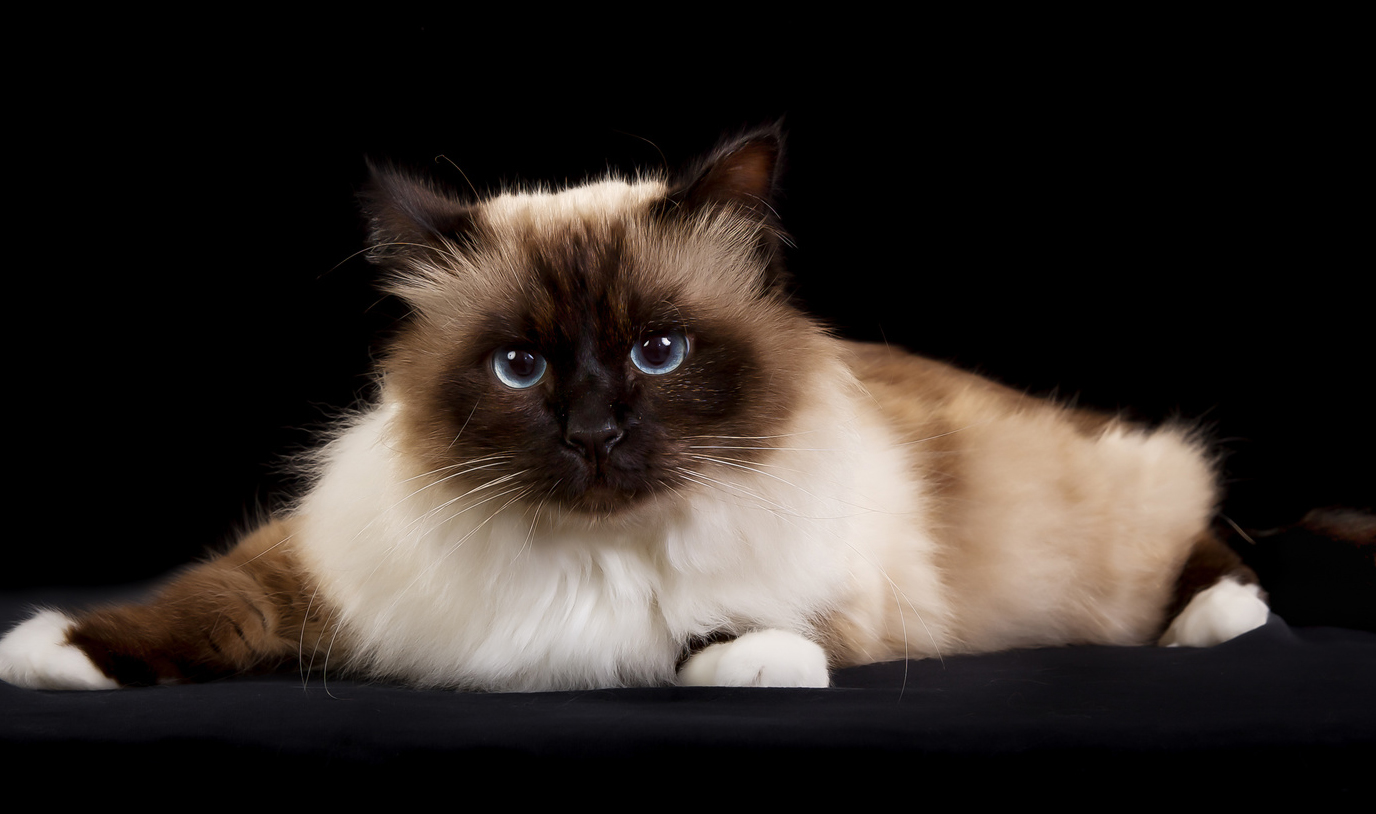
The Birman has a medium-sized, rectangular body with a broad face and distinct Roman nose. Their ears are wide at the base and tall, set atop the head, and their eyes are rounded and a deep sapphire blue in color. This coloration is a result of the "blue eye" gene, which is linked to the white coat and is a defining characteristic of the breed.
These cats possess a medium-length, silky fur that lacks an undercoat, making them less prone to matting. Their coat is always pointed, with a base color ranging from white to cream, and the points are colored, corresponding to the cat's overall color. The trademark feature of the Birman is the contrasting white "gloves" on each paw, which include all toes and extend up the back of the leg, known as the "laces," finishing with an inverted V shape up the hock. This distinctive coat pattern is a result of a genetic mutation that affects pigmentation.
Recognized point colors include seal, chocolate, red, and their corresponding dilute varieties: blue, lilac, and cream. Tabby and tortie variations in these colors are also allowed. The coat's color and pattern are strictly regulated by breed standards, ensuring that each Birman meets the criteria for the breed.
Temperament and Behavior
The Birman is a docile and gentle cat that loves people, often following them from room to room and wanting to be involved in their activities. This breed is affectionate and social, making it an excellent companion for those who seek a pet that enjoys close interaction. Birmans are known for their loyalty and can form strong bonds with their owners, often becoming a part of the family.
With a high level of energy, the Birman cat enjoys playtime and physical activity, making it a suitable pet for active households. They communicate in a soft voice, typically to remind their owners it might be time for food or a cozy cuddle session. This breed is also known for its intelligence and can be moderately trained, making them adaptable to various household environments and even capable of learning tricks.
Birmans are often described as having a "dog-like" temperament, as they can be very attached to their owners and may exhibit behaviors such as bringing gifts or following their owners around the house. This makes them a unique and endearing breed for those looking for a pet that is both affectionate and interactive.
Health Considerations
The Birman cat has a life expectancy of 14 to 15 years, which is slightly higher than the average cat lifespan. However, they are prone to certain health issues, such as chronic kidney disease, which is indicated by high levels of creatinine and symmetric dimethylarginine (SDMA) in their blood. Creatinine is a creatine phosphate produced during metabolism, and SDMA is a methylated form of the amino acid arginine, released during protein catabolism. Regular blood tests can help detect these conditions early.
Birmans are also at a higher risk of developing feline infectious peritonitis, which alters renal function, and urate urolithiasis, a type of kidney stone, with an odds ratio of 6.77. Feline audiogenic reflex seizures (FARS), a form of epilepsy, are believed to be more common in Birman cats. These health issues can have significant impacts on the quality of life for Birman cats, and owners should be vigilant about monitoring their pet's health and seeking veterinary care when necessary.
Breed Recognition and Genetics
The Birman breed has been recognized by various cat associations around the world, including the Fédération Internationale Féline, the Governing Council of the Cat Fancy in England, the Cat Fanciers' Association in the United States, the Canadian Cat Association, and The International Cat Association. Recognized in 1979 by these organizations, the Birman has gained worldwide popularity, with dedicated breed clubs and registries ensuring the breed's standards are maintained.
A study by Lipinski et al. in 2008 found that the Birman has one of the lowest levels of genetic diversity among all breeds studied, which could be a contributing factor to some of their health issues.
Care and Ownership
Their moderate energy level makes them suitable for active individuals or families with young children. Birmans enjoy being involved in family activities and can be great companions for children who are gentle and respectful of pets.
Prospective owners should seek breeders who prioritize health and genetic diversity. Owning a Birman can be a rewarding experience, as they form strong bonds with their owners and contribute to a loving household. Birmans are known for their affectionate nature and can be a great source of comfort and companionship.
Buying Checklist
When considering adding a Birman cat to your home, keep the following checklist in mind:
- Look for a reputable breeder with a focus on health and genetic diversity.
- Ask for health clearances and certifications from genetic testing for kidney disease and other hereditary conditions.
- Ensure your home has a safe and stimulating environment for an active cat.
- Understand the responsibilities of owning a Birman, including the time and effort required for grooming and socialization.
Frequently Asked Questions
What is the lifespan of the Birman?
The average lifespan of the Birman is about 14 - 15 years. Good nutrition and regular veterinary care support a healthy life.
What is the temperament of the Birman?
The Birman is known for: Affectionate, Active, Gentle, Social. Its affection rating is very high. Its energy level is high.
What size and weight is the Birman?
It is a medium-sized cat, typically around 3 - 7 kg as an adult.
Is the Birman easy to care for?
Available ratings indicate relatively low grooming needs, and moderate shedding. Routine brushing, ear and dental care, and nail trims are still recommended.
Is the Birman good with kids and other pets?
Available ratings indicate high child-friendliness, and very high pet-friendliness. Supervised, gradual introductions are recommended.
How much exercise does the Birman need?
With a high energy level, it needs walks, play or training matched to its stamina.



