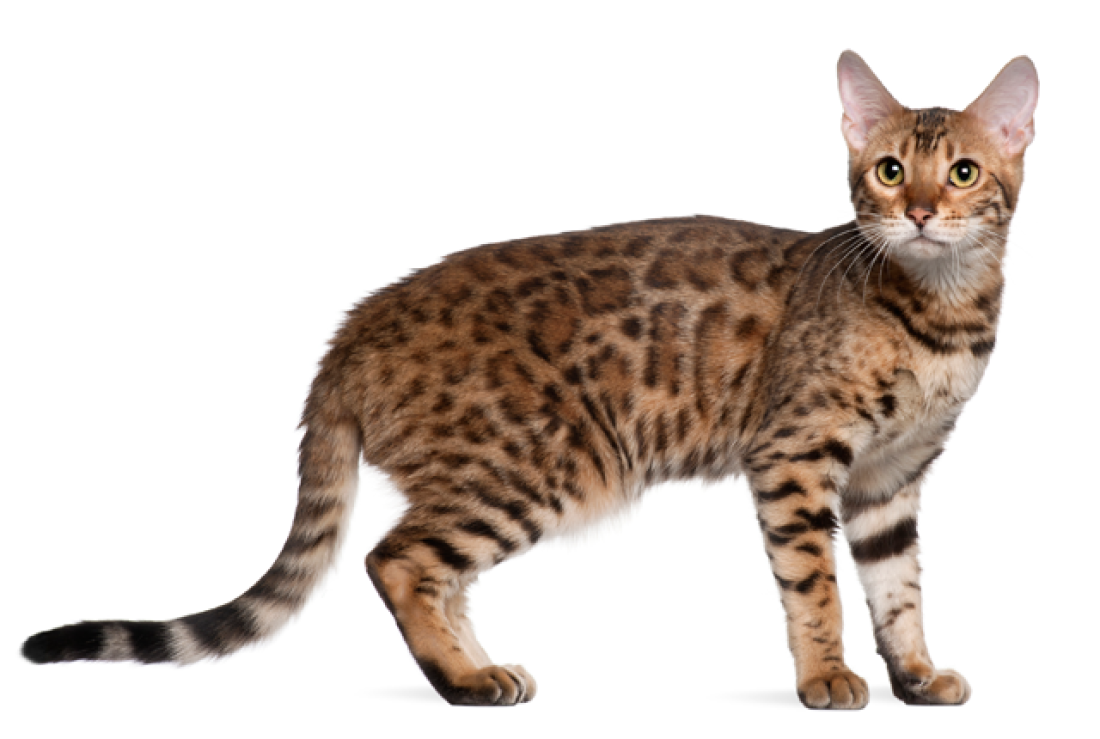
Origin and Development
The Bengal cat, a hybrid breed, originated in the United States, resulting from crossbreeding an Asian leopard cat with domestic cats, particularly the spotted tabby Egyptian Mau. The breed's name is derived from the Asian leopard cat's taxonomic name, Prionailurus bengalensis. Jean Mill of California is credited with the modern Bengal breed, initiating the first deliberate cross of an Asian leopard cat with a domestic cat in 1963. This cross was significant in creating a cat with the desired traits of the wild ancestor, such as the striking coat patterns and energetic personality.
By 1986, the Bengal was accepted as a new breed by The International Cat Association (TICA), gaining championship status in 1991. This acceptance was a pivotal moment for the breed, opening doors for broader recognition and breeding practices. The breed has since been registered with most major cat registries, including the GCCF, FIFe, ACF, and CFA, with specific restrictions on the genetic distance from the Asian leopard cat ancestor to maintain the breed's distinct characteristics.
Long-haired Bengals emerged early in the breed's development, with the long-hair trait originating from domestic cats in the breed's foundation. This trait is recessive, allowing for the production of long-haired offspring from two carrier Bengals. Genetic testing, including a test developed by the UC Davis, enables breeders to identify carriers for selective breeding.
Appearance and Genetics
Bengals exhibit a variety of coat colors and patterns, including black, blue, spotted, and marbled tabby patterns. They are the only domestic breed of cat with rosette markings, a result of the wild gene inherited from the Asian leopard cat. Geneticist Christopher Kaelin's research at Stanford University identified the genes responsible for the spotted and marble patterns in Bengal cats, contributing significantly to the understanding of the breed's genetics.
Genome sequencing in 2024 revealed that Bengals have an average of 3.48% leopard cat DNA, covering 93% of the leopard cat genome. The UC Davis Veterinary Genetics Laboratory has studied domestic cat blood-types, with most Bengals falling within the AB system, though the genetics of the AB blood-group in Bengals is not well understood. Some breeders claim Bengals are hypoallergenic, though this has not been scientifically proven.
Hypertrophic cardiomyopathy (HCM) is a significant health concern in Bengals, a disease where the heart muscle becomes abnormally thick, making it difficult for the heart to pump blood. There is no genetic testing for HCM, but Bengal cats used for breeding should be screened annually. Bengal progressive retinal atrophy (PRA-b) causes cats to lose their vision over time, with symptoms beginning around 7 weeks of age.
Temperament and Personality
Bengals are known for their alert, agile, energetic, and intelligent temperament. They are highly curious and demand a lot of interaction, making them less suitable for first-time cat owners. Bengals are also intelligent and trainable, which can be an advantage for owners willing to engage with them. Their trainability can be particularly useful in managing their high energy levels and curiosity.
While Bengals are generally friendly, their level of friendliness is considered low, and they may be less affectionate than some other cat breeds. This temperament requires owners to be patient and proactive in creating a bond with their Bengal. They are adaptable, scoring a 5 on the adaptability scale, and have a high level of social needs, requiring regular interaction with their owners or other pets. This social aspect is a crucial consideration for potential owners to ensure a harmonious household dynamic.
Health Considerations
Health issues in Bengals include HCM, a genetic disease causing thickening of the heart muscle, and Bengal progressive retinal atrophy (PRA-b), leading to vision loss and eventual blindness. These conditions are significant concerns for breeders and owners, requiring vigilant health monitoring and appropriate veterinary care. Erythrocyte pyruvate kinase deficiency (PK-deficiency) is another genetic disease found in Bengals, requiring breeders to test cats before breeding to prevent the disease from being passed on.
Ulcerative nasal dermatitis is a unique condition affecting the nasal planum of Bengal cats, presenting as dry scales and progressing to crusts and fissures. It is considered hereditary and incurable but can be treated with topical steroids. A study found the life expectancy of Bengals to be 8.51 years, compared to the overall average of 11.74 years for cats. Understanding the life expectancy can help potential owners set realistic expectations for their pet's lifespan.
Breed Registration and Popularity
Bengals are registered with major cat registries such as TICA, GCCF, FIFe, ACF, and CFA. The breed has gained significant popularity, ranking as the most popular breed within TICA in 2024 with nearly 200,000 registered kittens bred by over 2,000 private breeders. In FIFe's 2024 statistics, Bengals ranked as the 7th most popular cat breed, comprising 3.7% of their total registered kittens.
Long-haired Bengals, known as Cashmere Bengals, have gained recognition. The New Zealand Cat Fancy granted them preliminary breed status in 2013, and TICA accepted the Bengal Longhair for competition in 2017. This recognition reflects the breed's diversity and the evolving interests of cat lovers worldwide.
Legal Restrictions and Ownership
Ownership of Bengal cats is legally regulated in several countries due to their hybrid nature. In Australia, importation of Bengal cats is banned, and in the UK, licensing requirements were removed in 2007. In the United States, restrictions vary by state and municipality, with some states and cities imposing bans or strict regulations on Bengal cats. For example, in Hawaii, Bengal cats are prohibited by law, and in Connecticut, it is illegal to own any generation of Bengal cat. These restrictions highlight the complex legal landscape surrounding Bengal cat ownership.
New Zealand's Southland District requires a permit to own Bengal cats, and they are banned on offshore islands. In the Netherlands and Belgium, it is illegal to own or breed Asian leopard cats and their hybrid Bengal offspring.
Buying a Bengal: Practical Considerations
Bengals require a home with active owners who can provide regular play and attention. Their energetic and curious nature demands a living environment that can accommodate their high levels of activity and exploration.
Research the breed thoroughly and consider whether your lifestyle and household can accommodate a Bengal's needs. This includes assessing your ability to provide adequate exercise, mental stimulation, and social interaction. Potential owners should also consider the financial implications of owning a Bengal, including veterinary care, food, and other expenses associated with pet ownership.
Frequently Asked Questions
What is the lifespan of the Bengal?
The average lifespan of the Bengal is about 12 - 15 years. Good nutrition and regular veterinary care support a healthy life.
What is the temperament of the Bengal?
The Bengal is known for: Alert, Agile, Energetic, Demanding, Intelligent. Its affection rating is very high. Its energy level is high.
What size and weight is the Bengal?
It is a medium-sized cat, typically around 3 - 7 kg as an adult.
Is the Bengal easy to care for?
Available ratings indicate low grooming needs, and moderate shedding. Routine brushing, ear and dental care, and nail trims are still recommended.
Is the Bengal good with kids and other pets?
Available ratings indicate high child-friendliness, and very high pet-friendliness. Supervised, gradual introductions are recommended.
How much exercise does the Bengal need?
With a high energy level, it needs walks, play or training matched to its stamina.
Is the Bengal hypoallergenic?
It has some hypoallergenic traits, but reactions vary. Spend time with one and seek professional advice before deciding.



