Havanese Breed Profile
The Havanese, originating from Cuba, is a small, sturdy companion dog recognized as the national dog of the nation. Known for its silky double coat and cheerful temperament, this breed is well-suited for city living and has an intelligent disposition that makes it an ideal companion. The Havanese's unique history as a breed that was once part of the Cuban aristocracy adds to its charm and allure.
Physical Description
The Havanese is a toy dog with a height ranging from 22 to 29 cm at the withers, with the ideal height being around 23 to 27 cm. Their body is slightly longer than their height, giving them an appearance of being longer than tall. The topline rises slightly from the withers to the croup, creating a straight but not level line. Their muzzles are full, and their skulls are flat with rounded backs. The Havanese has solid black eyes, except for chocolate-colored dogs, which may have brown eyes. Their ears are slightly upward-arcing and hang down on the sides of the head. The tail is carried arched forward over the back, adding to their elegant and poised appearance.
Coat and Colors
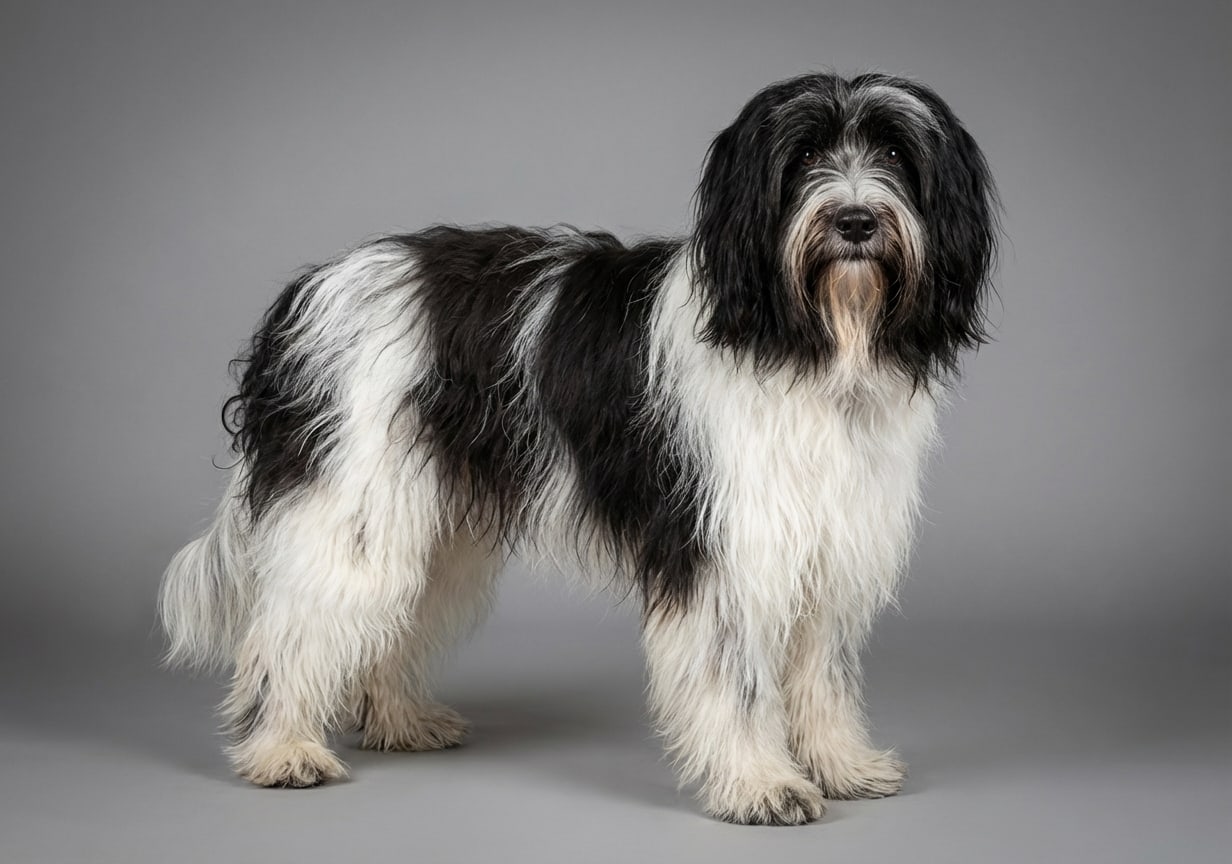
Havanese possess a long, soft, lightweight, and silky double coat. The coat is slightly wavy, profuse, and undulating. The outer coat is soft and light, with the undercoat sometimes completely absent. The Havanese coat is unique in that it can be shown naturally brushed out or corded, which turns the long hair into cords resembling human locks. The breed comes in all coat colors and patterns, but all colored dogs must have a black nose and black pigment around the eyes, except for chocolate dogs, which may have dark brown pigment. This versatility in coat colors allows for a wide range of aesthetic preferences among owners.
Temperament and Personality
The Havanese is an outgoing, intelligent, friendly, playful, affectionate, and adaptable dog. Their cheerful and playful nature makes them ideal for families and individuals seeking a loyal and friendly pet. Their intelligence and trainability also make them suitable for various roles, such as therapy dogs and assistance dogs. The Havanese's friendly disposition is often seen in their tendency to greet strangers warmly and their desire to be involved in family activities.
Health Considerations
The Havanese is prone to certain health issues. They can suffer from luxating patella, a condition where the kneecap slips out of place; liver disease, which can manifest as jaundice or liver failure; heart disease, including mitral valve disease; cataracts, which can lead to vision problems; retinal dysplasia, a condition affecting the retina; sebaceous adenitis, an inflammatory skin condition; and portosystemic shunt, a condition where blood bypasses the liver. A study found that 4.35% of Havanese had portosystemic shunt, compared to 0.35% of mixed-breed dogs.
History and Background
The Havanese is a member of the bichon family and is believed to have descended from the Blanquito de la Habana, a breed that has since become extinct. The Blanquito was itself descended from the Bichón Tenerife. During the Cuban Revolution, many upper-class Cubans fled to the United States, leaving behind their dogs. American breeders took an interest in the Havanese in the 1970s, and the breed was officially recognized by the American Kennel Club (AKC) in 1996. The Havanese has since grown in popularity and is now one of the fastest-growing breeds in the AKC.
Breed Standard and Grooming
The Havanese breed standard dictates that the dogs should be shown untrimmed, with slight trimming only around the feet for a tidy appearance. The tail may not be docked, and the American Kennel Club Standard allows head furnishings above each eye to be held in two small braids secured with plain elastic bands. Grooming a Havanese involves regular brushing, which can be as frequent as once a day to maintain the coat's silky texture. Their hypoallergenic flag is set to 0, meaning they may not be suitable for those severely allergic to dogs, despite their reputation for being hypoallergenic.
Activity and Sports
Due to their friendly nature and trainability, Havanese excel in various activities and dog sports. They are used as therapy dogs, assistance dogs, performing dogs, and in mold and termite detection. They also compete in dog agility, flyball, musical canine freestyle, and obedience training. Their high energy levels and intelligence make them well-suited for these activities. Their agility and responsiveness are particularly highlighted in sports such as agility and obedience, where they can quickly learn and execute commands.
Buying a Havanese: Practical Considerations
When considering purchasing a Havanese, potential owners should be aware of the breed's specific needs and characteristics. They also benefit from daily exercise and mental stimulation to keep their high energy levels and intelligence engaged. Potential owners should also be prepared for the financial commitment associated with the breed, including veterinary care, grooming, and proper nutrition. Additionally, due to their size and energy levels, Havanese may not be suitable for owners looking for a low-maintenance pet. Their adaptability and affectionate nature make them a rewarding choice for those willing to invest the time and resources necessary to care for them properly.
Frequently Asked Questions
What is the temperament of the Havanese?
The Havanese is known for: Outgoing, Intelligent, Friendly, Playful, Affectionate, Adaptable. Its energy level is high.
What size and weight is the Havanese?
It is a small dog, typically around 3-6 kg as an adult.
Is the Havanese easy to care for?
Reliable grooming and shedding ratings are not available. Routine brushing, ear and dental care, and nail trims are still recommended.
Is the Havanese good with kids and other pets?
Reliable child- and pet-friendliness ratings are not available. Supervised, gradual introductions are recommended.
How much exercise does the Havanese need?
With a high energy level, it needs walks, play or training matched to its stamina.
Havanese
Trait Scores
N/A