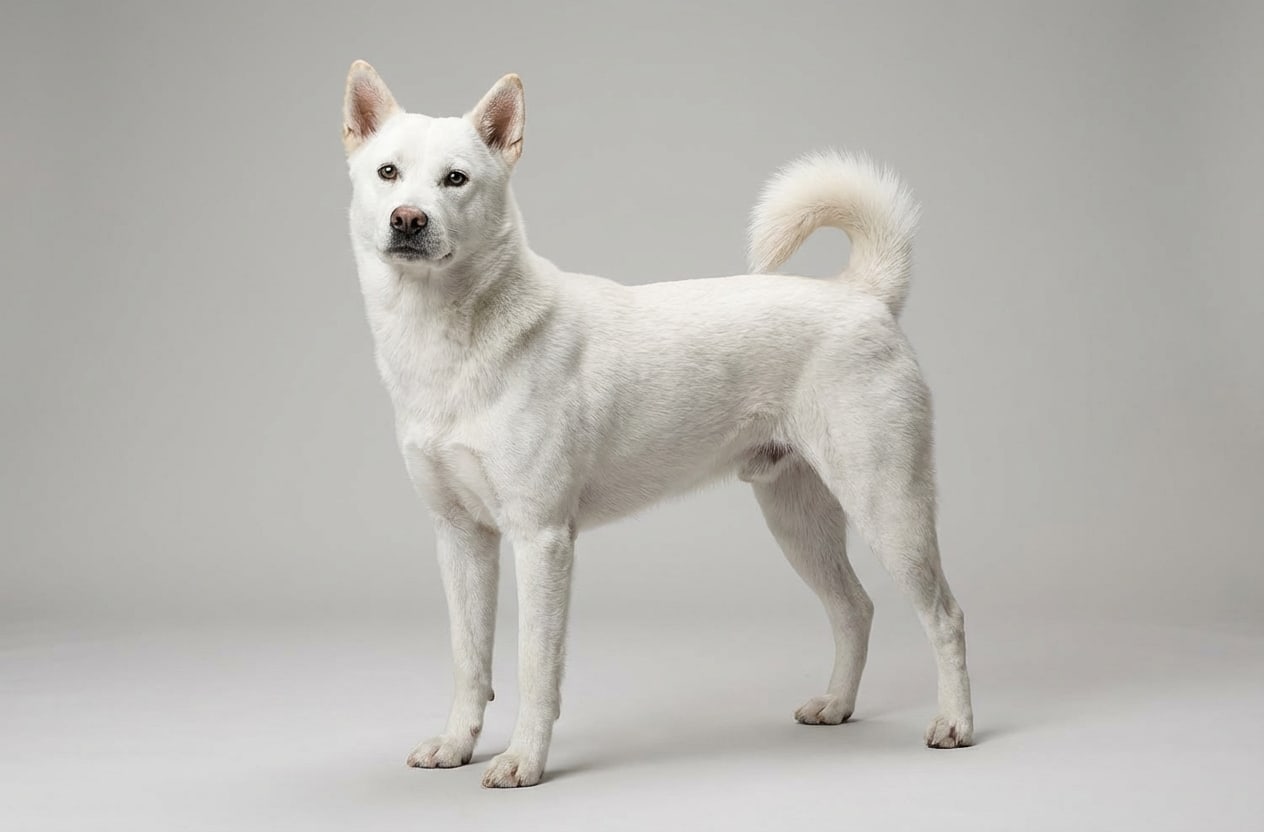
Origin and General Description
The Chinese Crested Dog, a small, toy breed, has its origins traced back to China, where it was prized for its fine-boned structure and graceful appearance. This breed stands out due to its two distinct coat types: the Hairless and the Powderpuff. The Hairless variety is characterized by its nearly hairless body, with tufts of hair on the paws, tail, and head, and a soft, human-like skin. The Powderpuff variety, on the other hand, boasts a long, soft double coat that is often compared to silk. Both varieties share a small stature, with adult weights ranging from 3.6 to 5.4 kilograms and heights from 28 to 33 centimeters. Despite their diminutive size, Chinese Crested Dogs are known for their lively and intelligent nature, endearing them to many as affectionate companions.
The Hairless variety can exhibit varying degrees of body hair, with some dogs appearing almost completely hairless, while others may have a 'hairy hairless' appearance if not properly groomed. This variety often lacks a full set of premolar teeth, a characteristic that is not considered a fault in the breed standard. The breed's delicate and fine-boned nature makes them particularly susceptible to injury, and they require careful handling to avoid harm.
Temperament and Characteristics
Chinese Crested Dogs are renowned for their affectionate and gentle temperament, making them ideal as pets. They are alert, playful, and lively, with a high level of intelligence that allows for effective training. However, their sensitivity requires a gentle and patient approach to training and handling.
Despite their small size, the Chinese Crested Dog has a moderate shedding level, which is beneficial for those with allergies. The breed's hare foot, with its elongated toes and deeper nail quicks, necessitates careful nail trimming to prevent pain and bleeding, a task that owners must regularly perform.
Coat Types and Grooming
The Hairless variety's skin is highly sensitive and resembles human skin, requiring special care to prevent dryness and sunburn. Owners must use hypoallergenic or oil-free moisturizing creams to maintain the skin's health. Regular trimming and/or shaving may be necessary to remove excess hair growth, ensuring the dog remains comfortable and aesthetically pleasing. The 'little to no shedding' trait is highly desirable for many owners, especially those with allergies.
Health Concerns
Chinese Crested Dogs face several health concerns, including poor dentition, particularly in the Hairless variety, which may result in missing or crowded teeth and teeth prone to decay. Eye problems are also a significant concern, with a higher incidence of primary lens luxation (PLL) and progressive retinal atrophy (PRA), which can lead to blindness. Other health issues include canine multiple system degeneration (CMSD), a progressive movement disorder that begins with cerebellar ataxia, and patellar luxation, an inheritable condition caused by shallow knee joints that can affect young dogs.
Life Expectancy and Breeder Purpose
A 2024 UK study indicated that the life expectancy of the Chinese Crested Dog is 13.4 years, which is slightly higher than the average life expectancy for purebred dogs. This longevity is attributed to the breed's generally healthy constitution and the dedication of breeders to maintaining the breed's standards. The breed's primary purpose as a toy dog is reflected in its small size and gentle nature, making it an excellent companion for individuals and families looking for a small, affectionate pet.
The ACCC (American Chinese Crested Club) serves as the US parent club for the breed and was recognized by the American Kennel Club (AKC) in 1991. Internationally, the breed was officially recognized by the Fédération Cynologique Internationale (FCI) in 1987. These organizations play a crucial role in setting standards for breeding, health, and competition for the Chinese Crested Dog.
Genetic Traits and History
The hairless trait in the Chinese Crested Dog is an incomplete dominant gene, with the 'hairless' allele being lethal when inherited as a homozygous dominant trait. This genetic quirk means that all hairless dogs are heterozygous and typically lack a full set of premolar teeth. The breed's origins are thought to be in Africa or Mexico, with Spanish explorers discovering the breed in Mexico and other parts of Central and South America in the 1500s. The breed has a rich history in Africa and Asia as well, with British, French, and Portuguese explorers discovering it in various regions during the 1700s and 1800s.
In the 1950s, Debora Wood created the "Crest Haven" kennel, laying the foundation for the modern Chinese Crested Dog through purposeful breeding and record-keeping of lineages. Wood's efforts were instrumental in the breed's recognition in the United States and internationally, contributing to its popularity as a companion dog. The breed's history is marked by its adaptability and resilience, as it has traversed continents and cultures, remaining a beloved companion throughout the years.
Buying a Chinese Crested Dog
Prospective owners of a Chinese Crested Dog should be prepared for the grooming requirements of both the Hairless and Powderpuff varieties, as well as the breed's energy level and sensitivity. Owning a Chinese Crested Dog requires dedication to their care, but the rewards of their affection and companionship can be profound. It is advisable to purchase from reputable breeders who prioritize health, temperament, and the overall well-being of the dogs they produce.
Frequently Asked Questions
What is the temperament of the Chinese Crested?
The Chinese Crested is known for: Affectionate, Alert, Playful, Lively, Intelligent, Gentle. Its energy level is high.
What size and weight is the Chinese Crested?
It is a small dog, typically around 3.6-5.4 kg as an adult.
Is the Chinese Crested easy to care for?
Reliable grooming and shedding ratings are not available. Routine brushing, ear and dental care, and nail trims are still recommended.
Is the Chinese Crested good with kids and other pets?
Reliable child- and pet-friendliness ratings are not available. Supervised, gradual introductions are recommended.
How much exercise does the Chinese Crested need?
With a high energy level, it needs walks, play or training matched to its stamina.
Chinese Crested
Trait Scores
N/A