Origin and Historical Background
The Turkish Angora, known as Ankara kedisi in Turkish, is an ancient natural breed of cat that originated in central Anatolia, specifically in the Ankara Province of modern-day Turkey. This breed has been documented as early as the 17th century, showcasing its long-standing heritage. The Turkish Angora is one of the oldest domestic cat breeds, with its ancestors among the first cats domesticated in the Fertile Crescent, descending from the African wildcat (Felis lybica). By the late 16th century, longhaired cats, including the Turkish Angora, were being imported to Britain and France from Asia Minor, Persia, and Russia.
The breed was recognized as distinct in Europe by the 17th century, and there is a notable connection between the Angora and the Persian cat. Charles Catton, in his 1788 book, referred to both as alternative names for the same breed. However, it was in the 20th century that the Angora was used to improve the Persian coat, but the two breeds have always maintained their distinct types. The Turkish Angora was brought to Canada in 1963 and was accepted as a championship pedigreed breed by the Cat Fanciers' Association in 1973. Initially, only white Angoras were recognized, but today, all North American registries accept the Turkish Angora in various colors and patterns.
Appearance and Physical Characteristics
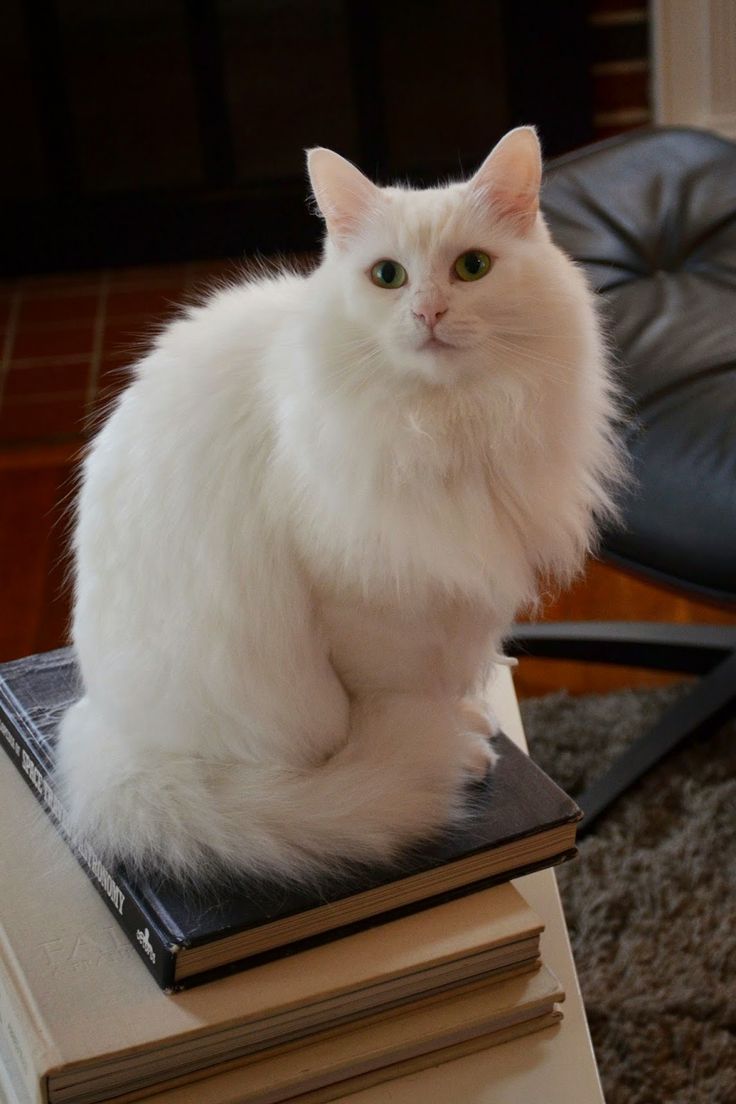
The Turkish Angora has a slender and elegant body, characterized by its long, silky coat that covers its muscular frame. This breed is known for its shimmery white coat and posh tail, although it can come in a variety of colors and patterns. The only disallowed coat colors are chocolate, lavender, or colorpoint. The head of the Turkish Angora is small to medium in size, with a smooth wedge shape. The body is long and slender, featuring good fineness of the bone. The eyes are large and almond-shaped, with colors ranging from blue, green, amber, to yellow, and even heterochromatic. The ears are pointed, large, and wide-set, adding to the cat's elegant appearance. The plumed tail is often carried upright, perpendicular to the back.
The breed's high energy level and intelligence make it a lively and engaging pet. Despite its delicate appearance, the Turkish Angora is agile and has a friendly and playful personality, making it a popular choice for families.
Temperament and Personality
The Turkish Angora is affectionate, intelligent, and social, forming strong bonds with humans. This breed is known for its playful nature, which makes it an excellent companion for families. The Turkish Angora gets along well with other pets in the home, but it will assert itself to make clear who is in charge and who owns the house. Its high energy level and agility make it an ideal match for active households. The breed is highly trainable and adaptable, with a rating of 5 in adaptability, reflecting its ability to fit into various living situations.
While the Turkish Angora is affectionate and social, it may choose a particular family member to be its constant companion. This cat is very protective of its chosen companion and forms a strong bond with them. The breed's gentle and intelligent nature, coupled with its high energy level, makes it an engaging and delightful pet for those who appreciate a lively and interactive feline companion.
Health Considerations
The Turkish Angora has a few health considerations that owners should be aware of. The gene responsible for blue eyes and white coats in this breed can lead to deafness in some cats. Owners should be vigilant for signs of hearing impairment, such as a lack of response to sounds. Additionally, there have been reports of kittens suffering from ataxia, a condition characterized by uncoordinated movements, and adult cats with hypertrophic cardiomyopathy, a heart condition that can lead to heart failure.
Early detection and management of health conditions can help ensure the well-being of this breed. Genetic studies have shown that the Turkish Angora is distinct from other cat breeds, including the Turkish Van, despite their geographical association.
Genetic Variations and Breed Standards
There is a perception among breeders in Turkey that the fine-boned version of the Turkish Angora does not represent the true character of the breed, which is much sturdier. American "Turkish" Angoras have only a minimal remnant of the original Atatürk Forest Farm and Zoo DNA, which is significant for the breed's history. A genetic study conducted by UC Davis focused on American cat fancy registered Angoras, rather than the "true" Turkish Angora from Turkey, specifically from the Ankara Zoo. This study highlighted the genetic differences between American and Turkish-originating Turkish Angoras, with the American breed being categorized as descendants of European random-bred cats, while the Turkish imports were assigned to the Eastern Mediterranean group.
The Turkish Angora is recognized by the Cat Fanciers' Association and has specific breed standards that encompass its appearance, temperament, and health. The breed's long and luxurious coat, elegant body, and lively personality are all essential aspects of the Turkish Angora standard.
Breed Ratings and Overall Profile
The Turkish Angora has been rated highly across various categories, reflecting its desirable traits and adaptability. The breed also scores 5 in intelligence, showcasing its quick and clever nature. While the Turkish Angora has a moderate grooming requirement, rated at 2, and a low shedding level, also rated at 2, these aspects are manageable for those willing to invest time in maintaining the cat's coat and health.
Despite a few health concerns, the Turkish Angora's overall rating in health issues is 2, reflecting the breed's generally good health and resilience. The breed's gentle and playful temperament, coupled with its high level of intelligence and social needs, makes it a great choice for families and individuals looking for a lively and engaging pet. The Turkish Angora's adaptability and strong bond with humans make it a beloved breed among cat enthusiasts around the world.
Buying a Turkish Angora: A Practical Checklist
- Research reputable breeders to ensure the health and temperament of the cat.
- Check for signs of potential health issues, such as deafness or ataxia, and discuss them with the breeder.
- Be prepared for the time and effort required to maintain the cat's long, luxurious coat.
- Ensure the cat will be compatible with your lifestyle, considering its high energy level and social needs.
By considering these factors, potential owners can make an informed decision and provide a loving and suitable home for a Turkish Angora.
Frequently Asked Questions
What is the lifespan of the Turkish Angora?
The average lifespan of the Turkish Angora is about 15 - 18 years. Good nutrition and regular veterinary care support a healthy life.
What is the temperament of the Turkish Angora?
The Turkish Angora is known for: Affectionate, Agile, Clever, Gentle, Intelligent, Playful, Social. Its affection rating is very high. Its energy level is high.
What size and weight is the Turkish Angora?
It is a small cat, typically around 2 - 5 kg as an adult.
Is the Turkish Angora easy to care for?
Available ratings indicate relatively low grooming needs, and relatively low shedding. Routine brushing, ear and dental care, and nail trims are still recommended.
Is the Turkish Angora good with kids and other pets?
Available ratings indicate high child-friendliness, and very high pet-friendliness. Supervised, gradual introductions are recommended.
How much exercise does the Turkish Angora need?
With a high energy level, it needs walks, play or training matched to its stamina.



