Origin and Development
The Tonkinese breed originated in Canada as a result of crossbreeding the Siamese and Burmese cats. This modern breed was reconstructed from a breed brought to the West in the 19th century, originally known as 'chocolate Siamese'. The recognition of the Tonkinese as a distinct breed began in the 1950s, with the breed being officially recognized in Canada in 1965, which is also the origin of the breed's name.
Two independent breeders, Margaret Conroy from Canada and Jane Barletta from the United States, were instrumental in developing the Tonkinese breed. They aimed to create a cat that combined the distinctive appearance of both the Siamese and Burmese with their lively personalities. The Tonkinese was moved from crossbreed classification to an established breed in 2001.
The Tonkinese breed received championship status with the Cat Fanciers' Association (CFA) in 1984 and was recognized by the Governing Council of the Cat Fancy (GCCF) in 1991. Today, the breed is recognized in most of Europe, Australia, New Zealand, Hong Kong, Japan, and South Africa, with over 30 countries featuring Tonkinese cats on postage stamps.
Appearance and Characteristics
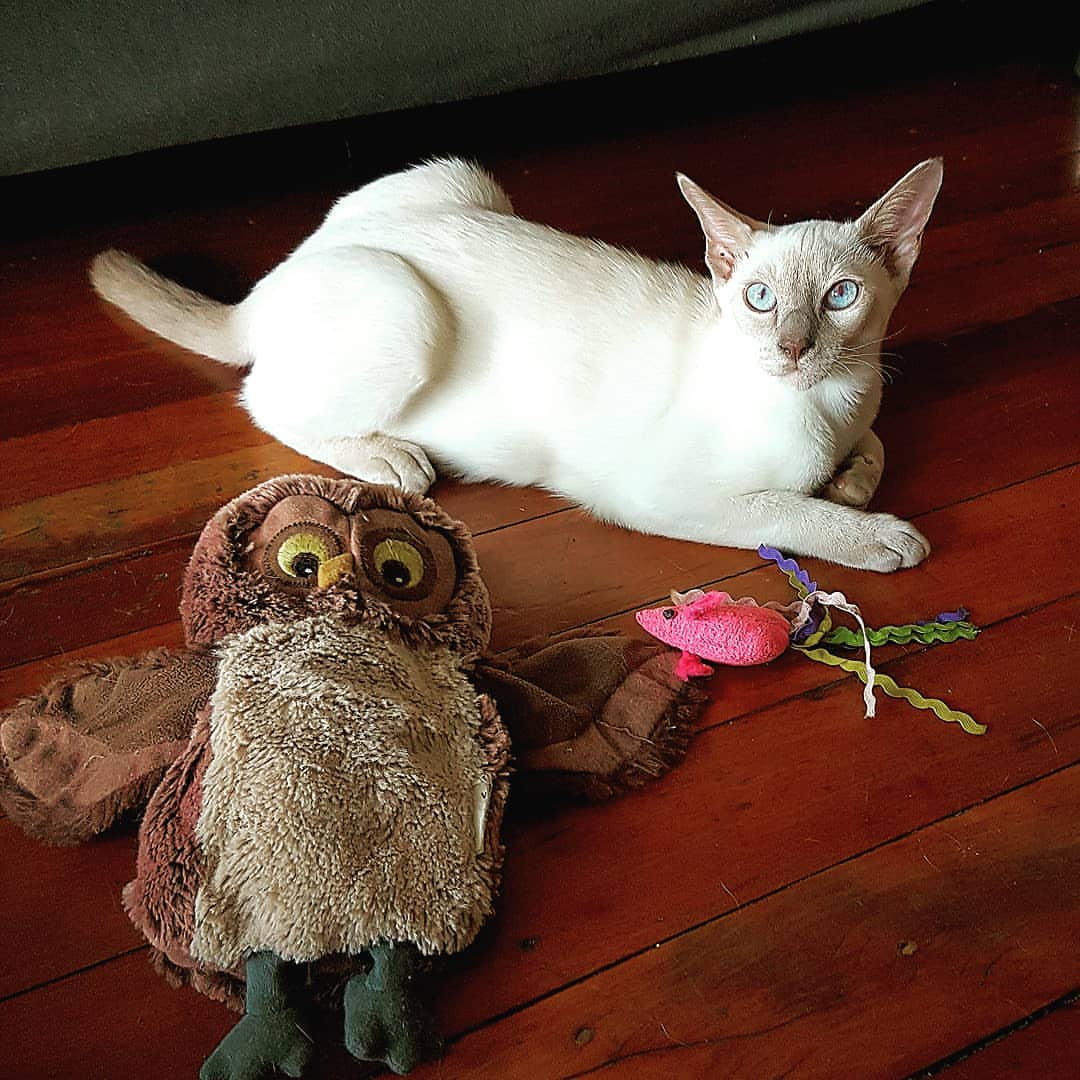
The Tonkinese is a medium-sized cat, intermediate in type between the slender, long-bodied modern Siamese and European Burmese, and the more "cobby" or substantially-built American Burmese. They have a gently rounded, slightly wedge-shaped head, a blunted muzzle, and moderately almond-shaped eyes set towards the outside of their head. Their tail and legs are slim but proportionate to the body, with distinctive oval paws.
The coat of the Tonkinese is medium in length, with a pointed coat pattern in a variety of colors. The colors include black, blue, chocolate, lilac, cinnamon, fawn, red, cream, and additional dilute modifiers like caramel and apricot. The coat pattern can be point, solid (sepia), or mink, each with its own unique characteristics and eye colors.
The Tonkinese is known for its deceptively muscular build, making them seem much heavier than expected when picked up. Despite their size, they are active, vocal, and generally people-oriented, with a playful and interested demeanor. Their voice is similar to the Burmese, persistent but softer and sweeter than the Siamese, reminiscent of the gentle quacking of a duck.
Temperament and Behavior
Tonkinese cats are intelligent, curious, and social, with a lively and outgoing nature. They are affectionate and enjoy supervising all activities with their keen curiosity. This breed is known to be loving and social, active and playful, yet content to be a lap cat. They are highly adaptable and friendly, making them suitable for various living situations.
Despite their playful and active nature, Tonkinese can become lonesome or bored if left alone for extended periods. They are also known to engage in dog-like behaviors, such as fetching, and enjoy jumping to great heights.
Health and Genetics
The Tonkinese is generally a healthy breed, with a life span of 14 to 16 years. However, like all cats, they can be prone to certain health issues. One such issue is urate urolithiasis, a condition where uric acid crystals form in the urine, leading to blockages. In a 2012 review, the Tonkinese was significantly under-represented in cases of this condition, with only one recorded case in a population of 365.
The Tonkinese is a crossbreed type, with coat color and pattern dependent on the genes inherited from the Siamese and Burmese parent breeds. Breeding two mink-patterned Tonkinese cats does not usually yield a full litter of mink kittens, as this intermediate pattern is the result of having one gene for the Burmese solid pattern and one for the Siamese pointed pattern. The color and pattern of any litter depend on statistical chance and the color genetics and patterns of the parents.
Coat and Color Variations
The Tonkinese comes in a variety of colors and patterns. The base colors recognized by the Cat Fanciers' Association (CFA) and World Cat Federation (WCF) are black, blue, chocolate, and lilac. These colors are allowed in the three colorpoint patterns: point, solid (sepia), and mink. The GCCF accepts additional colors like cinnamon, fawn, red, cream, caramel, and apricot, allowing these colors in tortoiseshell and tabby patterns, as well as the three colorpoint patterns. The International Cat Association (TICA) accepts all genetically possible colors and patterns.
The mink pattern is unique to the Tonkinese, with a lighter shade base that is still harmonious with the point color and eyes that are a lighter blue-green, known as aquamarine. This pattern can be found on the entire blue-green to green-blue spectrum.
Breed Recognition and Popularity
The Tonkinese breed has gained recognition and popularity worldwide. It received championship status with the Cat Fanciers' Association in 1984 and is recognized by the Governing Council of the Cat Fancy (GCCF) in 1991. The breed is recognized in most of Europe, Australia, New Zealand, Hong Kong, Japan, and South Africa, and has even been featured on postage stamps in over 30 countries.
The semi-longhaired or Tibetan variety of the Tonkinese is more popular in Europe, particularly in countries like the Netherlands, Germany, Belgium, Luxembourg, and France. This variety tends to be more popular due to its unique appearance and temperament.
Buying a Tonkinese Cat
Here is a practical checklist to help you make an informed decision:
- Check the cat's health and ask for a health guarantee.
- Ensure the cat is well-socialized and friendly.
- Consider the cat's energy level and whether it matches your lifestyle.
- Understand the grooming requirements of the Tonkinese's coat.
- Ask about the cat's diet and feeding schedule.
- Find out about the cat's vet history and any known health issues.
Keep in mind that Tonkinese cats can be expensive, with prices varying based on the breeder, the cat's bloodline, and the color and pattern of the coat. Be prepared for a long-term commitment, as Tonkinese cats have a life span of 14 to 16 years.
Frequently Asked Questions
What is the lifespan of the Tonkinese?
The average lifespan of the Tonkinese is about 14 - 16 years. Good nutrition and regular veterinary care support a healthy life.
What is the temperament of the Tonkinese?
The Tonkinese is known for: Curious, Intelligent, Social, Lively, Outgoing, Playful, Affectionate. Its affection rating is very high. Its energy level is high.
What size and weight is the Tonkinese?
It is a small cat, typically around 3 - 5 kg as an adult.
Is the Tonkinese easy to care for?
Available ratings indicate low grooming needs, and moderate shedding. Routine brushing, ear and dental care, and nail trims are still recommended.
Is the Tonkinese good with kids and other pets?
Available ratings indicate high child-friendliness, and very high pet-friendliness. Supervised, gradual introductions are recommended.
How much exercise does the Tonkinese need?
With a high energy level, it needs walks, play or training matched to its stamina.



