Origin and Development
The Sphynx cat, also known as the Canadian Sphynx, originated in Canada and was developed through selective breeding of naturally occurring hairless mutations. The breed's development began in the 1960s, with the first known hairless male kitten, Prune, born in 1966 in Toronto, Ontario, Canada. This groundbreaking event marked the beginning of a breed that would later become known for its distinctive lack of fur.
The Sphynx breed is distinct from other hairless cat breeds like the Russian Peterbald and Donskoy, and its development was based on two sets of hairless felines discovered in North America in the 1970s. These included barn cats from the Pearson family in Wadena, Minnesota, and stray cats found in Toronto, Ontario, Canada, by Shirley Smith. The Pearson family's cats, named Dermis and Epidermis, were instrumental in the breed's early development.
The breed's name, Sphynx, was adopted after the cats were initially referred to as "Moonstones" and "Canadian Hairless. " The first individuals to determine the autosomal recessive nature of the Sphynx gene for hairlessness were the Bawas and the Tenhoves, who were instrumental in establishing a successful breeding program. Their work laid the foundation for the breed's recognition and standardization.
Breed Standard and Appearance
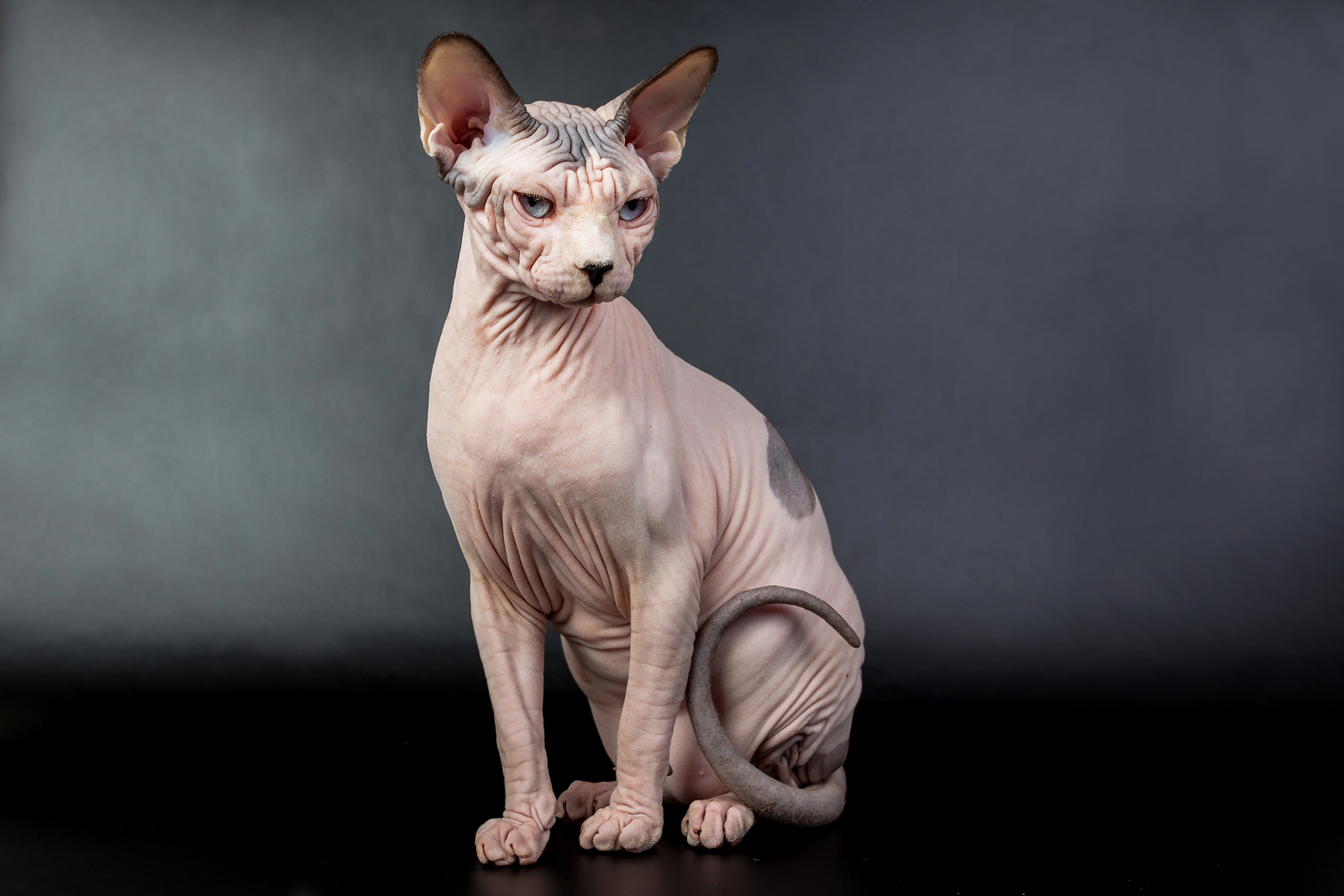
The Sphynx has a texture of chamois leather on its skin, which may have fine hairs or be completely hairless. Whiskers may be present, whole or broken, or absent. The breed standard describes a somewhat wedge-shaped head with large eyes and ears, quite long legs and tail, and neat rounded paws. This unique appearance is a direct result of the breed's genetic makeup and selective breeding.
Their skin is the color that their fur would be, and all the usual cat markings, such as solid, point, van, tabby, tortie, etc. , may be found on the Sphynx's skin. Due to their lack of fur, Sphynx cats lose body heat more readily than coated cats, making them warm to the touch and prone to seeking out warm places. This characteristic requires owners to be vigilant about keeping their Sphynx cats comfortable in various climates.
The Sphynx's body is muscular, with a medium-length torso, barrel-chested, and a full, round abdomen. Their paw pads are thicker than other cats, giving them the appearance of walking on cushions, and their tails are whiplike, tapering from the body to the tip, sometimes with fur all over the tail or a puff of fur on the tip. These physical features contribute to the breed's distinctive and endearing appearance.
Temperament and Behavior
The Sphynx is an intelligent, inquisitive, and extremely friendly people-oriented breed. They are known for greeting their owners at the front door with obvious excitement and happiness, a behavior that is characteristic of their friendly nature. Their temperament is loyal, inquisitive, friendly, quiet, and gentle, making them a beloved choice for many cat owners.
Sphynx cats are highly attached to their owners, often demanding large amounts of attention. They are one of the more dog-like breeds of cats, frequently greeting their owners at the door and being friendly when meeting strangers. This breed tends to cuddle for body warmth due to their lack of fur, a behavior that is both charming and a practical adaptation to their unique physiology.
A study conducted by the Journal of Veterinary Behavior in 2012 rated purebred Sphynx cats as friendlier than purebred European cats. This study provides empirical evidence of the Sphynx's social nature and their reputation as a friendly and sociable breed.
Health Considerations
The Sphynx lacks protective fur, making it susceptible to health issues such as skin cancer if exposed to sunlight for long durations. Their kittens are also more susceptible to respiratory infections in the first weeks of life due to their lack of hair, highlighting the importance of careful handling and a controlled environment for young Sphynx kittens.
Other health concerns include hypertrophic cardiomyopathy (HCM), a genetic disorder that affects the heart, and congenital myasthenic syndrome (CMS), an inherited neuromuscular disorder.
Owners should also be aware of the increased earwax production and the need for regular cleaning to prevent infections. This aspect of care is particularly important for Sphynx cats, as their lack of fur means that earwax can accumulate more easily and lead to potential health issues.
Genetics and Breeding
The Sphynx's distinctive hairlessness is primarily due to a mutation in the KRT71 gene, which also affects other breeds like the Devon Rex and Selkirk Rex. This mutation, known as "hr," leads to a complete loss of function in the hair follicle, resulting in a nearly hairless appearance.
The breed's development involved two lines of natural mutations: Dermis and Epidermis from the Pearson family in Minnesota and Bambi, Punkie, and Paloma from Toronto, Ontario, Canada. These cats provided the foundation for the existing Sphynx breed.
In 2010, DNA analysis confirmed that the Sphynx hairlessness is produced by a different allele of the same gene that produces the short curly hair of the Devon Rex. The Sphynx's allele is incompletely dominant over the Devon allele and both are recessive to the wild type.
Care and Maintenance
Sphynx cats require regular cleaning to manage the greasy secretion from their skin and the accumulation of a sticky, dark brown or reddish-brown layer. This cleaning is not only for aesthetic reasons but also to maintain their skin health and prevent infections. They also produce more earwax than most domestic cats, necessitating frequent cleaning to prevent infections, which is a critical aspect of their care.
Due to their lack of fur, Sphynx cats should never be allowed outdoors unattended, as they have limited means to conserve body heat in cold weather. In some climates, owners provide coats or other clothing in the winter to help them conserve body heat, a practical solution to a unique challenge.
While they lack much of the fur of other cat breeds, Sphynxes are not necessarily hypoallergenic. Allergies to cats are triggered by a protein called Fel d1, found in cat saliva and sebaceous glands, so those with cat allergies may still react to direct contact with Sphynx cats. This is an important consideration for potential owners with allergies.
Buying a Sphynx Cat
- Ensure the cat is from a reputable breeder who can provide health clearances and genetic testing results.
- Be prepared for the increased maintenance required for the cat's skin and ears. This includes regular cleaning and understanding the unique needs of a Sphynx cat.
- Assess whether your home environment is suitable for a Sphynx, considering their need for warmth and their friendly, inquisitive nature. This includes ensuring that the home provides a warm and comfortable environment and that the cat will have ample opportunities for social interaction.
- Be aware of the potential for sunburn and skin damage, and plan to limit the cat's exposure to outdoor sunlight. This is particularly important for kittens and cats with lighter skin tones.
Buying a Sphynx cat should be a well-informed decision, ensuring that the cat's needs are met and that you are prepared for the commitment of owning this unique and special breed.
Frequently Asked Questions
What is the lifespan of the Sphynx?
The average lifespan of the Sphynx is about 12 - 14 years. Good nutrition and regular veterinary care support a healthy life.
What is the temperament of the Sphynx?
The Sphynx is known for: Loyal, Inquisitive, Friendly, Quiet, Gentle. Its affection rating is very high. Its energy level is low.
What size and weight is the Sphynx?
It is a small cat, typically around 3 - 5 kg as an adult.
Is the Sphynx easy to care for?
Available ratings indicate relatively low grooming needs, and low shedding. Routine brushing, ear and dental care, and nail trims are still recommended.
Is the Sphynx good with kids and other pets?
Available ratings indicate high child-friendliness, and very high pet-friendliness. Supervised, gradual introductions are recommended.
How much exercise does the Sphynx need?
With a low energy level, it needs walks, play or training matched to its stamina.
Is the Sphynx hypoallergenic?
It has some hypoallergenic traits, but reactions vary. Spend time with one and seek professional advice before deciding.



