Origin and Development
The Somali cat, a pedigreed breed, originates from Somalia and is descended from the Abyssinian cat. The distinctive long hair of Somalis is due to inheriting two copies of the recessive gene for long hair, a characteristic that sets them apart from the Abyssinian.
First Somali cats appeared in the litters of Abyssinians as long-haired kittens, though the introduction of the long-haired gene into the Abyssinian gene pool remains a mystery. The breed's name, "Somali," is a reference to the African nation and is a unique interpretation of the Ethiopian-Somali conflict, symbolizing the genetic borders between the Abyssinian cat and the long-haired Abyssinian.
In the 1940s, British breeder Janet Robertson exported Abyssinian kittens to Australia, New Zealand, and North America, where descendants occasionally produced kittens with long or fuzzy coats. The first known long-haired Abyssinian appeared in North America in 1953, and the breed was recognized by the Cat Fanciers Association (CFA) in 1975, followed by acceptance in Europe in 1982.
Janet Robertson's work was pivotal in the development of the breed, as she selectively bred Abyssinian cats with long hair to establish the Somali breed. Her efforts were recognized when the Somali cat was first registered with the CFA in 1975, marking a significant milestone in the breed's official recognition.
Over the years, the Somali cat has gained popularity not only for its unique appearance but also for its friendly and playful temperament, making it a sought-after companion for many cat enthusiasts.
Breed Standards and Characteristics
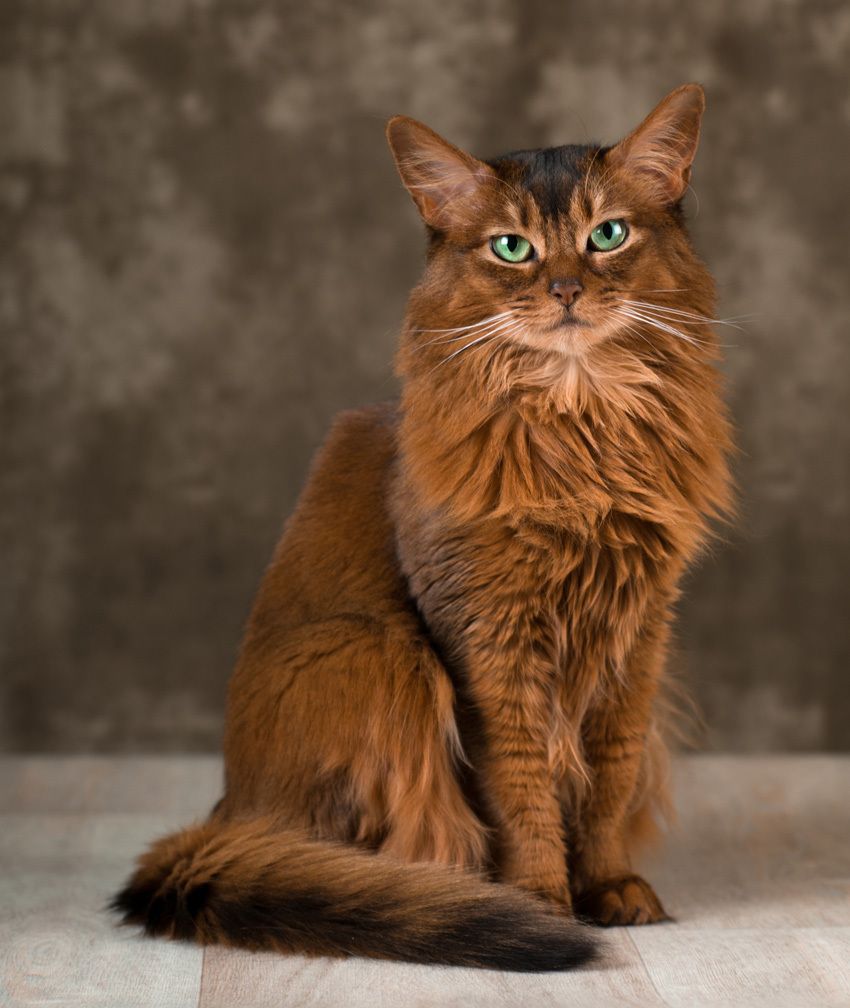
Somalis are recognized for their energetic and social nature, often referred to as "Fox Cats" due to their sleek bodies, long tails, and large pointed ears. Their ticked tabby pattern, which contains between four and twenty colours on each hair, makes their coats softer to the touch than those of other cat breeds.
The coat of a Somali is medium in length, and they come in a variety of colors, including black, blue, cinnamon, fawn, and silver, with combinations of tortoiseshell and silver also accepted by some registries. The CFA and SCCA, for instance, recognize these colors, reflecting the breed's diverse color palette.
Somalis are medium-large in size, weighing between 3 and 5 kg, and have a life span of 12 to 16 years. They are known for their high energy levels, medium friendliness, and medium shedding, making them a lively and engaging companion. Their robust build and agility are well-suited to their active lifestyle.
Temperament and Behavior
Somalis are known for their mischievous, tenacious, and intelligent nature. They are highly inquisitive and love the company of humans and other animals, making them interactive and loyal companions. Their playful behavior often includes chasing toys and exploring new areas, which keeps them mentally and physically stimulated.
Their energy level is rated 5, reflecting their lively and playful disposition, which can be quite intense, especially during the kitten stage. This high energy level requires a home that can accommodate their need for exercise and entertainment.
While they are not as vocal as some other breeds, with a vocalization rating of 1, they do communicate effectively and enjoy engaging with their owners. Their quiet nature makes them suitable for households where a more subdued vocal presence is preferred.
Health Considerations
Despite their generally healthy nature, Somalis may be affected by certain health issues. They are one of the more commonly affected breeds for pyruvate kinase deficiency, a condition caused by an autosomal recessive mutation of the PKLR gene.
Somalis may also be prone to hereditary retinal degeneration due to a mutation in the rdAc allele, which can cause vision problems.
Other health concerns that may affect Somalis include hip dysplasia, a condition that can lead to mobility issues, and polycystic kidney disease, which can affect kidney function.
Breed Registration and Popularity
The Somali cat is registered with the Cat Fanciers Association (CFA) and the Somali Cat Club of America (SCCA). The breed's recognition by the CFA in 1975 and its subsequent acceptance in Europe in 1982 contributed to its growing popularity. The SCCA, founded in 1976, has played a significant role in promoting the breed and maintaining breed standards.
While Somalis are a relatively rare breed worldwide, they ranked at position 25 out of 54 breeds in popularity according to the 2024 statistics of FIFe, one of the major global cat registries, representing 0.2% of their total registered kittens that year. This ranking reflects the breed's niche appeal and its status as a unique and distinctive cat breed.
Coat Color and Patterns
All Somali cats have a ticked tabby pattern, with the most common colors being black, blue, cinnamon, fawn, and silver. This pattern is characterized by a series of stripes that run along the cat's body, creating a distinctive and beautiful coat.
While there are 28 colors of Somali in total, certain organizations accept only some of these colors. For example, the CFA and SCCA recognize black, blue, cinnamon, fawn, and silver, with combinations of tortoiseshell and silver also accepted. This variety in colors and patterns adds to the Somali cat's appeal and diversity.
Buying a Somali Cat: What to Consider
- Check for breed registration with reputable organizations like the CFA or SCCA.
- Look for a healthy cat with a vibrant coat and clear eyes.
- Understand the potential health issues associated with the breed, such as pyruvate kinase deficiency and hereditary retinal degeneration.
- Be prepared for the high energy levels and social needs of the Somali cat.
- Consider the breed's shedding and grooming requirements to ensure you can provide the necessary care for their long, luxurious coat.
- Ensure that your lifestyle aligns with the Somali cat's active and social nature, providing them with ample opportunities for play and interaction.
By considering these factors, you can find a Somali cat that will be a wonderful addition to your family. The Somali cat's unique combination of appearance, temperament, and energy makes them a special choice for those looking for a lively and engaging companion.
Frequently Asked Questions
What is the lifespan of the Somali?
The average lifespan of the Somali is about 12 - 16 years. Good nutrition and regular veterinary care support a healthy life.
What is the temperament of the Somali?
The Somali is known for: Mischievous, Tenacious, Intelligent, Affectionate, Gentle, Interactive, Loyal. Its affection rating is very high. Its energy level is high.
What size and weight is the Somali?
It is a small cat, typically around 3 - 5 kg as an adult.
Is the Somali easy to care for?
Available ratings indicate moderate grooming needs, and high shedding. Routine brushing, ear and dental care, and nail trims are still recommended.
Is the Somali good with kids and other pets?
Available ratings indicate moderate child-friendliness, and high pet-friendliness. Supervised, gradual introductions are recommended.
How much exercise does the Somali need?
With a high energy level, it needs walks, play or training matched to its stamina.



