Origin and History
The Russian Blue cat, known as the Russian: Русская голубая кошка, originated in Russia, specifically from a naturally occurring landrace that may have originated in the port of Arkhangelsk. Also referred to as Archangel Blues, this breed was taken to Great Britain and Northern Europe by sailors in the 1860s. The name Archangel Blues comes from the region where the cats were first seen in Europe, the port city of Arkhangelsk.
The first reference to the Archangel Cat in British print appeared in 1862, and the first recorded appearance of one in a show was in 1872 at The Crystal Palace in England. The breed was developed mainly in the UK and Scandinavia until after World War II, when a lack of numbers led to crossbreeding with the Siamese. Despite the crossbreeding, breeders have worked to preserve the original Russian Blue traits and have since largely bred out Siamese characteristics.
US breeders created the modern Russian Blue post-war, combining bloodlines from Scandinavian and British Russian Blues. This breed has been used to create other breeds like the Havana Brown and to alter existing breeds such as the Nebelung. It is also used in Italy to make Oriental Shorthairs healthier and more robust, known as RUS4OSH in FIFe, highlighting its influence across various cat breeds and registries.
Breed Registration and Standards
The Russian Blue is selectively bred and pedigreed in all major cat fancier and breeder organisations, ensuring all cats are purebred with a formally registered ancestry. This breed holds championship status with all major international cat registries and is accepted for registry. The Cat Fanciers' Association, one of the oldest registering cat associations in the world, has detailed breed profiles and standards for the Russian Blue.
In 2024, only 2370 British Blue kittens were registered with FIFe, representing approximately 2.5% of their total registrations, highlighting the breed's relative rarity. This figure underscores the breed's selectiveness and the effort that goes into maintaining its purity and health. The standard for the Russian Blue is defined by its dense coat, specific color, and body structure, with a focus on the cat's distinct silver sheen and overall appearance.
Appearance and Physical Characteristics
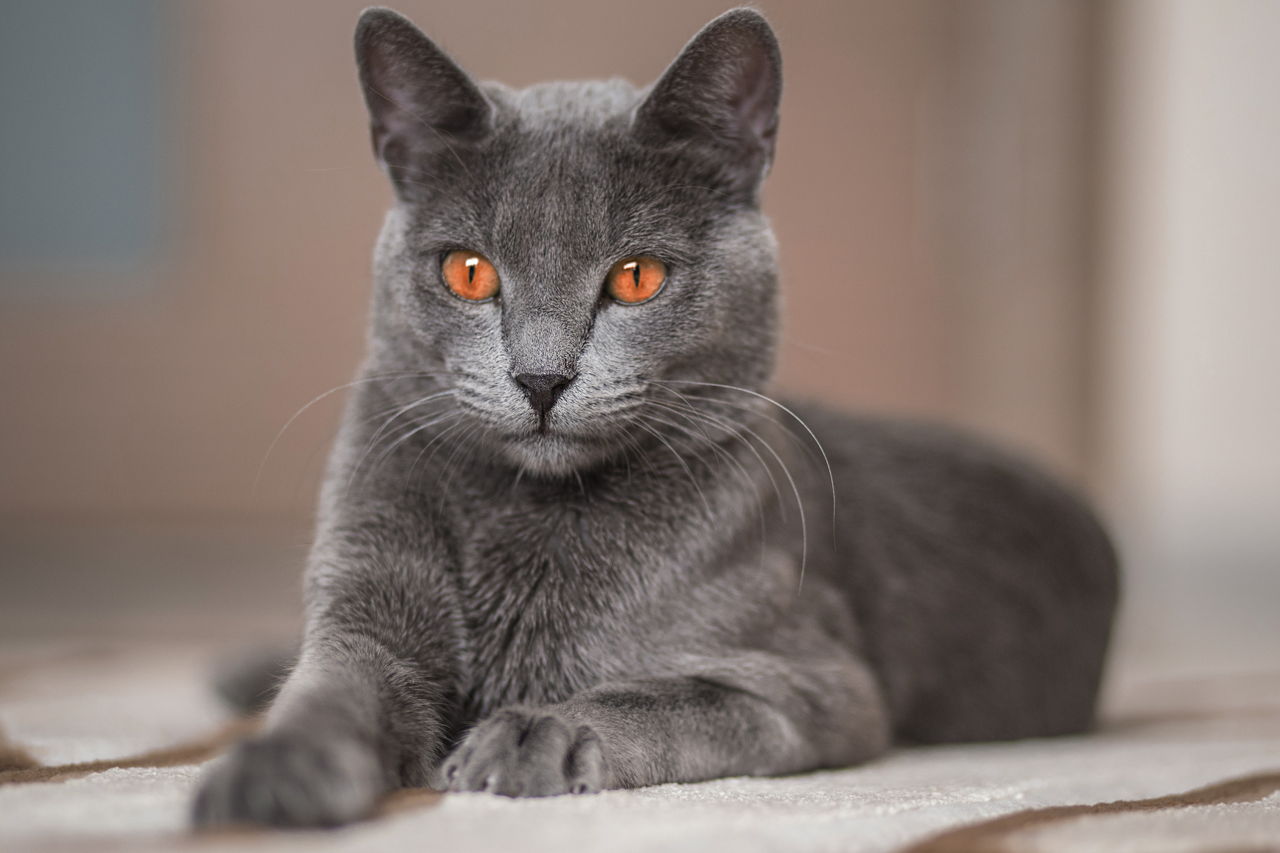
The Russian Blue is a short-haired breed with a dense, plush double coat in a solid, shimmering pale blue-grey colour, known for its distinct silver sheen. The coat is described as exceptionally thick and soft to the touch, with an undercoat that is soft, downy, and equal in length to the guard hairs, contributing to its plush and warm texture.
These cats have vivid emerald green eyes, pinkish lavender to mauve paw pads, and may display faint, barely perceptible tabby striping on their tails. Males are typically larger than females, with an average weight of 3.6 to 6.8 kg (8 to 15 lb) when fully grown, emphasizing the breed's sturdy yet graceful build.
Temperament and Personality
Russian Blues are known for their quiet nature but can be active and playful, especially when outdoors. They are very loving and reserved, not liking noisy households but enjoying play and exercise. They bond closely with their owners and are compatible with other pets, making them a great choice for families with multiple animals, especially considering their sociable nature.
They may be fierce hunters, often catching rodents, birds, rabbits, small mammals, or reptiles, demonstrating their natural instincts and athleticism. They do not like change and prefer predictable, routine schedules, which makes them well-suited to stable households that can accommodate their preferences.
Health and Genetic Traits
While the Russian Blue is generally a healthy breed, there are some genetic predispositions to consider. For example, the breed has been used to create other breeds and alter existing ones, which can lead to the introduction of certain traits or conditions. One such condition is feline infectious peritonitis, which affected the Nyan Cat meme's inspiration, Russian Blue Marty.
Other genetic health concerns include hypertrophic cardiomyopathy, which affects the heart muscle and can lead to heart failure, and hip dysplasia, a common condition in large breed cats. Responsible breeders perform health checks and genetic testing on their cats to reduce the incidence of these conditions, ensuring the overall health and well-being of the breed.
Popularity and Cultural Impact
The Russian Blue is considered relatively rare, with only a small percentage of cat registrations being British Blue kittens. This breed has made appearances in popular culture, including in films like "Garfield: The Movie," "Felidae," and "Cats & Dogs," as well as in comic books and memes like the Nyan Cat. The breed's unique characteristics and beauty have made it a favorite among cat enthusiasts and collectors, contributing to its cultural impact and popularity.
The Russian Blue's involvement in media and memes has also raised awareness about the breed, bringing it to the attention of a broader audience. Cat shows and competitions often feature Russian Blues, showcasing their elegance and charm to a wider public, further enhancing their cultural presence and popularity.
Breed-specific Numbers
According to the Cat Fanciers' Association, there were approximately 4,000 registered Russian Blues in the United States in 2023. This figure indicates the breed's presence in the country and its popularity among cat enthusiasts. In comparison, the UK's Cat Breeder's Association reported that only 2370 British Blue kittens were registered in 2024, highlighting the breed's rarity and the selectiveness of breeders in maintaining the breed's characteristics.
Coat/Colour Standards
The coat and color standards for the Russian Blue are stringent. The coat must be short, dense, and double-layered, with a plush texture that is thick and soft to the touch. The color is a solid, shimmering pale blue-grey with a distinct silver sheen. The color purity is critical, with any white spots or discoloration being considered faults in the show ring.
The coloration of the eyes is also an important aspect, with vivid emerald green eyes being the ideal. The paw pads are pinkish lavender to mauve, and any tabby striping on the tail must be faint and barely perceptible. The breed standard is maintained by cat registries and associations, who enforce these guidelines at shows and competitions to ensure the breed's identity and characteristics are preserved.
Practical Consequences of Breed Traits
This can be a time-consuming task for owners, requiring a consistent grooming routine.
However, their strong bond with their owners and need for affection can make them prone to separation anxiety if left alone for extended periods. It's important for owners to provide their Russian Blue with ample interaction, playtime, and routine to keep them happy and healthy.
Care and Maintenance
Buying a Russian Blue: A Practical Checklist
When considering a Russian Blue, here are some key factors to keep in mind:
- Look for a cat that fits your lifestyle, considering factors like energy level, noise tolerance, and adaptability.
- Be prepared for the cost of ownership, including food, vet care, and grooming. The breed's thick coat may require professional grooming services and special dietary needs that could add to the cost of care.
- Research the breed's potential health issues and discuss them with your veterinarian. Responsible breeders will provide health clearances and information to potential owners, ensuring they are well-informed about any genetic predispositions.
Buying a Russian Blue should be a well-informed decision, ensuring the best possible experience for both the owner and the cat. By considering these factors, potential owners can create a nurturing environment that supports the breed's unique traits and needs.
Frequently Asked Questions
What is the lifespan of the Russian Blue?
The average lifespan of the Russian Blue is about 10 - 16 years. Good nutrition and regular veterinary care support a healthy life.
What is the temperament of the Russian Blue?
The Russian Blue is known for: Active, Dependent, Easy Going, Gentle, Intelligent, Loyal, Playful, Quiet. Its affection rating is moderate. Its energy level is high.
What size and weight is the Russian Blue?
It is a small cat, typically around 2 - 5 kg as an adult.
Is the Russian Blue easy to care for?
Available ratings indicate moderate grooming needs, and moderate shedding. Routine brushing, ear and dental care, and nail trims are still recommended.
Is the Russian Blue good with kids and other pets?
Available ratings indicate moderate child-friendliness, and moderate pet-friendliness. Supervised, gradual introductions are recommended.
How much exercise does the Russian Blue need?
With a high energy level, it needs walks, play or training matched to its stamina.
Is the Russian Blue hypoallergenic?
It has some hypoallergenic traits, but reactions vary. Spend time with one and seek professional advice before deciding.



