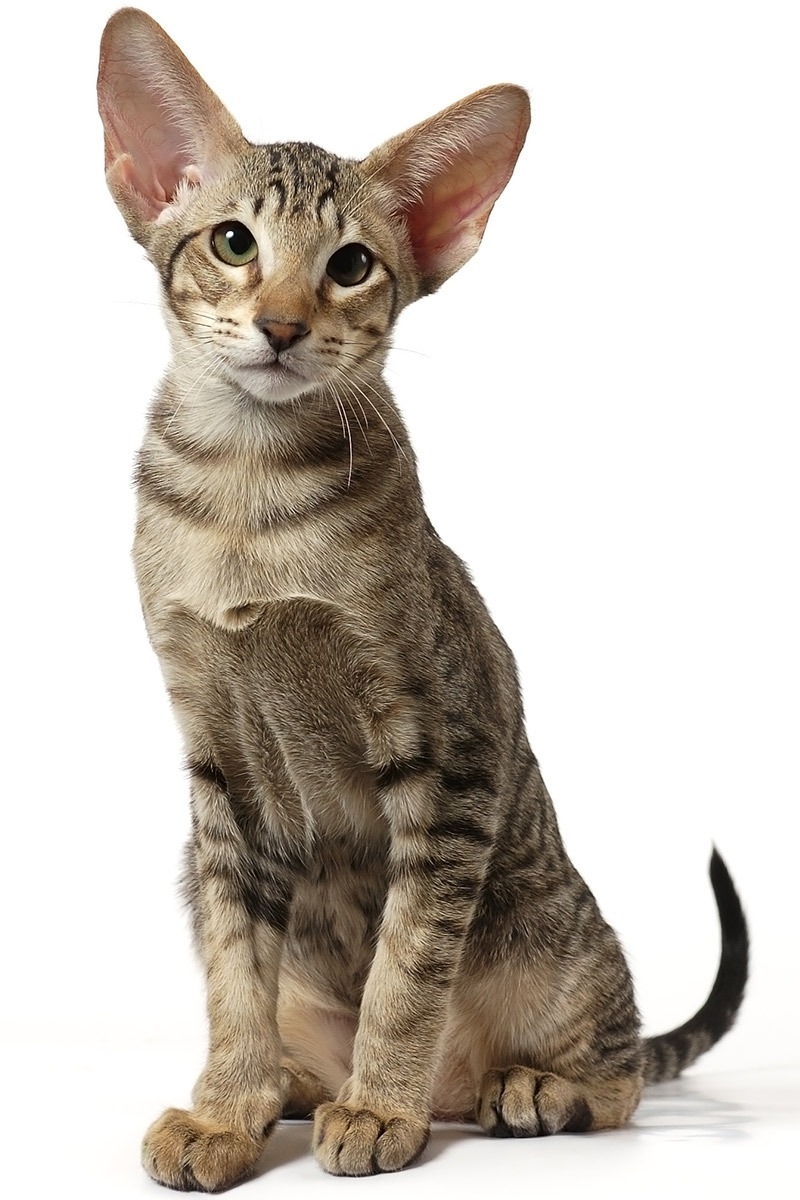
Origin and Development
The Oriental Shorthair cat originated in the United States and was developed by New York area cat breeders, including Vicky and Peter Markstein, who were intrigued by tabby point and solid colored cats of a Siamese body type. The breed has its genetic roots in Thailand, where the Siamese cat, known locally as the "Wichian Mai," was highly revered. The formal development of the breed occurred in the 1950s, with the breeders focusing on creating a cat that would maintain the Siamese body type but exhibit a shorter coat. It was accepted for championship competition by the Cat Fanciers' Association (CFA) in 1977, and has since received recognition from the Governing Council of the Cat Fancy (GCCF) and various other cat breeding organisations. The breed is highly regarded within the CFA community, being one of the most popular among its members, with over 5,000 registrations annually.
Notable figures in the development of the breed include the Marksteins, who founded the Oriental Shorthair Cat Association (OSCA) in 1971, and the breed's recognition by the GCCF in 1990. The establishment of "Oriental Shorthairs International" in 1973 played a significant role in promoting the breed and ensuring its standards were upheld.
Breed Characteristics
The Oriental Shorthair has a modern Siamese head and body type but comes in a wide range of coat colors and patterns, such as solid, tabby, silver, tortoiseshell, and parti-colour. They possess almond-shaped eyes that can be blue, green, or copper, a triangular head shape, large ears, and an elongated, slender, and muscular body. Their coat is medium in length, with a silky texture, and can exhibit high energy levels and medium shedding. The breed standard also specifies that the coat should be tight and glossy, without any excessive furnishings or kinks.
Under the breed standard, over 300 coat color and pattern combinations are theoretically possible. These combinations are derived from a variety of base colors like black, chocolate, cinnamon, red, and white, and patterns such as tortoiseshell and parti-colour. The breed's distinctive color points include the ears, face, paws, and tail, which are darker than the rest of the body, mimicking the Siamese cat's coloration.
Temperament and Personality
Orientals are known for their energetic, affectionate, intelligent, and social nature. They form strong bonds with their humans and often remain playful into adulthood. Despite their slender appearance, they are athletic and can leap into high places, making them highly entertaining pets.
They are conversationalists, often vocal, and enjoy living in pairs or groups, seeking both human and feline interaction. Their intelligence and high energy level make them highly trainable, although their curious nature might lead to some playful mischief when left alone. They are known to be quite active and require regular playtime and mental stimulation to stay happy and healthy.
Breed Standards and Variants
The Oriental Shorthair has been officially recognized by the Cat Fanciers' Association (CFA) and the Governing Council of the Cat Fancy (GCCF), among others. While the CFA accepts the breed for championship competition, the GCCF recognizes it with some differences in coat conformation, publishing separate breed registration policies for specific-coat variants. For example, the GCCF's standard for the breed requires a shorter nose and a more rounded face compared to the CFA's standard.
The breed has two recognized variations: the standard Oriental Shorthair and the Oriental Longhair. The Longhair differs by carrying a pair of the recessive long hair genes, extending the length of the coat but maintaining the same body structure and characteristics as the Shorthair. The Longhair variant is recognized by the GCCF but not by the CFA.
Health and Genetic Considerations
The breed is not free from potential health issues, though specific concerns are not widely documented. Some of the genetic issues that might affect any cat breed, such as hip dysplasia and heart conditions, could be of concern. However, without specific evidence, it is not possible to pinpoint any specific health conditions as prevalent within the breed.
One condition that has been noted in the breed is polycystic kidney disease (PKD), which is a concern for all shorthaired breeds.
Care and Grooming
Their coat is medium in length and shedding is medium, so regular brushing can help maintain a healthy coat and manage shedding. A soft-bristle brush or a grooming glove is ideal for this breed.
Owners should be proactive in monitoring their pet's health and consulting with a veterinarian for any concerns.
Choosing an Oriental Shorthair
When choosing an Oriental Shorthair, ensure the cattery has a reputation for health screenings and asks about the health of the parents and other family members.
Since the breed is recognized by multiple cat registries, you may find a variety of colors and patterns, but be aware that certain colorations might have different acceptances across different organizations. For example, the CFA recognizes chocolate and cinnamon colors, while the GCCF does not.
Frequently Asked Questions
What is the lifespan of the Oriental?
The average lifespan of the Oriental is about 12 - 14 years. Good nutrition and regular veterinary care support a healthy life.
What is the temperament of the Oriental?
The Oriental is known for: Energetic, Affectionate, Intelligent, Social, Playful, Curious. Its affection rating is very high. Its energy level is high.
What size and weight is the Oriental?
It is a small cat, typically around 2 - 5 kg as an adult.
Is the Oriental easy to care for?
Available ratings indicate low grooming needs, and moderate shedding. Routine brushing, ear and dental care, and nail trims are still recommended.
Is the Oriental good with kids and other pets?
Available ratings indicate high child-friendliness, and very high pet-friendliness. Supervised, gradual introductions are recommended.
How much exercise does the Oriental need?
With a high energy level, it needs walks, play or training matched to its stamina.
Is the Oriental hypoallergenic?
It has some hypoallergenic traits, but reactions vary. Spend time with one and seek professional advice before deciding.



