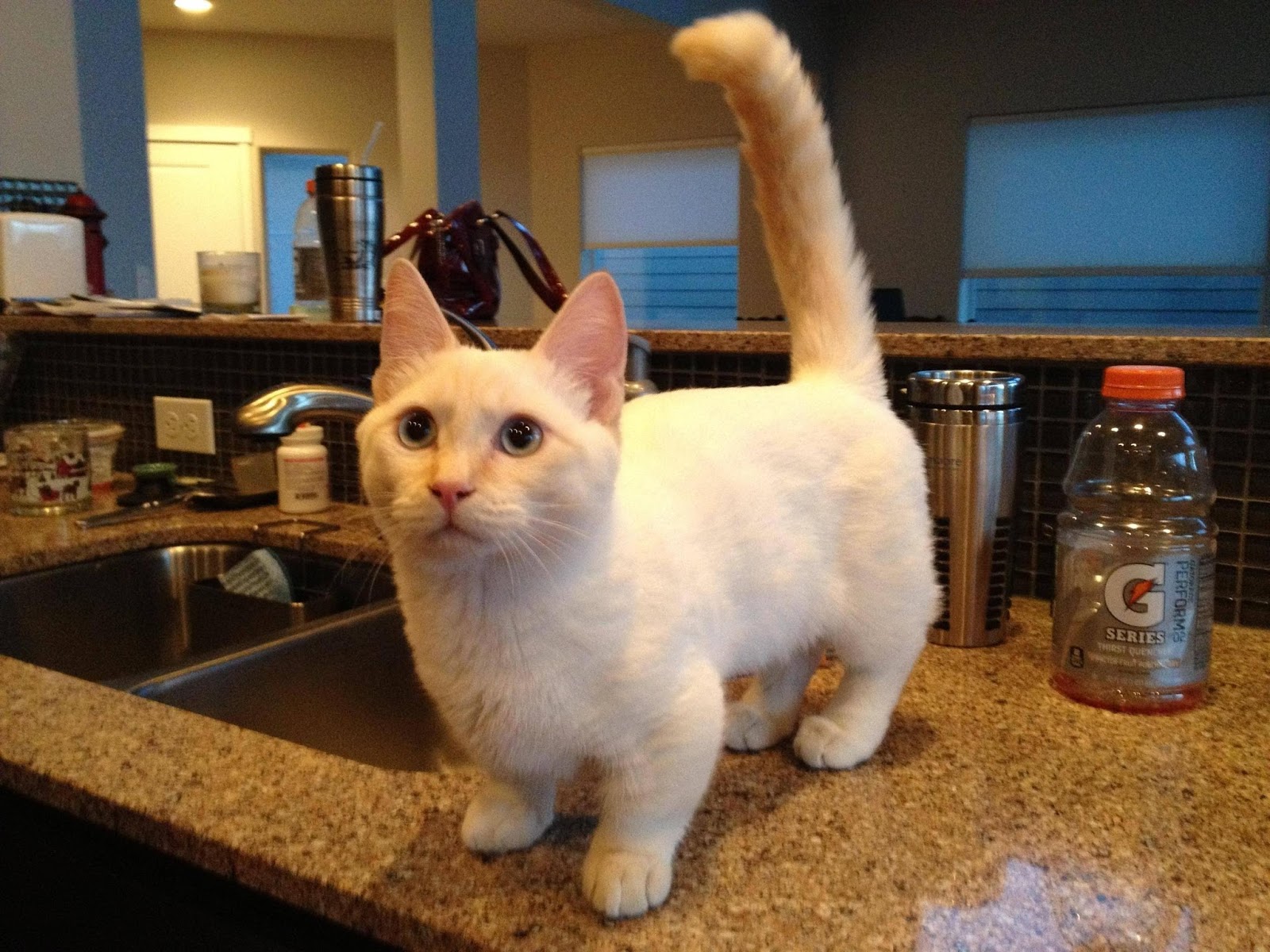
Breed Origin and History
The Munchkin cat, a breed known for its distinctive short legs, originated in the United States. Documented since the 1940s, this breed was officially recognized in 1991. The Munchkin is considered the original breed of dwarf cat, with its name deriving from L. Frank Baum's Munchkin Country in the 1900 novel, "The Wonderful Wizard of Oz. "
Short-legged cats have been observed globally, with a British veterinary report in 1944 noting four generations of such cats. The breed's lineage was nearly lost during World War II but was preserved in the United States in the 1970s. Sandra Hochenedel, a music teacher in Louisiana, found a pregnant cat with short-legged kittens in 1983, marking the beginning of the modern Munchkin breed.
Controversy surrounded the breed's recognition by The International Cat Association (TICA) in 1997, with concerns over health and mobility issues. Despite the criticism, the Munchkin was proposed as a new breed by Laurie Bobskill and Robert Bobskill in 1994 and accepted by TICA into its new breed development program. However, several cat registries, including the Fédération Internationale Féline and the Governing Council of the Cat Fancy, have refused to recognize the Munchkin due to welfare concerns and the breed's association with dwarfism.
Breed Standard and Characteristics
The Munchkin cat is a small to medium-sized breed, weighing between 2 and 4 kg as adults. Despite their short legs, Munchkins are agile and fast, displaying impressive running and leaping abilities. Their legs can be slightly bowed, and excessive bowing is a disqualification in the show ring, while cow-hocked legs are penalized.
The breed comes in all coat colors and patterns, with a medium-plush coat for the short-haired variety and a semi-long silky coat for the long-haired variety. TICA rules for outcrossing allow the use of any domestic cat that does not belong to a recognized breed, and similarity to other breeds can lead to disqualification.
The Munchkin's hind legs can be slightly longer than the front, creating a rise from the shoulder to the rump. Their coat is typically short, but a long-haired variety exists, recognized in a separate category. In 2014, a Munchkin cat named Lilieput from Napa, California, was recognized by Guinness World Records as the shortest statured living cat, standing at 5.25 inches (133 mm) tall.
Temperament and Behavior
Munchkin cats are known for their outgoing nature and enjoy being handled. They are playful and intelligent, traits that contribute to their high energy levels. Despite their small stature, Munchkins are agile and can be faster and more agile than they appear, making them a lively and dynamic breed.
These cats are generally friendly but may have lower social needs compared to other breeds. They adapt well to various environments and are considered highly trainable, making them suitable for families and individuals alike. Munchkins are also friendly with children and dogs, rated highly in the dog-friendly category.
Health Concerns and Genetic Issues
The Munchkin's short legs are the result of a genetic mutation known as chondrodysplasia, leading to an increased incidence of lordosis and pectus excavatum, or a hollowed chest. These cats are at a higher risk for severe osteoarthritis due to their activity levels and behavior being affected by their shorter limbs.
Breeding of Munchkin cats is prohibited in several countries, including the European Union and the Netherlands, due to genetic health concerns. The Fédération Internationale Féline prohibits breeds based on dwarfism, specifically mentioning the Munchkin as an example of unacceptable manipulation of genetic disease.
The gene causing chondrodysplasia in Munchkin cats is autosomal dominant, meaning only heterozygous cats are viable. Understanding the genetics of breeding can help mitigate the risk of health issues, but the breed remains controversial among some registries and breeders.
Genetic Makeup and Breeding
The gene responsible for the Munchkin's short legs is caused by an autosomal dominant mutation, represented by the dominant "M" gene and the recessive "m" gene. A Punnett square can illustrate the chances of a particular mating resulting in a short-legged kitten, with a 25% chance of failure to gestate, a 25% chance of a normal kitten, and a 50% chance of a short-legged kitten.
Breeding Munchkin cats involves careful consideration of genetic mutations and their potential impact on the overall health of the cats. Several crossbreeds have been developed from the Munchkin, including the Bambino, Dwelf, Genetta, Kinkalow, Lambkin, Minskin, Minuet, and Skookum, each with unique characteristics but varying degrees of recognition by major registries.
Controversy and Welfare Concerns
The Munchkin breed has been the subject of much controversy due to its genetic mutation and the concerns over the health and welfare of the cats. Many pedigree cat associations have refused to recognize the Munchkin due to these concerns, with the Fédération Internationale Féline and the Governing Council of the Cat Fancy among the most notable organizations that do not recognize the breed.
Several countries have implemented breeding bans for Munchkin cats, including the European Union and the Netherlands, due to the potential genetic health issues associated with the breed. The Humane Society of the United States has expressed concerns about breeding animals for exaggerated physical characteristics that compromise overall health, highlighting the ethical considerations involved in the breeding of the Munchkin.
Buying a Munchkin: Practical Considerations
- Ensure the breeder is reputable and has experience with the Munchkin breed.
- Ask about the cat's health history and any known genetic issues.
- Consider the Munchkin's energy level and adaptability to your lifestyle.
- Understand the breed's controversy and be prepared to advocate for the Munchkin if faced with discrimination.
Frequently Asked Questions
What is the lifespan of the Munchkin?
The average lifespan of the Munchkin is about 10 - 15 years. Good nutrition and regular veterinary care support a healthy life.
What is the temperament of the Munchkin?
The Munchkin is known for: Agile, Easy Going, Intelligent, Playful. Its affection rating is very high. Its energy level is high.
What size and weight is the Munchkin?
It is a small cat, typically around 2 - 4 kg as an adult.
Is the Munchkin easy to care for?
Available ratings indicate relatively low grooming needs, and moderate shedding. Routine brushing, ear and dental care, and nail trims are still recommended.
Is the Munchkin good with kids and other pets?
Available ratings indicate high child-friendliness, and very high pet-friendliness. Supervised, gradual introductions are recommended.
How much exercise does the Munchkin need?
With a high energy level, it needs walks, play or training matched to its stamina.



