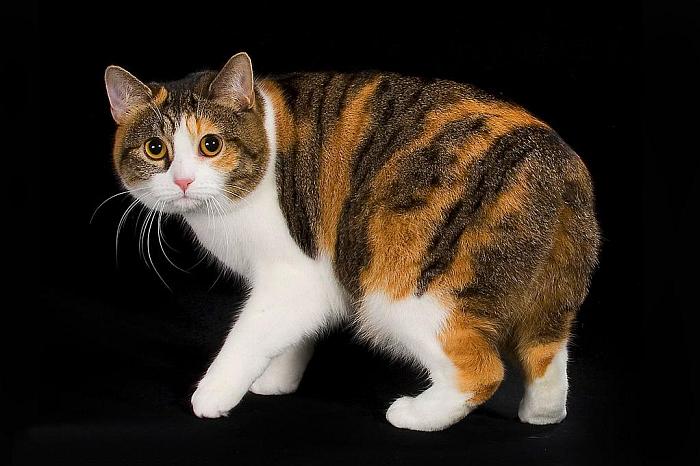
Origin and Historical Background
The Manx cat originated on the Isle of Man, a British island located in the Irish Sea. The breed's unique characteristic, the taillessness, stems from a spontaneous mutation that became prevalent due to the limited genetic diversity of island biogeography. This mutation, known as the Manx taillessness gene, is a dominant trait.
Manx cats have been a part of the Isle of Man's culture since the early 19th century, where they were referred to as "stubbin" or "rumpy," depending on their tail length. Folklore surrounding the breed includes stories of tailless cats being brought to the island by sea and tales of a cat swimming ashore from a Spanish Armada shipwreck.
Manx cats were exhibited in cat shows since the late 1800s, with the first known breed standard published in 1903 by Charles Henry Lane. The breed was one of the first recognized by the Cat Fanciers' Association (CFA) in 1908. The Manx breed was also accepted by the American Cat Fanciers Association (ACFA) in 1912 and by the United Kennel Club (UKC) in 1939.
Physical Characteristics
The Manx cat is known for its distinctive taillessness, with variations ranging from a complete absence of a tail to a long, normal-length tail. The tail length is determined by genetics and is not the result of surgical alteration, which is illegal in many jurisdictions. The most common tail types are rumpy (no tail), rumpy riser (a small tuft of fur at the end of the spine), stumpy (a short stub of a tail), and longy (a full-length tail).
The Manx body is medium-sized, with broad shoulders, flat sides, and a muscular, lean build. Their hind legs are notably longer than the forelegs, giving them a rounded or humped appearance when viewed from the side. The head is rounded, with large, rounded eyes and prominent outer corners. The ears are large and round-tipped, and the neck is long. Manx cats can weigh between 8 to 18 pounds, with males generally being larger than females.
Manx cats come in two coat lengths: short-haired and long-haired. The short-haired coat is dense, soft, and lies close to the skin, while the long-haired coat, known as the Cymric, has a silky texture and is longer, particularly around the hocks and neck. The color patterns are diverse, with solid, tabby, tortoiseshell, and calico being common.
Temperament and Personality
Manx cats are known for their placid and sweet temperament, often described as gentle and playful. They are social and enjoy being around people, making them loving companions. Despite their gentle nature, they can be quite active and are skilled hunters, which has made them popular among farmers and as ship's cats. Manx cats are known to be excellent mousers and can be particularly beneficial in households with rodent problems.
Manx cats are intelligent and trainable, with a high adaptability and social needs. They are also generally friendly towards dogs, making them a suitable choice for multi-pet households. Manx cats have a reputation for being people-oriented, often greeting their owners at the door and following them around the house.
Health Considerations
While Manx cats are generally healthy, they are prone to certain health issues due to the dominant gene responsible for taillessness. One notable condition is Manx syndrome, which includes a range of neurological disorders that can lead to weakness, paralysis, and difficulty with coordination. These issues are more common in tailless Manx cats. Symptoms can range from mild to severe and may include an inability to walk, balance problems, and an increased risk of spinal disc disease.
Manx cats may also be susceptible to spinal deformities, particularly if the taillessness gene is bred inbreed. This can lead to issues such as a kinked spine or malformed vertebrae. Other health concerns include patellar luxation (a dislocation of the kneecap) and hip dysplasia, which can affect both tailless and long-tailed Manx cats.
Breed Standards and Recognition
The Manx cat is recognized as a distinct breed by various cat registries, including the Cat Fanciers' Association (CFA) and The International Cat Association (TICA). The breed standard emphasizes the unique physical characteristics of the Manx, such as the absence or presence of a tail, the rounded head, and the long hind legs. The standard also includes specific requirements for coat length, color, and pattern.
Despite the breed's historical challenges in cat shows, the Manx has gained popularity and recognition over the years. The first known breed standard was published in 1903 by Charles Henry Lane, who noted that a Manx could be clearly distinguished from other tailless cats based on its movements and general character. The breed's distinctive appearance and personality have contributed to its growing popularity.
Choosing a Manx Cat
If you are considering adding a Manx cat to your family, here are some practical considerations:
- Be aware of the potential health issues associated with the breed, particularly Manx syndrome and spinal deformities. Consult with a veterinarian who is familiar with the breed to discuss the best care practices.
- Consider the cat's energetic and playful nature when selecting a home environment. Manx cats enjoy being active and may require toys and space to explore.
- Ensure your household is ready for a social and affectionate companion.
- Research reputable breeders who prioritize the health and well-being of their cats. Avoid purchasing from sources that may not follow ethical breeding practices.
Remember that Manx cats are a unique breed with distinct characteristics and needs. Proper care and understanding of their temperament can ensure a happy and fulfilling relationship with your new pet.
Frequently Asked Questions
What is the lifespan of the Manx?
The average lifespan of the Manx is about 12 - 14 years. Good nutrition and regular veterinary care support a healthy life.
What is the temperament of the Manx?
The Manx is known for: Easy Going, Intelligent, Loyal, Playful, Social. Its affection rating is very high. Its energy level is high.
What size and weight is the Manx?
It is a small cat, typically around 3 - 6 kg as an adult.
Is the Manx easy to care for?
Available ratings indicate low grooming needs, and very high shedding. Routine brushing, ear and dental care, and nail trims are still recommended.
Is the Manx good with kids and other pets?
Available ratings indicate high child-friendliness, and very high pet-friendliness. Supervised, gradual introductions are recommended.
How much exercise does the Manx need?
With a high energy level, it needs walks, play or training matched to its stamina.



