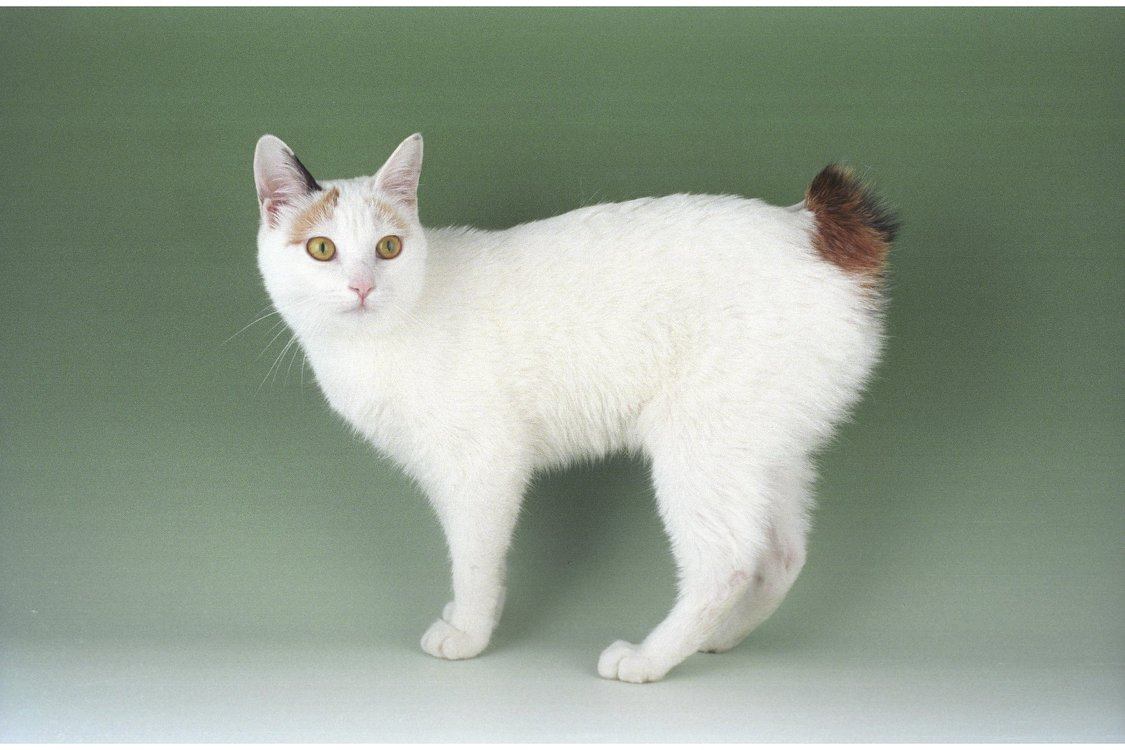
Origin and Historical Significance
The Japanese Bobtail, known as ジャパニーズ・ボブテイル in Japanese, is a breed with an ancient heritage, rooted in Japan. First developed in Japan, this unique cat breed was officially registered in the 1960s. Its history in Japan spans centuries, with the breed frequently depicted in traditional folklore and art.
Japanese Bobtails are believed to have originated from domestic and feral populations of kinked-tailed cats, which were widespread in Southeast Asia and southern China. These kinked-tailed cats, known as "qilin tail" in southern China, were considered symbols of fortune and wealth. The bobtail trait is a dominant one, with cats displaying tails that range in length from slightly shortened to abruptly cut off, with some bobtails being less than 10 cm long.
A missense mutation of the HES7 gene is responsible for the kinked tails in these cats, including the Japanese Bobtails. This mutation likely originated in Southeast Asia or China before the cats were introduced to Japan. In 1602, Japanese authorities decreed that all cats should be set free to help deal with rodents, making Japanese Bobtails the "street/farm cats" of Japan.
Physical Description and Standards
The Japanese Bobtail is recognized by all major registering bodies, except the Governing Council of the Cat Fancy (GCCF) in the United Kingdom. The breed has a distinctive appearance, characterized by a medium-size body, a long torso, and lean, elegant muscles. Males typically weigh between 2.7 and 4 kg, while females are slightly lighter.
The head of the Japanese Bobtail forms an equilateral triangle, with large, upright ears set wide apart at right angles to the head. The muzzle is fairly broad and round, with large, oval eyes that are not bulging. The legs are long, slender, and high, with hind legs longer than the forelegs. Paws are oval, and toes are five in front and four behind.
The coat of the Japanese Bobtail is medium length and soft and silky, with a minimal to medium shedding level. Both shorthair and longhair varieties exist, with the shorthair accepted for Championship status in the Cat Fanciers' Association in 1976 and the longhair in 1993.
Temperament and Personality
The Japanese Bobtail is an active, agile, and clever breed, known for its lively and loyal nature. These cats love to be with people and play endlessly, often bringing toys to their owners and playing fetch with a favorite toy for hours. They are social and assume a leadership role even in the presence of a dog, making them a confident and bold companion.
This breed is highly intelligent and responds well to training, making them easier to train to perform tricks than most breeds. They are attentive and alert, with a strong human-oriented nature. Their vocalization level is high, often interacting with people through vocal means.
The Japanese Bobtail is considered a lucky breed, with predominantly-white calicoes, known as Mi-Ke, being especially favored. These cats are often seen in the Maneki Neko, a statue of a cat with its paw in the air, believed to attract good fortune and prosperity in Japanese culture.
Lifespan and Health
The average lifespan of the Japanese Bobtail is 14 to 16 years, which is considered relatively long for a domestic cat. They are generally healthy cats, with the recessive gene associated with the shortened tails not linked to any spinal or bone abnormalities.
As with any breed, there can be a variety of health issues related to genetics, but they are generally not common. The gene responsible for the short tail causes a reduction in the number of tail vertebrae and some fusion, but this does not lead to skeletal disorders. Recent studies have shown that the Japanese Bobtail is one of the most genetically diverse of pedigree breeds, with smaller litters and lower kitten mortality rates compared to other breeds.
Coat and Grooming
The Japanese Bobtail has a medium-length coat that is soft and silky, with minimal to medium shedding. This makes the breed easy to groom, requiring minimal effort to maintain a healthy and attractive coat. Both shorthair and longhair varieties are well-suited for owners who are willing to invest time in grooming their pets.
Despite the breed's active nature, they are prone to obesity, so it's important for owners to provide a diet that supports their high energy levels and ensures regular physical activity to maintain a healthy weight and overall well-being, considering their genetically diverse nature and fast kitten development rate.
Adaptability and Compatibility
The Japanese Bobtail is highly adaptable, rated 5 out of 5 in adaptability by breed standards. They are affectionate, rated 5 out of 5, and are particularly good with children, rated 4 out of 5. They are also very friendly with dogs, rated 5 out of 5, making them suitable for multi-pet households.
This breed has a high level of social needs, rated 5 out of 5, and thrives on human interaction. They are not typically stranger-friendly, rated 5 out of 5, indicating their loyalty and attachment to their owners.
Buying and Owning a Japanese Bobtail
When considering adding a Japanese Bobtail to your family, there are several factors to consider. The breed is not hypoallergenic, with a shedding level rated 3 out of 5, so it may not be ideal for those with allergies. However, their high trainability, rated 5 out of 5, and intelligence, rated 5 out of 5, make them a great choice for owners looking for a companion that can be trained to perform tricks and engage in various activities.
Given their active nature, a home with ample space for play is recommended. They enjoy climbing and exploring, so a house with accessible furniture or outdoor spaces can provide them with the stimulation they need.
The cost of owning a Japanese Bobtail can vary, but it's important to consider not just the initial purchase price but also ongoing expenses such as food, grooming, and veterinary care. The Japanese Bobtail breed is one of the most genetically diverse of pedigree breeds, which contributes to their overall health and longevity.
Frequently Asked Questions
What is the lifespan of the Japanese Bobtail?
The average lifespan of the Japanese Bobtail is about 14 - 16 years. Good nutrition and regular veterinary care support a healthy life.
What is the temperament of the Japanese Bobtail?
The Japanese Bobtail is known for: Active, Agile, Clever, Easy Going, Intelligent, Lively, Loyal, Playful, Social. Its affection rating is very high. Its energy level is high.
What size and weight is the Japanese Bobtail?
It is a small cat, typically around 2 - 5 kg as an adult.
Is the Japanese Bobtail easy to care for?
Available ratings indicate low grooming needs, and moderate shedding. Routine brushing, ear and dental care, and nail trims are still recommended.
Is the Japanese Bobtail good with kids and other pets?
Available ratings indicate high child-friendliness, and very high pet-friendliness. Supervised, gradual introductions are recommended.
How much exercise does the Japanese Bobtail need?
With a high energy level, it needs walks, play or training matched to its stamina.



